Hollingsworth K A, Shively R D, Glasscock S N, Light J E, Tolleson D R, Barboza P S
Department of Rangeland, Wildlife and Fisheries Management, Texas A&M University, College Station, Texas, United States of America.
Welder Wildlife Foundation, Sinton, Texas, United States of America.
PLoS One. 2021 Mar 15;16(3):e0248204. doi: 10.1371/journal.pone.0248204. eCollection 2021.
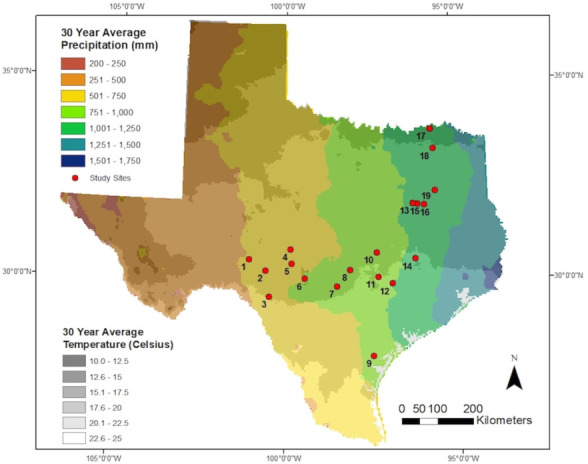
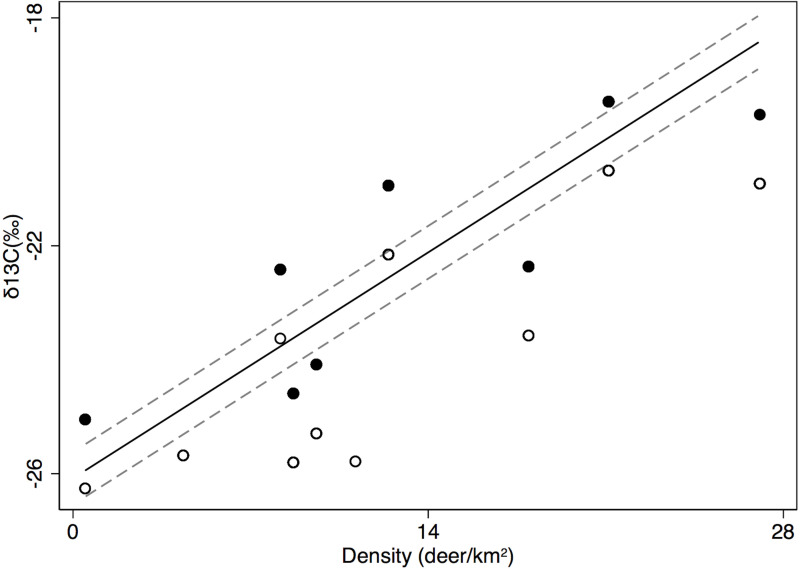
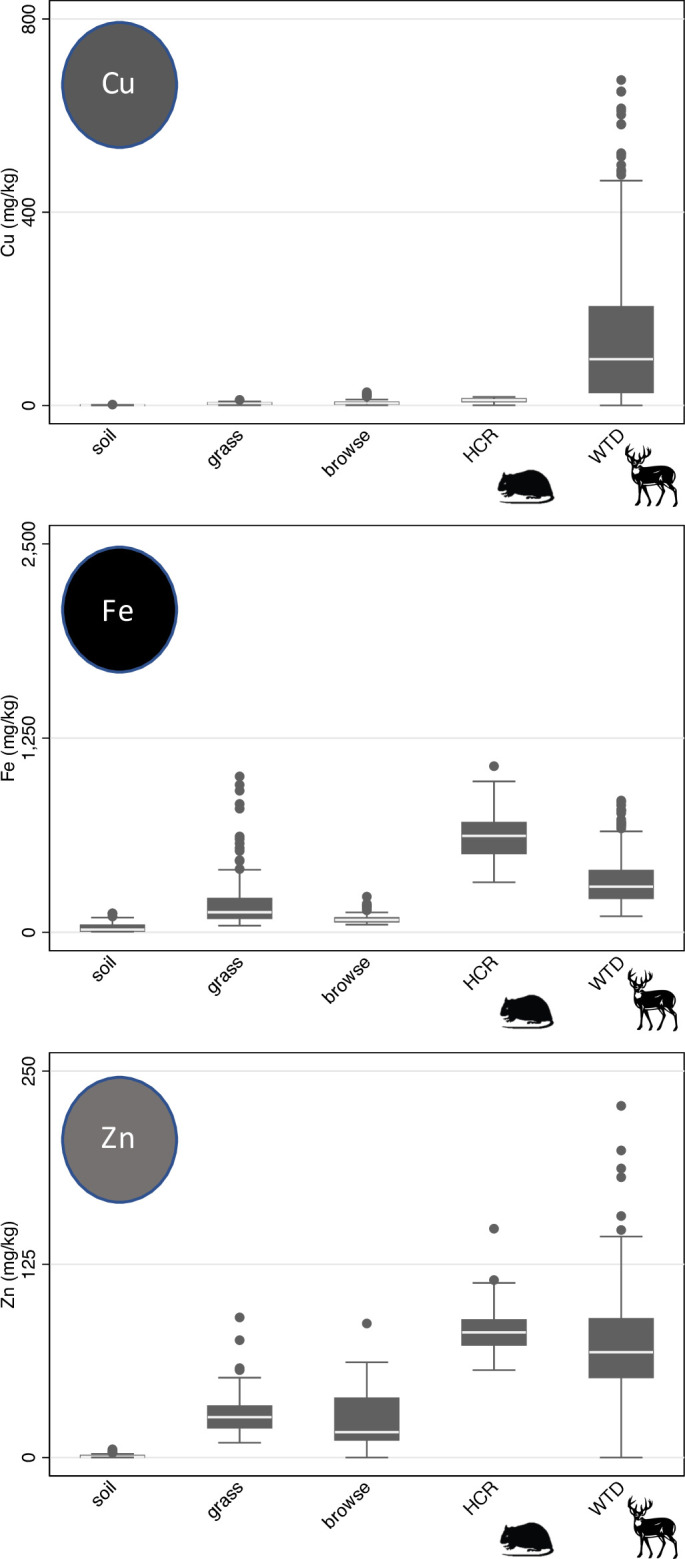
Copper (Cu), iron (Fe), and zinc (Zn) are essential trace minerals for the reproduction, growth, and immunity of mammalian herbivore populations. We examined the relationships between Cu, Fe, and Zn in soils, common plants, and hepatic stores of two wild herbivores to assess the effects of weather, sex, and population density on the transfer of trace minerals from soils to mammals during the growing season. Soils, grasses, woody browse, hispid cotton rats (Sigmodon hispidus), and white-tailed deer (Odocoileus virginianus) were sampled across 19 sites. Concentrations of Cu, Fe, and Zn in grasses and browse species were not correlated with concentrations of those minerals in soils sampled from the same areas. Leaves of woody browse were higher in Cu, lower in Fe, and similar in Zn when compared with grasses. Available concentrations of soils were positively related to liver Cu and Zn in hispid cotton rats, which was consistent with the short lives and high productivity of these small mammals that rely on grass seed heads. Interactions between soil concentrations and weather also affected liver Cu and Fe in deer, which reflected the greater complexity of trophic transfers in large, long-lived, browsing herbivores. Population density was correlated with liver concentrations of Cu, Fe, and Zn in hispid cotton rats, and concentrations of Cu and Fe in deer. Liver Cu was < 5 mg/kg wet weight in at least 5% of animals at two of eight sites for hispid cotton rats and < 3.8 mg/kg wet weight in at least 5% of animals at three of 12 sites for deer, which could indicate regional limitation of Cu for populations of mammalian herbivores. Our data indicate that supplies of trace minerals may contribute to density dependence of herbivore populations. Local population density may therefore influence the prevalence of deficiency states and disease outbreak that exacerbate population cycles in wild mammals.
铜(Cu)、铁(Fe)和锌(Zn)是哺乳动物食草动物种群繁殖、生长和免疫所必需的微量矿物质。我们研究了两种野生食草动物的土壤、常见植物和肝脏中铜、铁和锌之间的关系,以评估天气、性别和种群密度对生长季节微量矿物质从土壤向哺乳动物转移的影响。在19个地点采集了土壤、草、木本植物、刚毛棉鼠(Sigmodon hispidus)和白尾鹿(Odocoileus virginianus)的样本。草和木本植物物种中铜、铁和锌的浓度与从同一地区采集的土壤中这些矿物质的浓度无关。与草相比,木本植物的叶子含铜量更高,含铁量更低,含锌量相似。土壤有效浓度与刚毛棉鼠肝脏中的铜和锌呈正相关,这与这些依赖草籽头的小型哺乳动物的短寿命和高繁殖率一致。土壤浓度与天气之间的相互作用也影响了鹿肝脏中的铜和铁,这反映了大型、长寿、食草性食草动物营养转移的更大复杂性。种群密度与刚毛棉鼠肝脏中铜、铁和锌的浓度以及鹿肝脏中铜和铁的浓度相关。在八个地点中的两个地点,至少5%的刚毛棉鼠肝脏铜含量低于5毫克/千克湿重;在12个地点中的三个地点,至少5%的鹿肝脏铜含量低于3.8毫克/千克湿重,这可能表明铜对哺乳动物食草动物种群存在区域限制。我们的数据表明,微量矿物质的供应可能导致食草动物种群的密度依赖性。因此,当地种群密度可能会影响缺乏状态的流行和疾病爆发,从而加剧野生哺乳动物的种群周期。