Newman Mark, Curran Desmond A
Precision Analytical Inc., 3138 NE Rivergate Street #301C, Mcminnville, OR, 97128, USA.
BMC Chem. 2021 Mar 15;15(1):18. doi: 10.1186/s13065-021-00744-3.
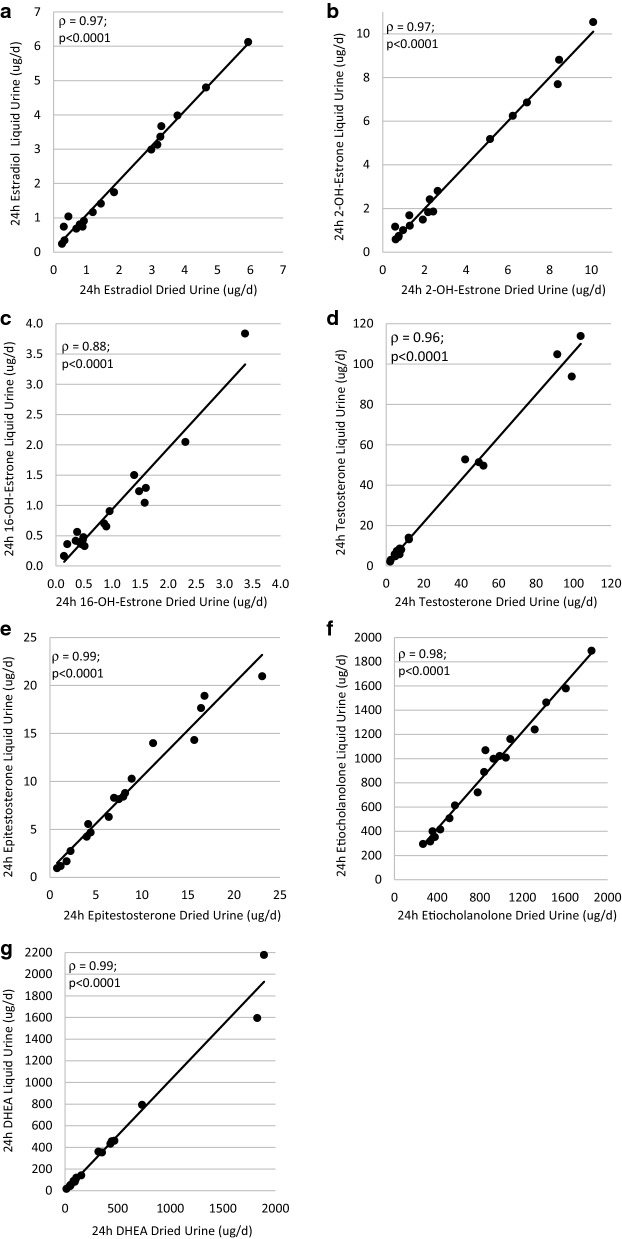
Mass spectrometry allows for analysis of multiple hormone and organic acid metabolites from small urine volumes; however, to assess the full extent of daily hormone production, 24-h urine collections are usually required. The aims of this study were, first, to confirm that mass spectrometric analysis of an array of hormones and organic acids would yield similar results in both liquid and dried urine, and, second, to determine if collection of four dried spot urine samples could be substituted for a 24-h collection when measuring reproductive hormones.
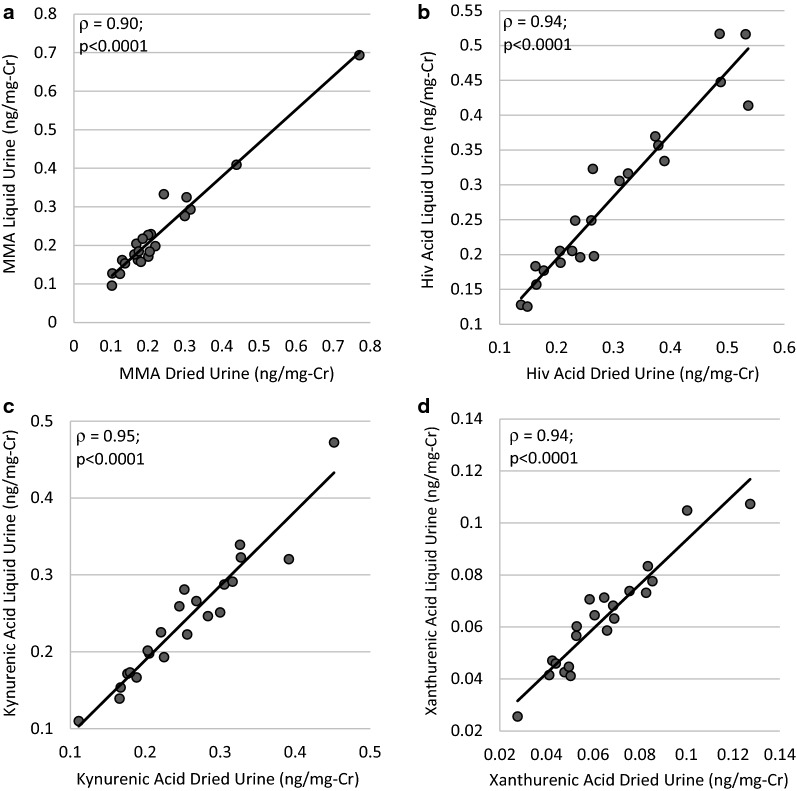
Two study populations were included in this prospective observational study. Twenty individuals collected both a spot liquid urine and dried urine on filter paper to analyze eight organic acids. A second group of 26 individuals collected both a 24-h urine and four dried spot urines during waking hours throughout the same day for evaluation of 17 reproductive hormones and metabolites; data from 18 of these individuals were available to compare liquid versus dried urine results. Dried urine was extracted, hydrolyzed, and derivatized before analysis by mass spectrometry; all analytes from dried urine were normalized to urine creatinine.
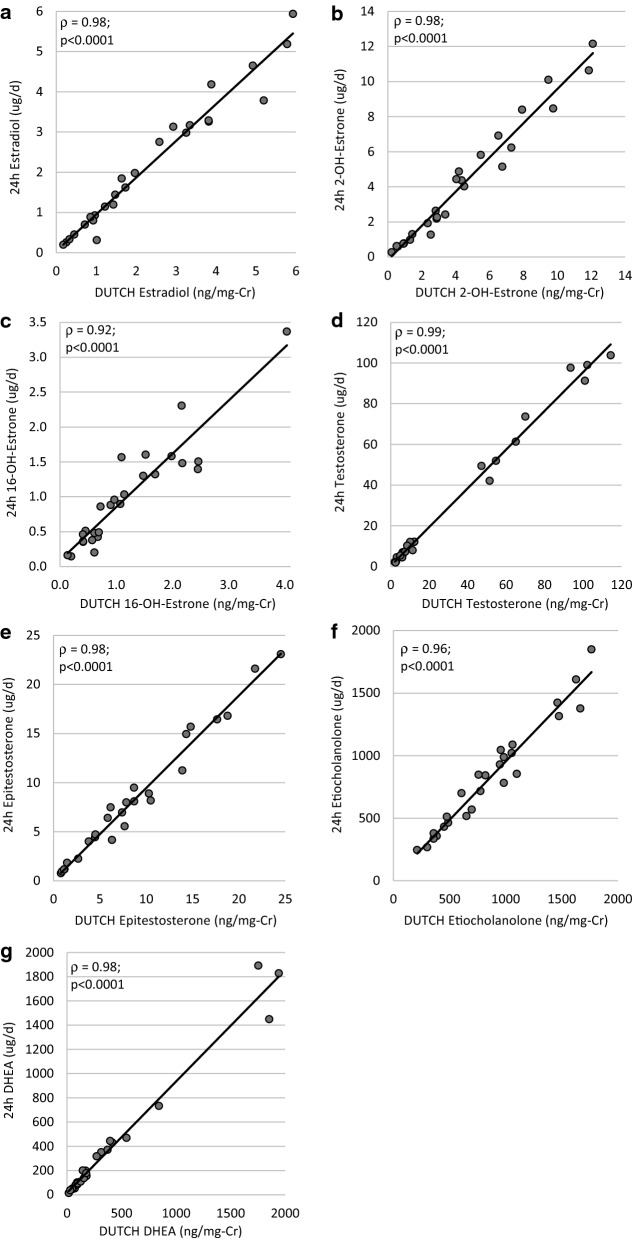
Reproductive hormone results from dried and liquid urine were in excellent agreement with intraclass correlation coefficients (ICCs) greater than 0.90; comparison of dried to liquid urine for organic acids showed good to excellent agreement (ICC range: 0.75 to 0.99). Comparison between the 4-spot urine collection and 24-h urine collection methods showed excellent agreement (ICC > 0.9) for 14 of the 17 urine metabolites and good agreement for the others (ICC 0.78 to 0.85) with no systematic differences between the two methods of collection.
The burden of urine collection can be reduced using collection of four spot dried urines on filter paper without compromising comparability with hormone results from a 24-h urine collection. A large number of urine analytes can be assessed from the dried urine with similar results to those from liquid urine. Given the ease of sample handling, this 4-spot dried urine assay would be useful for both clinical assessment of patients and for large epidemiologic studies.
质谱分析法能够从小体积尿液中分析多种激素和有机酸代谢物;然而,为了评估每日激素产生的全貌,通常需要收集24小时尿液。本研究的目的,一是确认对一系列激素和有机酸进行质谱分析在液态尿液和干化尿液中会产生相似的结果,二是确定在测量生殖激素时,收集4份干化尿斑样本是否可以替代24小时尿液收集。
本前瞻性观察性研究纳入了两个研究群体。20名个体收集了一份即时液态尿液和滤纸干化尿液,用于分析8种有机酸。另一组26名个体在同一天的清醒时间内收集了一份24小时尿液和4份干化尿斑样本,用于评估17种生殖激素和代谢物;其中18名个体的数据可用于比较液态尿液和干化尿液的结果。干化尿液在进行质谱分析前进行提取、水解和衍生化处理;干化尿液中的所有分析物均以尿肌酐进行标准化。
干化尿液和液态尿液中的生殖激素结果具有极好的一致性,组内相关系数(ICC)大于0.90;干化尿液与液态尿液中有机酸的比较显示出良好到极好的一致性(ICC范围:0.75至0.99)。4份尿斑样本收集法与24小时尿液收集法之间的比较显示,17种尿液代谢物中的14种具有极好的一致性(ICC > 0.9),其他代谢物具有良好的一致性(ICC 0.78至0.85),两种收集方法之间无系统差异。
使用滤纸收集4份干化尿斑样本可以减轻尿液收集的负担,同时不影响与24小时尿液收集所得激素结果的可比性。从干化尿液中可以评估大量尿液分析物,结果与液态尿液相似。鉴于样本处理简便,这种4份干化尿斑样本检测法对患者的临床评估和大型流行病学研究均有用处。