Department of Oral Science, Graduate School of Medicine, Chiba University, 1-8-1 Inohana, Chuo-ku, Chiba-shi, Chiba, 260-8670, Japan.
Department of Dentistry and Oral-Maxillofacial Surgery, Chiba University Hospital, 1-8-1 Inohana, Chuo-ku, Chiba-shi, Chiba, 260-8677, Japan.
Sci Rep. 2021 Mar 15;11(1):5897. doi: 10.1038/s41598-021-85242-1.
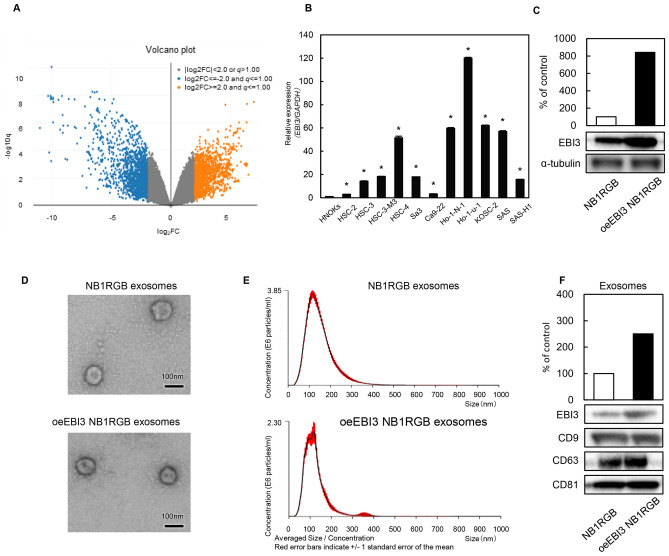
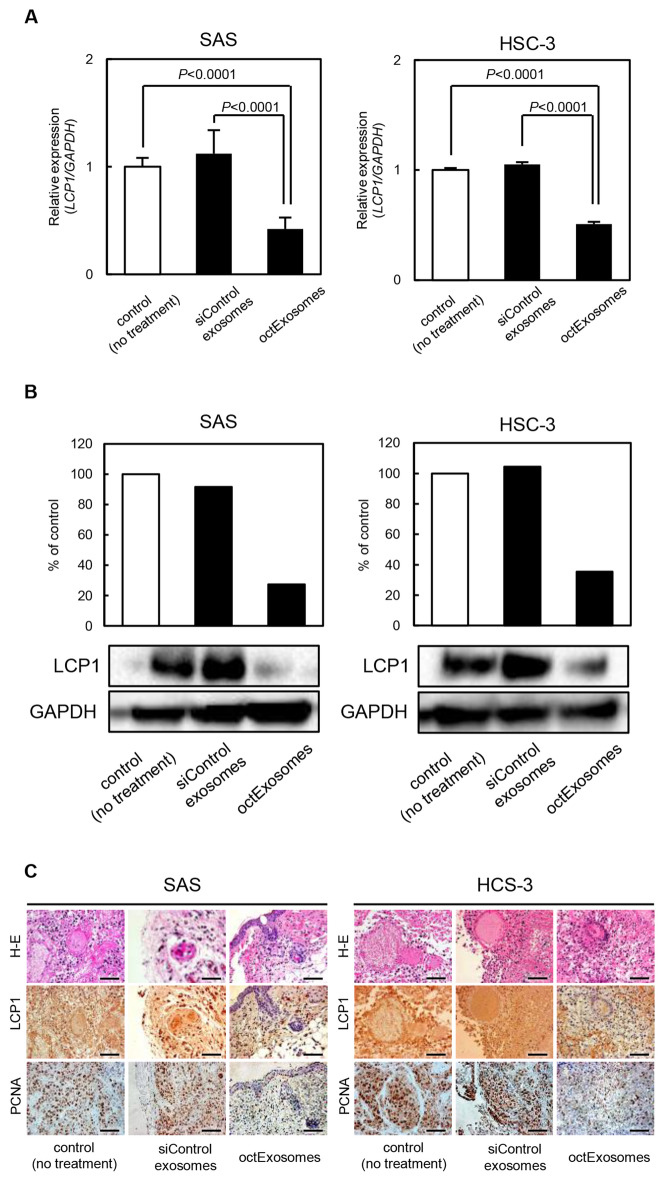
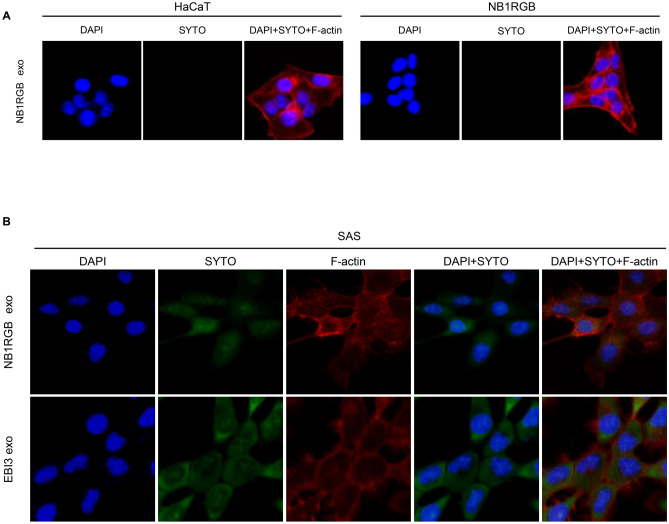
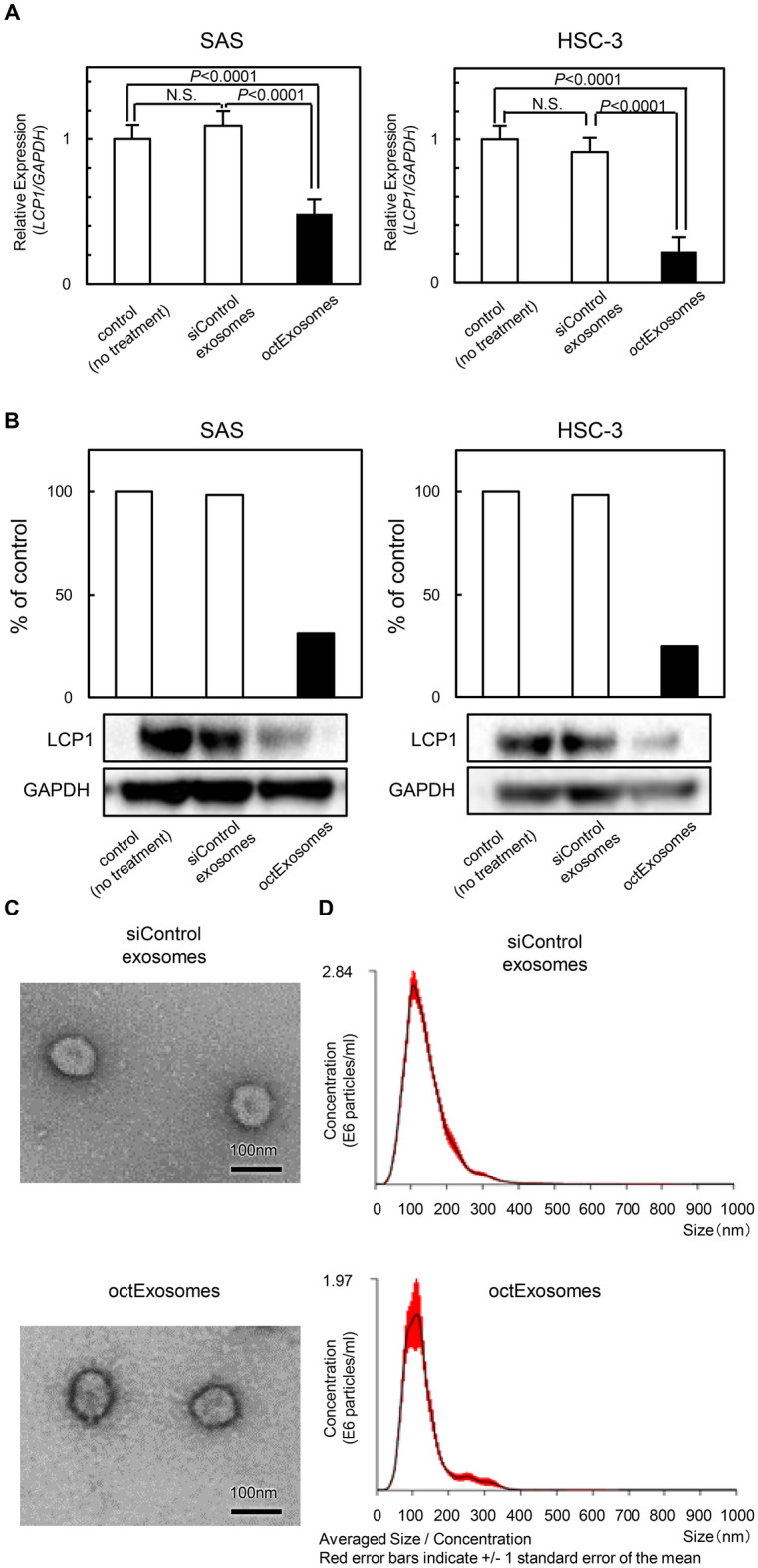
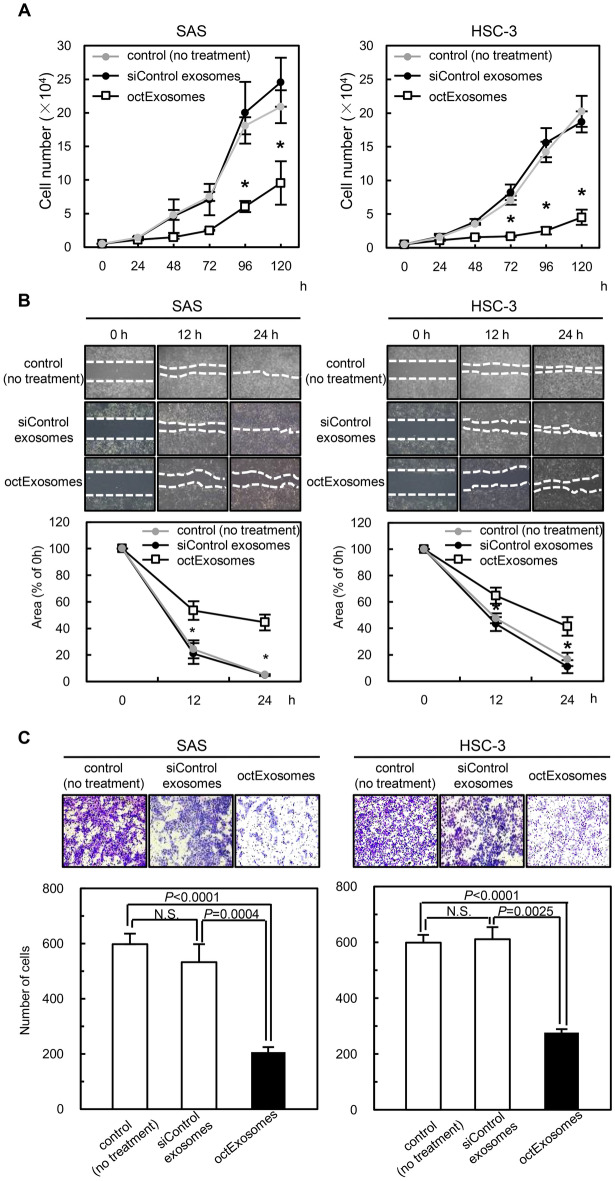
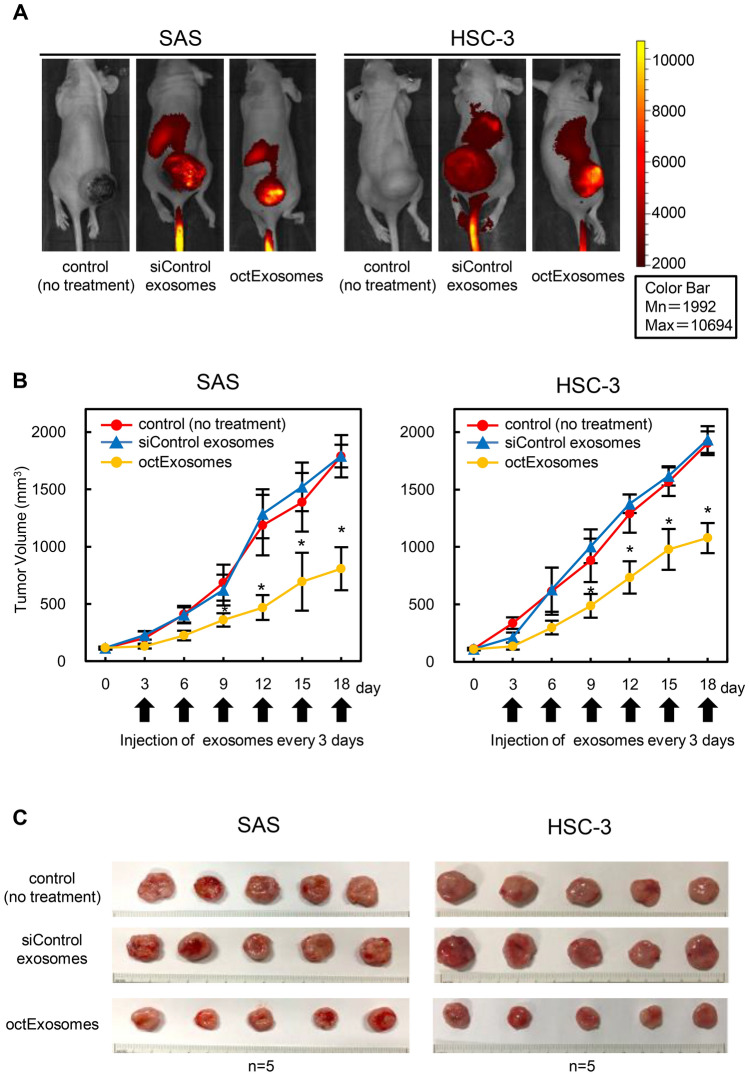
Exosomes are involved in a wide range of biological processes in human cells. Considerable evidence suggests that engineered exosomes (eExosomes) containing therapeutic agents can attenuate the oncogenic activity of human cancer cells. Despite its biomedical relevance, no information has been available for oral squamous cell carcinoma (OSCC), and therefore the development of specific OSCC-targeting eExosomes (octExosomes) is urgently needed. We demonstrated that exosomes from normal fibroblasts transfected with Epstein-Barr Virus Induced-3 (EBI3) cDNA were electroporated with siRNA of lymphocyte cytoplasmic protein 1 (LCP1), as octExosomes, and a series of experiments were performed to evaluate the loading specificity/effectiveness and their anti-oral cancer cell activities after administration of octExosomes. These experiments revealed that octExosomes were stable, effective for transferring siLCP1 into OSCC cells and LCP1 was downregulated in OSCC cells with octExosomes as compared with their counterparts, leading to a significant tumor-suppressive effect in vitro and in vivo. Here we report the development of a new valuable tool for inhibiting tumor cells. By engineering exosomes, siLCP1 was transferred to specifically suppress oncogenic activity of OSCC cells. Inhibition of other types of human malignant cells merits further study.
外泌体参与人类细胞中的广泛的生物学过程。大量证据表明,含有治疗剂的工程化外泌体(eExosomes)可以减弱人类癌细胞的致癌活性。尽管其具有重要的生物医学相关性,但目前尚无关于口腔鳞状细胞癌(OSCC)的信息,因此迫切需要开发针对 OSCC 的特异性外泌体(octExosomes)。我们证明了用 Epstein-Barr 病毒诱导蛋白 3(EBI3)cDNA 转染的正常成纤维细胞来源的外泌体可以通过电穿孔将淋巴细胞胞质蛋白 1(LCP1)的 siRNA 转染为 octExosomes,并进行了一系列实验来评估它们的载药特异性/有效性及其在给予 octExosomes 后的抗口腔癌细胞活性。这些实验表明,octExosomes 是稳定的,能够将 siLCP1 有效地转染到 OSCC 细胞中,并且与对照相比,LCP1 在 OSCC 细胞中被下调,导致体外和体内显著的肿瘤抑制作用。在这里,我们报告了一种新的有价值的抑制肿瘤细胞的工具的开发。通过工程化外泌体,将 siLCP1 转染以特异性抑制 OSCC 细胞的致癌活性。抑制其他类型的人类恶性细胞值得进一步研究。