Department of Neuroscience, Imaging and Clinical Sciences, G. d'Annunzio University of Chieti-Pescara, Chieti, Italy.
Department of Psychological, Health and Territorial Sciences, G. d'Annunzio University of Chieti-Pescara, Chieti, Italy.
Int J Psychol. 2021 Aug;56(4):577-584. doi: 10.1002/ijop.12755. Epub 2021 Mar 15.
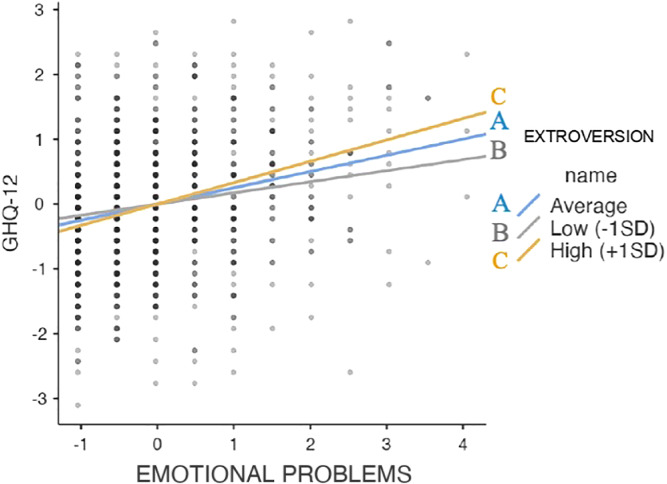
The Italian lockdown following the spread of COVID-19 exposed residents to a long and unexpected period of managing offspring at home. Throughout this time, most parents continued to work remotely. The present research aimed at assessing multiple sociodemographic and psychological variables for parental well-being during the lockdown. An online survey was administered from 6 to 11 April 2020. Respondents were 917 parents aged 23-67 years with up to six children, aged 3-13 years. The measures employed were: 14 demographic questions, the Big Five Inventory (BFI-10), the Emotional Symptoms and Hyperactivity-Inattention subscales of the Strength and Difficulties Questionnaire (SDQ-P), and the General Health Questionnaire (GHQ-12). Multiple moderated linear regression analyses were performed. Motherhood, higher levels of education, higher neuroticism, lower extroversion, and more child emotional and hyperactivity-inattention symptoms were found to be significant predictors of parent distress. Furthermore, a significant two-way interaction between child emotional problems and parent extroversion was found. Overall, parents showed high rates of psychological distress, signalling severe difficulties during the lockdown. Families with a child suffering from emotional and behavioural difficulties should immediately be detected by social services to activate support interventions to prevent chronic and amplified manifestations of these problems.
意大利在 COVID-19 传播之后实行了封锁,居民们在家中照顾子女的时间比预期的要长得多。在此期间,大多数父母继续远程工作。本研究旨在评估封锁期间父母幸福感的多个社会人口学和心理变量。2020 年 4 月 6 日至 11 日进行了在线调查。受访者为 917 名年龄在 23-67 岁之间、有至多六个 3-13 岁子女的父母。采用的措施包括:14 个人口统计学问题、大五人格量表(BFI-10)、长处与困难问卷(SDQ-P)的情绪症状和多动-注意力不集中分量表以及一般健康问卷(GHQ-12)。进行了多次调节线性回归分析。研究发现,母亲身份、较高的教育水平、较高的神经质、较低的外向性以及更多的儿童情绪和多动-注意力不集中症状是父母困扰的显著预测因素。此外,还发现儿童情绪问题与父母外向性之间存在显著的双向交互作用。总体而言,父母表现出较高的心理困扰率,这表明封锁期间存在严重困难。有情绪和行为困难儿童的家庭应立即被社会服务部门发现,以便启动支持干预措施,预防这些问题的慢性和放大表现。