Department of Pharmaceutical Sciences, University of Illinois at Chicago, Chicago, Illinois, USA.
Department of Chemistry, Princeton University, Princeton, New Jersey, USA.
mBio. 2021 Mar 16;12(2):e02688-20. doi: 10.1128/mBio.02688-20.
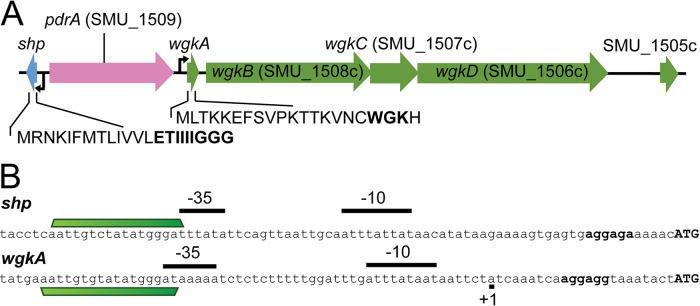
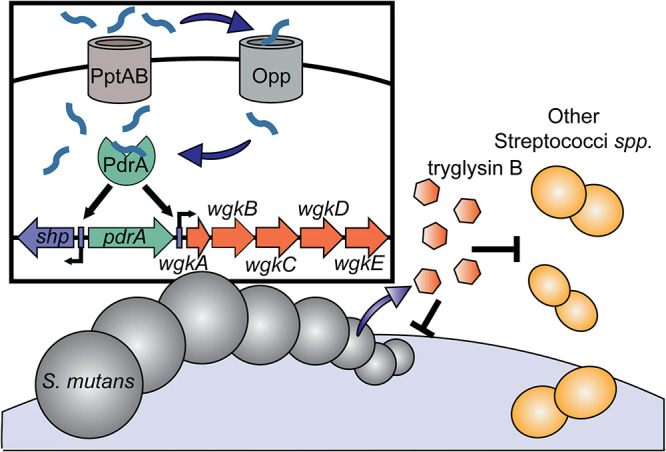
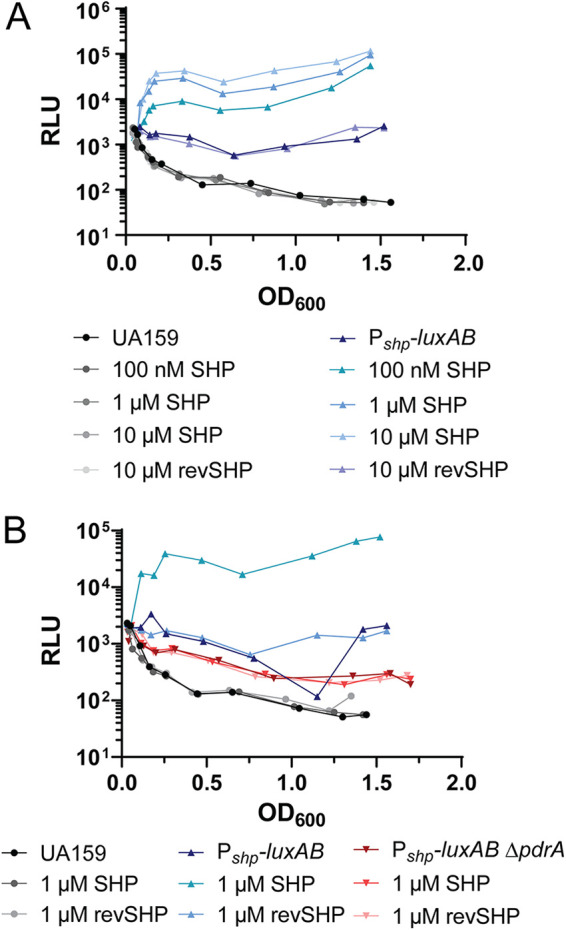
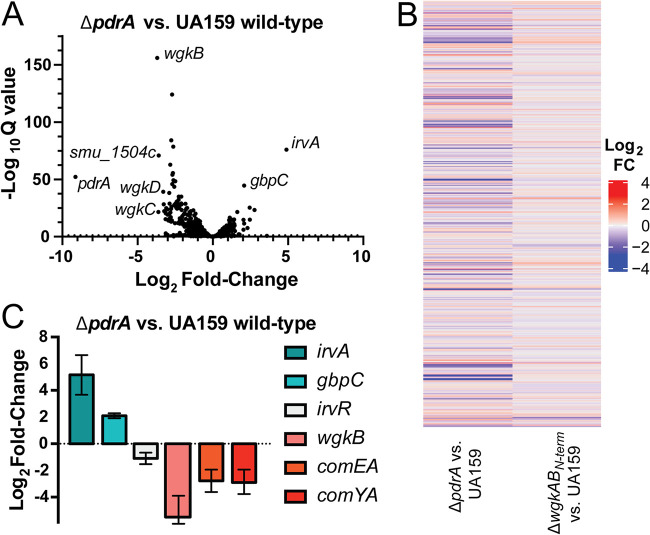
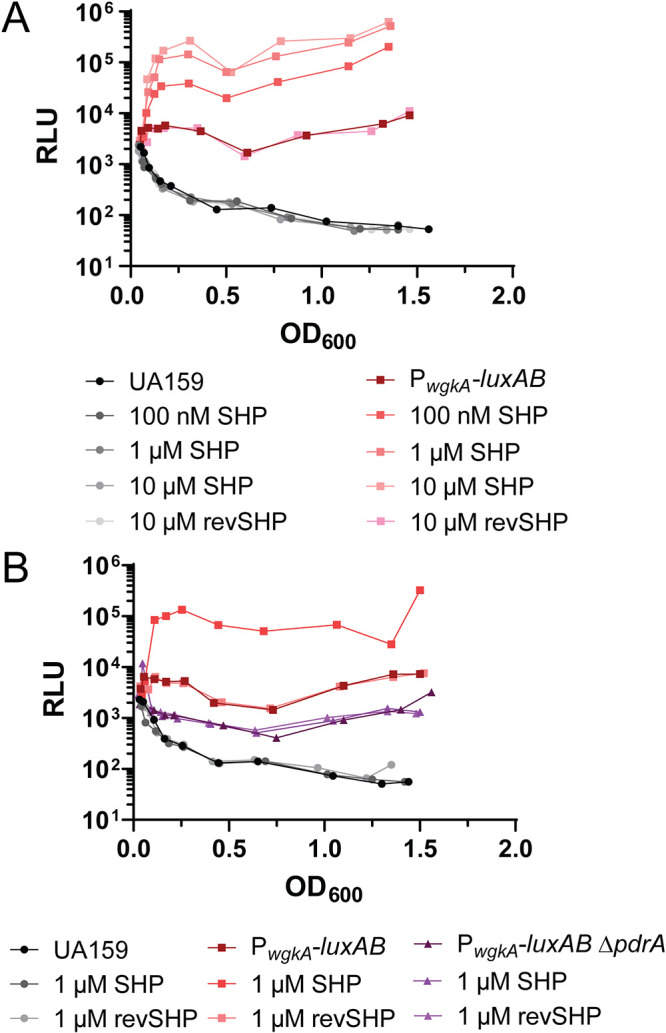
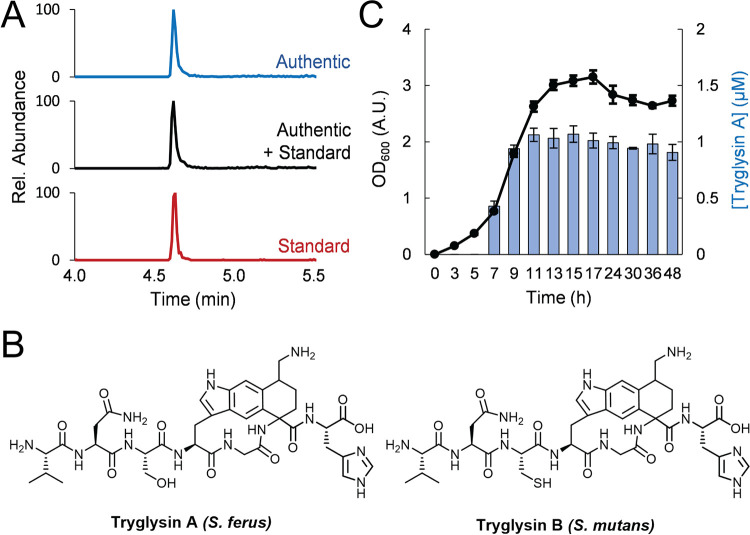
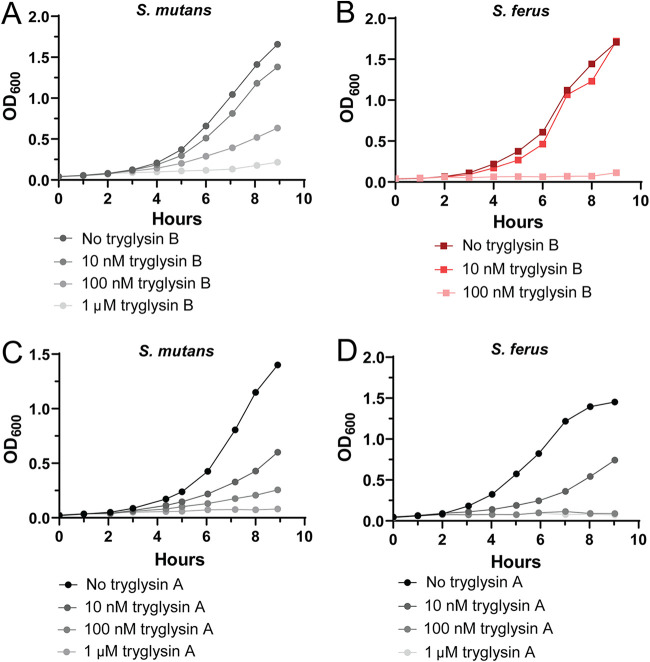
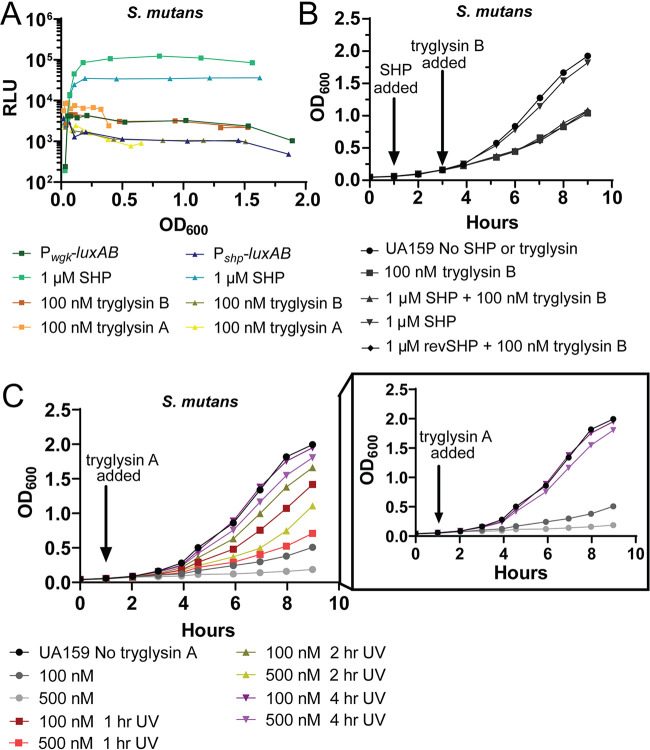
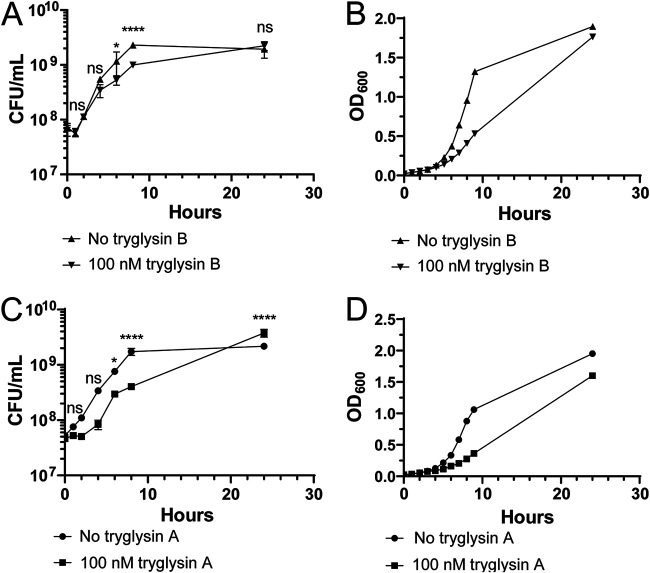
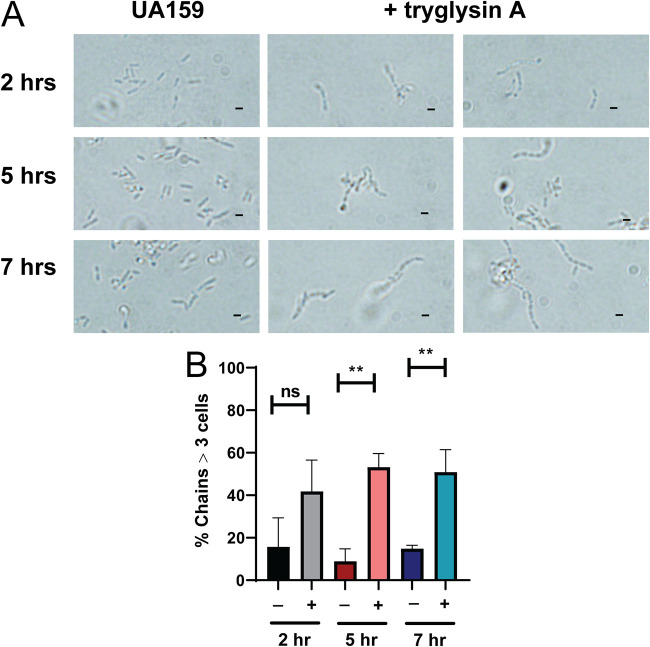
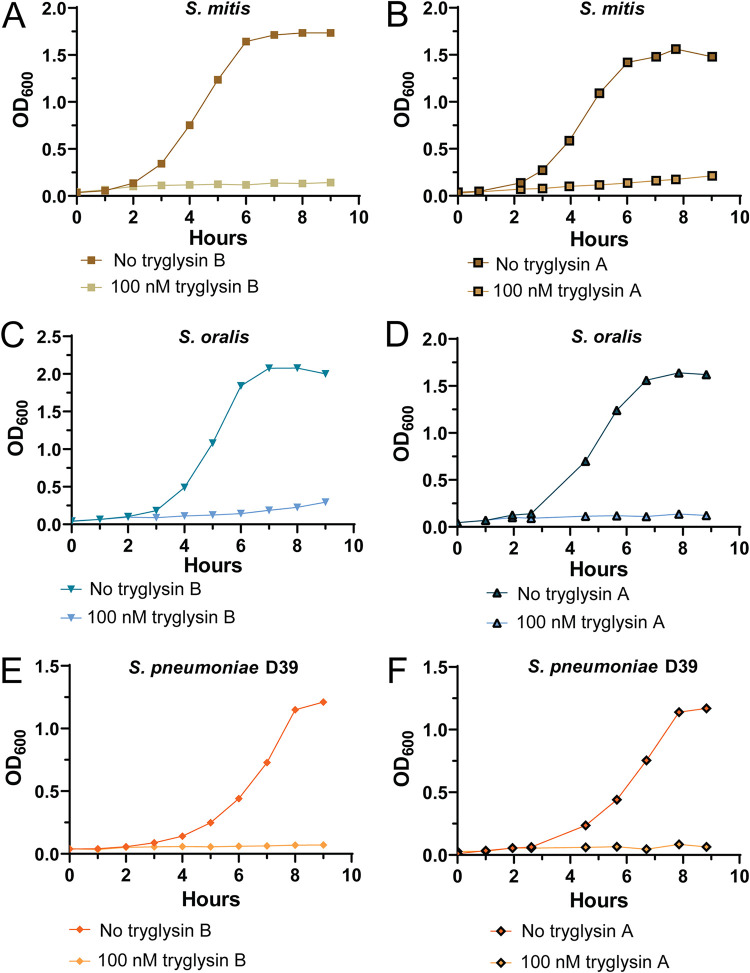
The genus encompasses a large bacterial taxon that commonly colonizes mucosal surfaces of vertebrates and is capable of disease etiologies originating from diverse body sites, including the respiratory, digestive, and reproductive tracts. Identifying new modes of treating infections is of increasing importance, as antibiotic resistance has escalated. is an important opportunistic pathogen that is an agent of dental caries and is capable of systemic diseases such as endocarditis. As such, understanding how it regulates virulence and competes in the oral niche is a priority in developing strategies to defend from these pathogens. We determined that UA159 possesses a bona fide short hydrophobic peptide (SHP)/Rgg quorum-sensing system that regulates a specialized biosynthetic operon featuring a radical-SAM (-adenosyl-l-methionine) (RaS) enzyme and produces a ribosomally synthesized and posttranslationally modified peptide (RiPP). The pairing of SHP/Rgg regulatory systems with RaS biosynthetic operons is conserved across streptococci, and a locus similar to that in is found in , an oral streptococcus isolated from wild rats. We identified the RaS-RiPP product from this operon and solved its structure using a combination of analytical methods; we term these RiPPs tryglysin A and B for the unusual Trp-Gly-Lys linkage. We report that tryglysins specifically inhibit the growth of other streptococci, but not other Gram-positive bacteria such as or We predict that tryglysin is produced by in its oral niche, thus inhibiting the growth of competing species, including several medically relevant streptococci. Bacteria interact and compete with a large community of organisms in their natural environment. is one such organism, and it is an important member of the oral microbiota. We found that uses a quorum-sensing system to regulate production of a novel posttranslationally modified peptide capable of inhibiting growth of several streptococcal species. We find inhibitory properties of a similar peptide produced by and predict that these peptides play a role in interspecies competition in the oral niche.
该属包含一个大型细菌分类群,通常定植于脊椎动物的黏膜表面,能够引起源自不同身体部位的疾病病因,包括呼吸道、消化道和生殖道。随着抗生素耐药性的加剧,寻找新的治疗感染方法变得越来越重要。 是一种重要的机会性病原体,是龋齿的病原体,并能够引起全身性疾病,如心内膜炎。因此,了解其如何调节毒力并在口腔生态位中竞争是制定防御这些病原体策略的首要任务。我们确定 UA159 拥有一个真正的短疏水性肽 (SHP)/Rgg 群体感应系统,该系统调节一个专门的生物合成操纵子,该操纵子具有一个激进-SAM(-腺苷基-l-甲硫氨酸) (RaS) 酶,并产生一个核糖体合成和翻译后修饰的肽 (RiPP)。SHP/Rgg 调节系统与 RaS 生物合成操纵子的配对在链球菌中是保守的,并且在 中发现了一个类似于 的基因座, 是一种从野生大鼠中分离出来的口腔链球菌。我们从这个操纵子中鉴定出 RaS-RiPP 产物,并使用组合分析方法解决了其结构;我们将这些 RiPP 命名为 tryglysin A 和 B,用于不寻常的 Trp-Gly-Lys 键。我们报告说,tryglysins 特异性抑制其他链球菌的生长,但不抑制其他革兰氏阳性菌,如 或 。我们预测,tryglysin 是由 在其口腔生态位中产生的,从而抑制包括几种医学相关链球菌在内的竞争物种的生长。细菌在其自然环境中与大量生物体相互作用并竞争。 就是这样一种生物体,它是口腔微生物群的重要成员。我们发现 使用群体感应系统来调节一种新型翻译后修饰肽的产生,这种肽能够抑制几种链球菌的生长。我们发现 产生的类似肽具有抑制作用,并预测这些肽在口腔生态位中的种间竞争中发挥作用。