Sayegh Nathalie, Hallit Souheil, Hallit Rabih, Saleh Nadine, Zeidan Rouba K
Faculty of Public Health, Lebanese University. Fanar (Lebanon).
Faculty of Medicine and Medical Sciences, Holy Spirit University of Kaslik (USEK). Jounieh (Lebanon).
Pharm Pract (Granada). 2021 Jan-Mar;19(1):2192. doi: 10.18549/PharmPract.2021.1.2192. Epub 2021 Feb 16.
Misuse of antibiotics and antimicrobial resistance are global concerns. Antibiotic stewardship programs (ASP) are advocated to reduce pathogens resistance by ensuring appropriate antimicrobial use. Several factors affect the implementation of ASPs in hospitals. The size and types of care provided, as well as the complexity of antibiotic prescription, are all issues that are considered in designing an effective hospital-based program.
To examine physicians' attitude on implementation of an antimicrobial stewardship program in Lebanese hospitals.
A descriptive cross-sectional survey was carried out using an online questionnaire. Survey items assessed ASP implementations, physicians' attitudes, usefulness of the tools, and barriers of implementation. The questionnaire was based on the Center for Disease Control core-elements.
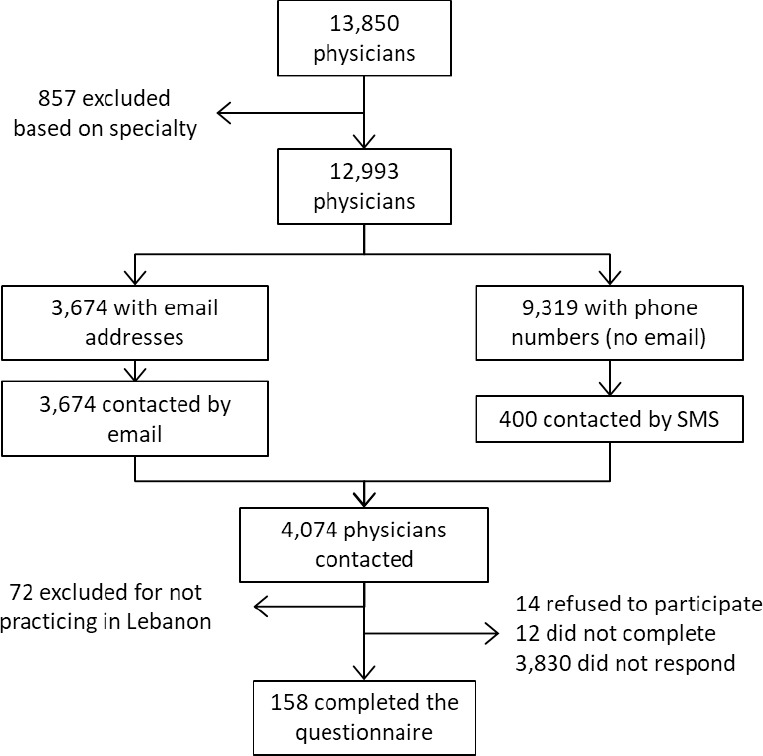
158 physicians completed the survey with a response rate of 4%. Our results showed that the majority (66%) of physicians were familiar with the ASP concept. Most respondents reported a lack of regular educational programs (41%), as well as a lack of support from the medical staff (76%). This study demonstrated positive attitudes and support for ASP implementation. However, ASPs were reported as affecting physicians' autonomy by 34 % of the participants. Antibiotic rounds and prospective audit and feedback were rated as most useful interaction methods with the ASPs. A minimal support of the Ministry Of Public Health, as well as the absence of regulation and of national guidelines, were reported as barriers to ASPs. The shortage of Infectious Disease physicians was seen as a barrier by half of the respondents.
Physicians are supportive of ASP, with preference for interventions that provide information and education rather than restrictive ones. Additional research is needed on a larger sample of physicians.
抗生素的滥用和抗菌药物耐药性是全球关注的问题。提倡实施抗生素管理计划(ASP)以通过确保抗菌药物的合理使用来降低病原体耐药性。有几个因素会影响医院中ASP的实施。所提供护理的规模和类型,以及抗生素处方的复杂性,都是设计有效的医院计划时需要考虑的问题。
研究黎巴嫩医院医生对实施抗菌药物管理计划的态度。
使用在线问卷进行描述性横断面调查。调查项目评估了ASP的实施情况、医生的态度、工具的实用性以及实施的障碍。该问卷基于疾病控制中心的核心要素。
158名医生完成了调查,回复率为4%。我们的结果表明,大多数(66%)医生熟悉ASP的概念。大多数受访者表示缺乏定期教育计划(41%),以及缺乏医务人员的支持(76%)。这项研究表明了对ASP实施的积极态度和支持。然而,34%的参与者报告称ASP影响了医生的自主权。抗生素查房以及前瞻性审核和反馈被评为与ASP最有用的互动方式。据报告,公共卫生部的支持最少,以及缺乏监管和国家指南是ASP实施的障碍。一半的受访者认为传染病医生短缺是一个障碍。
医生支持ASP,更喜欢提供信息和教育而非限制性的干预措施。需要对更多医生样本进行进一步研究。