Wang Hongcai, Zhao Kaile, Ba Ying, Gao Tao, Shi Ning, Niu Qiong, Liu Chengxia, Chen Yan
Department of Neurology, Binzhou Medical University Hospital, Binzhou, Shandong, China.
Department of Gastroenterology, Binzhou Medical University Hospital, Binzhou, Shandong, China.
Oxid Med Cell Longev. 2021 Feb 28;2021:1298657. doi: 10.1155/2021/1298657. eCollection 2021.
Gastric electrical pacing (GEP) could restore interstitial cells of Cajal in diabetic rats. M2 macrophages contribute to the repair of interstitial cells of Cajal injury though secreting heme oxygenase-1 (HO-1). The aim of the study is to investigate the effects and mechanisms of gastric electrical pacing on M2 macrophages in diabetic models.
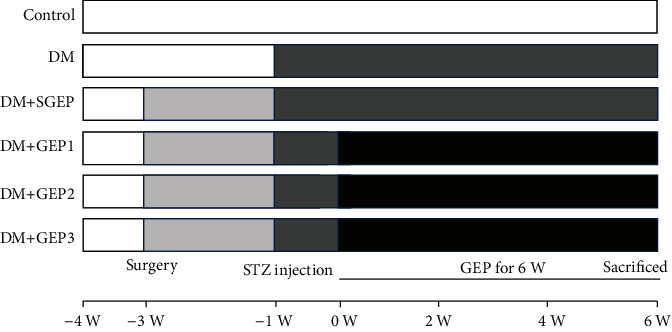
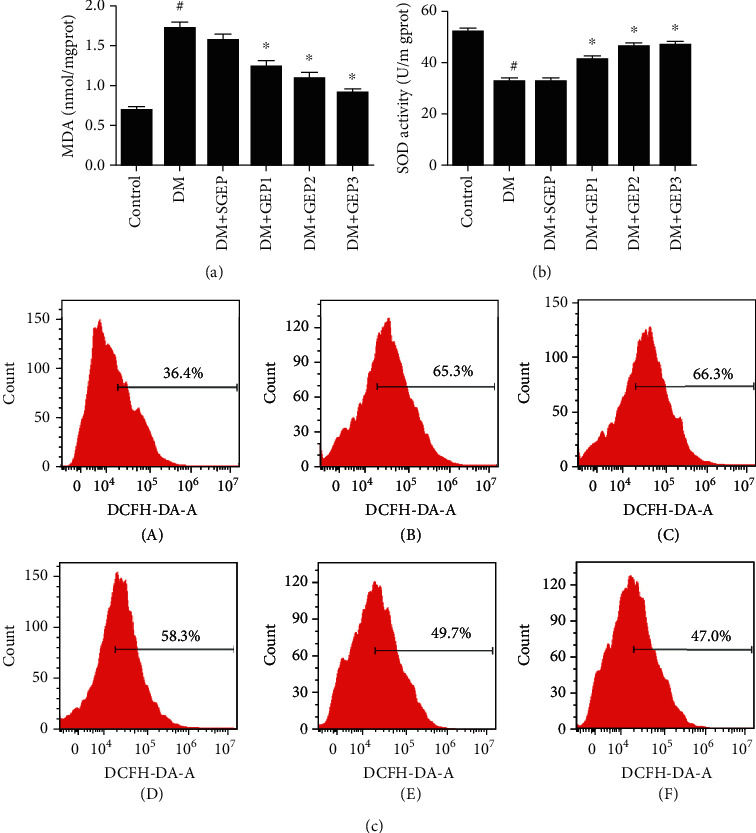
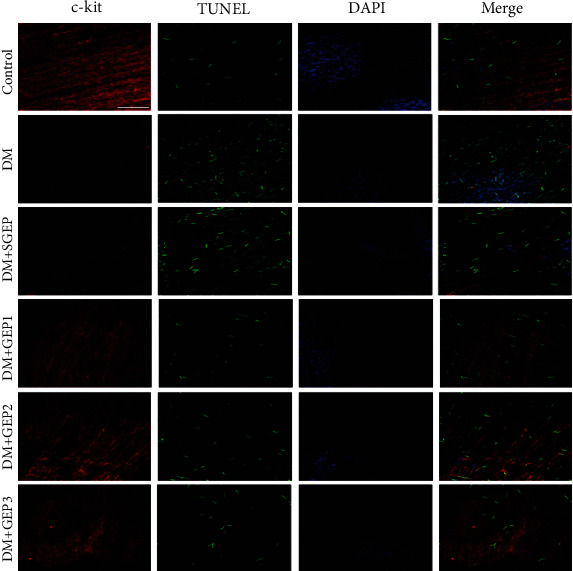
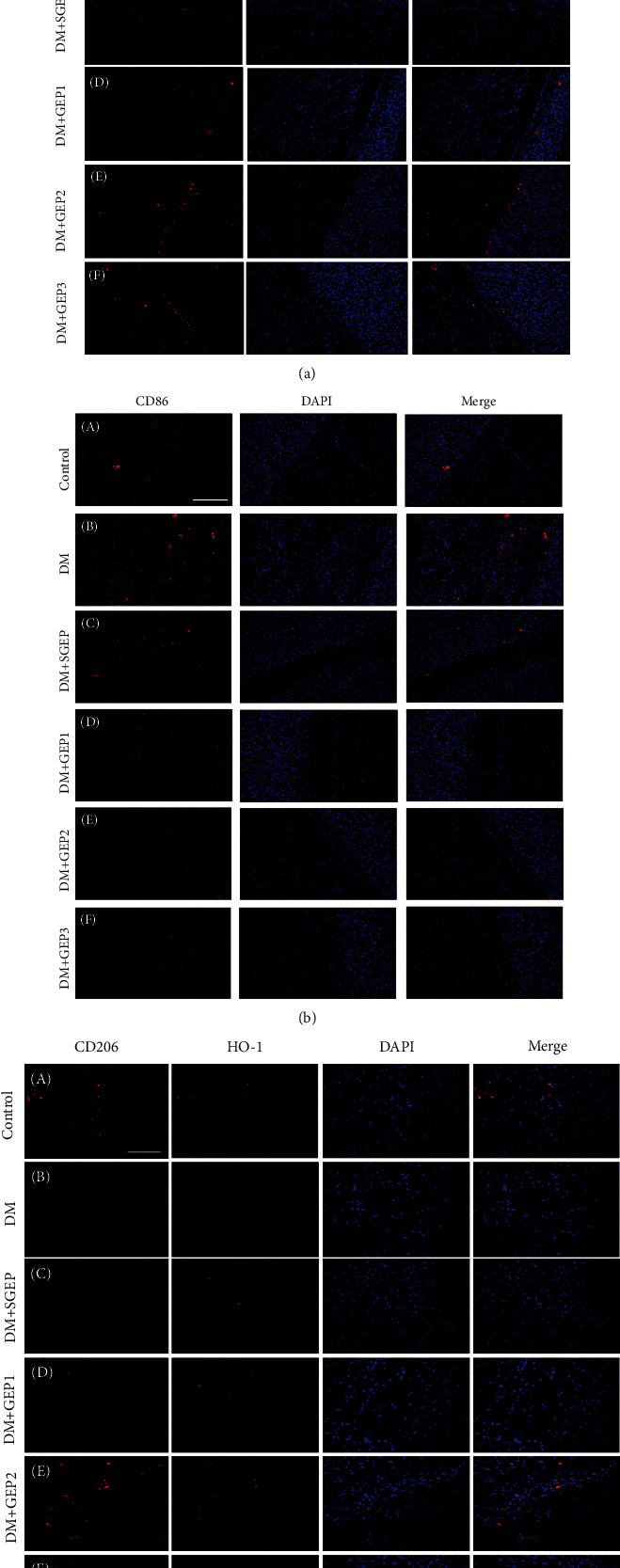
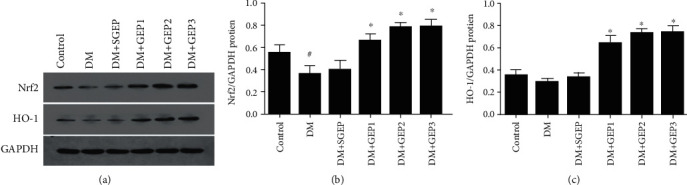
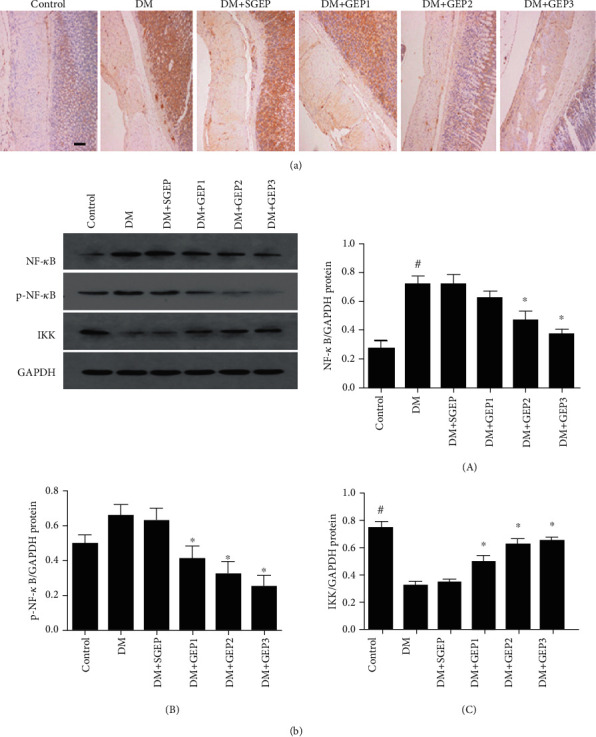
Sixty male Sprague-Dawley rats were randomized into control, diabetic (DM), diabetic with the sham GEP (DM+SGEP), diabetic with GEP1 (5.5 cpm, 100 ms, 4 mA) (DM+GEP1), diabetic with GEP2 (5.5 cpm, 300 ms, 4 mA) (DM+GEP2), and diabetic with GEP3 (5.5 cpm, 550 ms, 4 mA) (DM+GEP3) groups. The apoptosis of interstitial cells of Cajal and the expression of macrophages were detected by immunofluorescence technique. The expression levels of the Nrf2/HO-1 and NF-B pathway were evaluated using western blot analysis or immunohistochemical method. Malonaldehyde, superoxide dismutase, and reactive oxygen species were tested to reflect the level of oxidative stress.
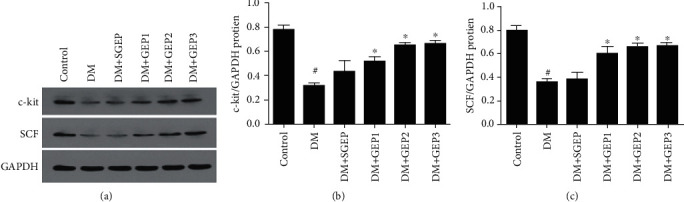
Apoptosis of interstitial cells of Cajal was increased in the DM group but significantly decreased in the DM+GEP groups. The total number of macrophages was almost the same in each group. In the DM group, M1 macrophages were increased and M2 macrophages were decreased. However, M2 macrophages were dramatically increased and M1 macrophages were reduced in the DM+GEP groups. Gastric electrical pacing improved the Nrf2/HO-1 pathway and downregulated the phosphorylation of NF-B. In the DM group, the levels of malonaldehyde and reactive oxygen species were elevated and superoxide dismutase was lowered, while gastric electrical pacing reduced the levels of malonaldehyde and reactive oxygen species and improved superoxide dismutase.
Gastric electrical pacing reduces apoptosis of interstitial cells of Cajal though promoting M2 macrophages polarization to play an antioxidative stress effect in diabetic rats, which associates with the activated Nrf2/HO-1 pathway and the phosphorylation of NF-B pathway.
胃电起搏(GEP)可使糖尿病大鼠的Cajal间质细胞得以恢复。M2巨噬细胞通过分泌血红素加氧酶-1(HO-1)促进Cajal间质细胞损伤的修复。本研究旨在探讨胃电起搏对糖尿病模型中M2巨噬细胞的影响及其机制。
将60只雄性Sprague-Dawley大鼠随机分为对照组、糖尿病组(DM)、假胃电起搏糖尿病组(DM+SGEP)、胃电起搏1组(5.5次/分钟,100毫秒,4毫安)(DM+GEP1)、胃电起搏2组(5.5次/分钟,300毫秒,4毫安)(DM+GEP2)和胃电起搏3组(5.5次/分钟,550毫秒,4毫安)(DM+GEP3)。采用免疫荧光技术检测Cajal间质细胞的凋亡及巨噬细胞的表达。采用蛋白质印迹分析或免疫组织化学方法评估Nrf2/HO-1和NF-κB信号通路的表达水平。检测丙二醛、超氧化物歧化酶和活性氧以反映氧化应激水平。
DM组Cajal间质细胞凋亡增加,而DM+GEP组显著减少。各组巨噬细胞总数基本相同。DM组M1巨噬细胞增加,M2巨噬细胞减少。然而,DM+GEP组M2巨噬细胞显著增加,M1巨噬细胞减少。胃电起搏改善了Nrf2/HO-1信号通路并下调了NF-κB的磷酸化水平。DM组丙二醛和活性氧水平升高,超氧化物歧化酶水平降低,而胃电起搏降低了丙二醛和活性氧水平并提高了超氧化物歧化酶水平。
胃电起搏通过促进M2巨噬细胞极化减少糖尿病大鼠Cajal间质细胞凋亡,发挥抗氧化应激作用,这与激活的Nrf2/HO-1信号通路和NF-κB信号通路的磷酸化有关。