School of Allied Health, La Trobe University, Human Services and Sport, Physiotherapy, Melbourne, VIC, 3086, Australia.
Eastern Health, Peter James Centre, Burwood East, PhysiotherapyVictoria, 3151, Australia.
Rev Endocr Metab Disord. 2021 Dec;22(4):877-890. doi: 10.1007/s11154-021-09644-2. Epub 2021 Mar 17.
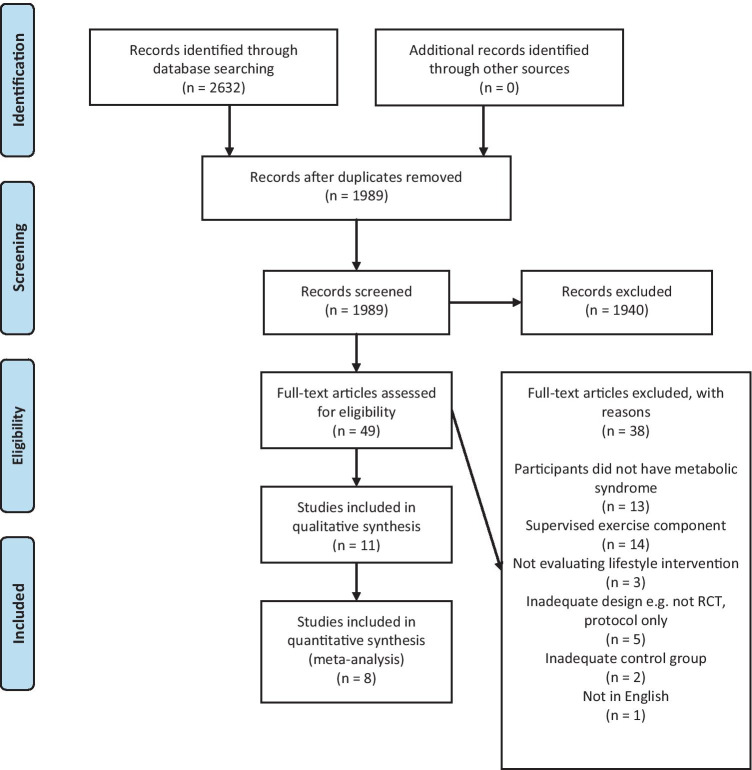
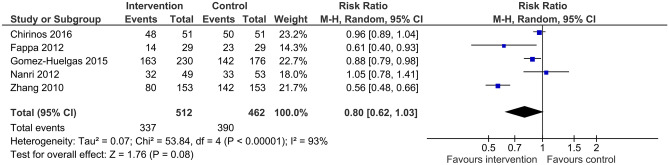
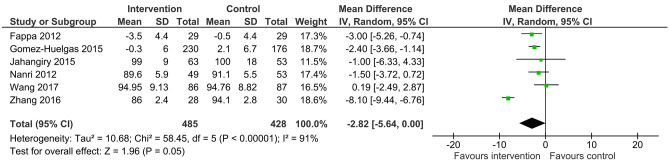
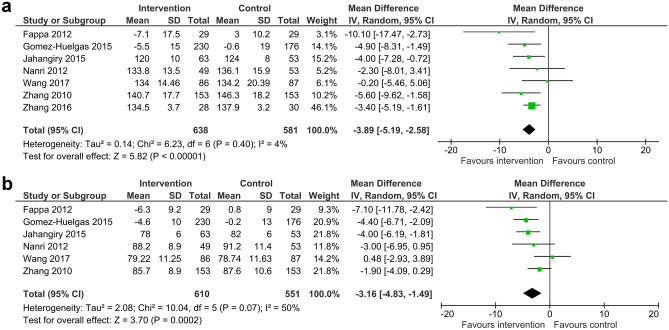
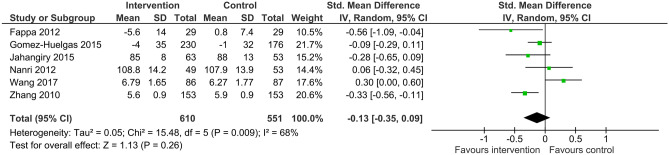
To determine whether lifestyle intervention programs comprising dietary intervention and prescribed, unsupervised exercise improve outcomes for people with metabolic syndrome. A systematic review and meta-analysis of randomised controlled trials. Online databases CINAHL, MEDLINE, PubMed and Embase were searched from the earliest date available to October 2020. Post-intervention data were pooled to calculate mean differences (MD) or standardised mean differences (SMD) and 95% confidence intervals (CI) using inverse variance methods and random effects models. Trial methodological quality was assessed using the Physiotherapy Evidence Database (PEDro) scale and overall quality of each meta-analysis was assessed using the Grading of Recommendation Assessment, Development and Evaluation approach. Eleven studies from 9 randomised controlled trials with 1,835 participants were included. There was high quality evidence that lifestyle intervention programs with unsupervised exercise reduced waist circumference (MD -2.82 cm, 95%CI -5.64 to 0.00, I 91%) and blood pressure (systolic: MD -3.89 mmHg, 95%CI -5.19 to -2.58, I 4%; diastolic: MD -3.16 mmHg, 95%CI -4.83 to -1.49, I 50%) and increased physical activity levels (SMD 0.47, 95%CI 0.24 to 0.70, I 45%) when compared to usual care. There was low quality evidence that they improved quality of life (SMD 0.59, 95%CI 0.05 to 1.13, I 84%). Unsupervised programs had no significant effect on fasting blood glucose (unless > 3 months duration), metabolic syndrome prevalence or cholesterol. Lifestyle intervention programs with prescribed, unsupervised exercise are a practical alternative to supervised programs for people with metabolic syndrome when time, access or resources are limited or when social distancing is required.
为了确定包括饮食干预和规定的、非监督的运动在内的生活方式干预计划是否能改善代谢综合征患者的结局。对随机对照试验的系统评价和荟萃分析。从最早可获得的日期到 2020 年 10 月,在线数据库 CINAHL、MEDLINE、PubMed 和 Embase 进行了检索。使用逆方差法和随机效应模型对干预后数据进行汇总,以计算均值差(MD)或标准化均值差(SMD)和 95%置信区间(CI)。使用物理治疗证据数据库(PEDro)量表评估试验方法学质量,使用推荐评估、制定和评价方法(GRADE)评估每个荟萃分析的整体质量。纳入了 9 项随机对照试验中的 11 项研究,共 1835 名参与者。有高质量证据表明,非监督运动的生活方式干预计划可降低腰围(MD-2.82cm,95%CI-5.64 至 0.00,I 91%)和血压(收缩压:MD-3.89mmHg,95%CI-5.19 至-2.58,I 4%;舒张压:MD-3.16mmHg,95%CI-4.83 至-1.49,I 50%),并提高身体活动水平(SMD 0.47,95%CI 0.24 至 0.70,I 45%),与常规护理相比。有低质量证据表明,它们可以提高生活质量(SMD 0.59,95%CI 0.05 至 1.13,I 84%)。非监督计划对空腹血糖(除非持续时间超过 3 个月)、代谢综合征患病率或胆固醇没有显著影响。对于时间、途径或资源有限或需要保持社交距离的代谢综合征患者,规定的、非监督的运动生活方式干预计划是监督计划的实用替代方案。