Wu Hongxia, Liu Aiwen
Department of Respiratory and Critical Care Medicine, The Affiliated People's Hospital of Shanxi Medical University, Shanxi Provincial People's Hospital, Taiyuan, Shanxi, P. R. China.
Department of Respiration, the Fifth People's Hospital of Jinan, Shandong, P. R. China.
J Int Med Res. 2021 Mar;49(3):300060521996183. doi: 10.1177/0300060521996183.
Ferroptosis is caused by iron-dependent lipid peroxide accumulation, the sensitivity of which might be regulated by acyl-CoA synthetase long chain family member 4 (ACSL4). Non-small-cell lung cancer (NSCLC) can resist oxidative stress and reduce the sensitivity of tumor cells to ferroptosis by changing the expression of some proteins. Mechanisms involving ferroptosis sensitivity in NSCLC are not fully understood.
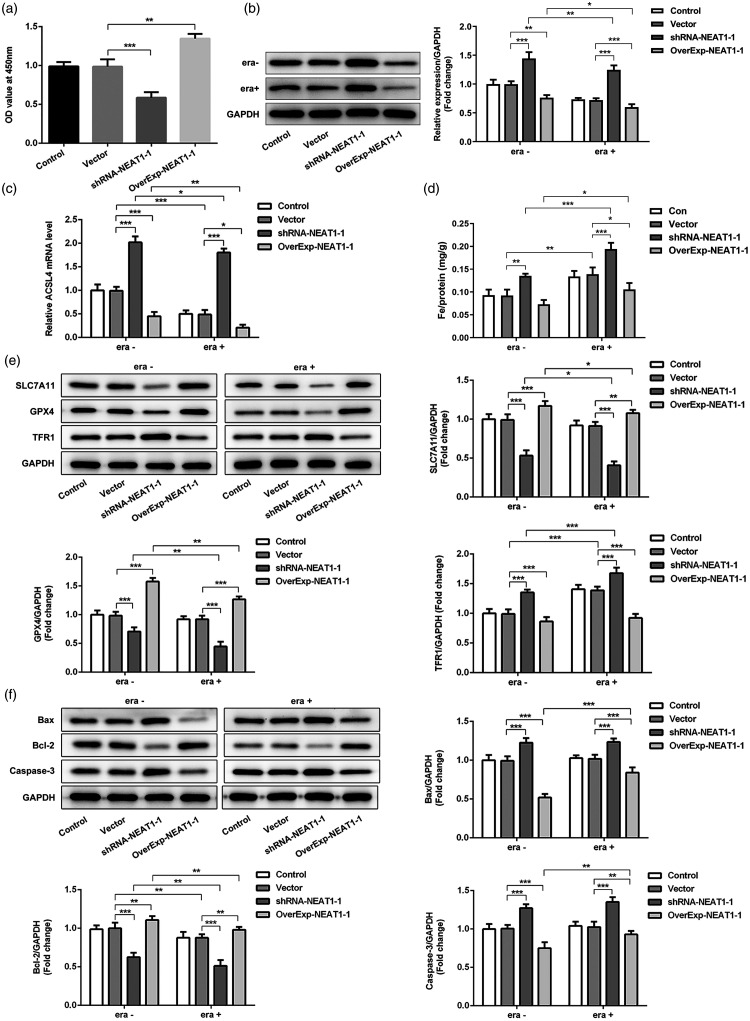
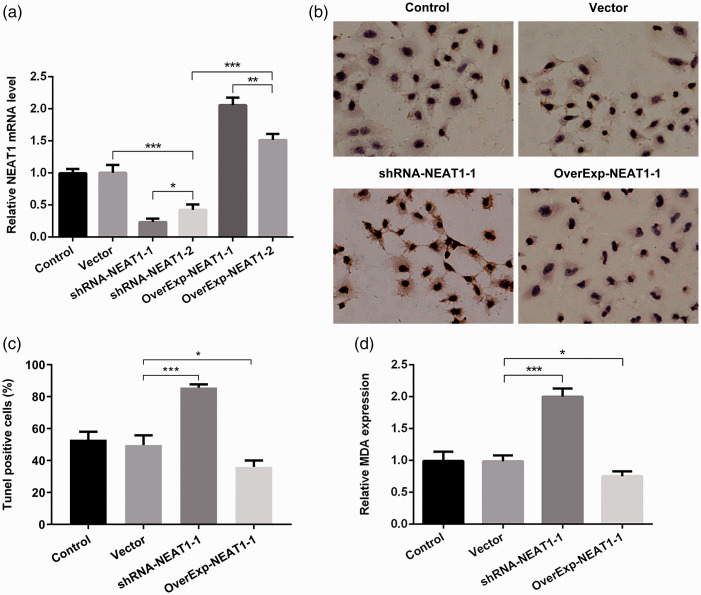
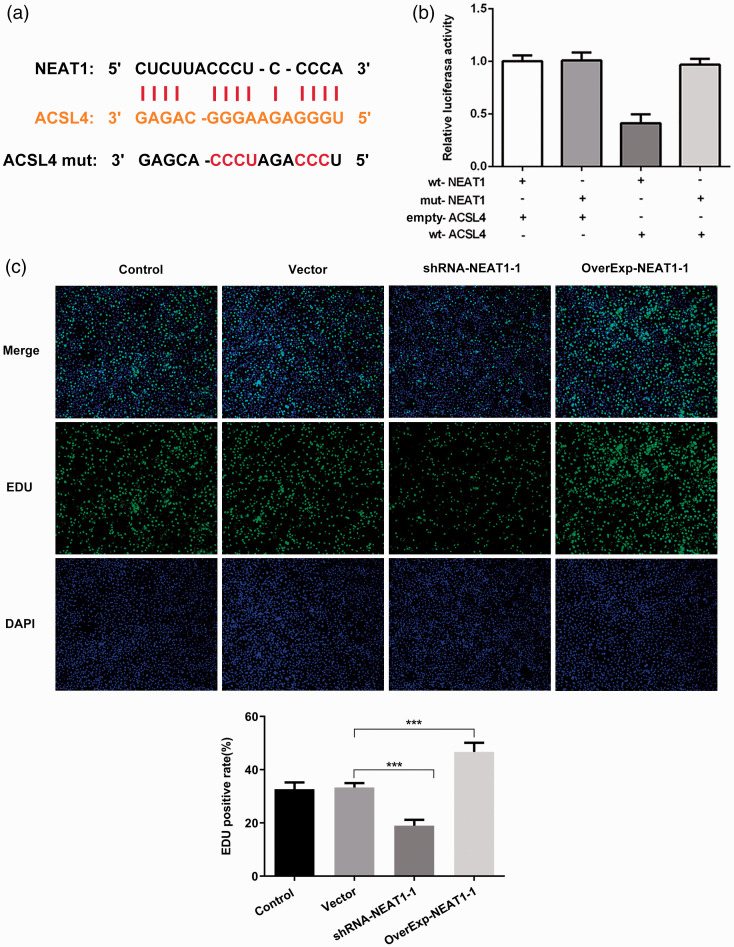
A dual-luciferase reporter assay was used to confirm a targeting relationship between long non-coding (lnc)RNA NEAT1 and ACSL4. Overexpression and silencing assays of NEAT1 function were used to determine its roles in cell death (by TUNEL staining) and lipid peroxidation (by malondialdehyde levels). Expression of ferroptosis-related proteins (SLCA11, GPX4, and TFR4) was evaluated by western blot in NSCLC cells treated or not with the ferroptosis inducer erastin.
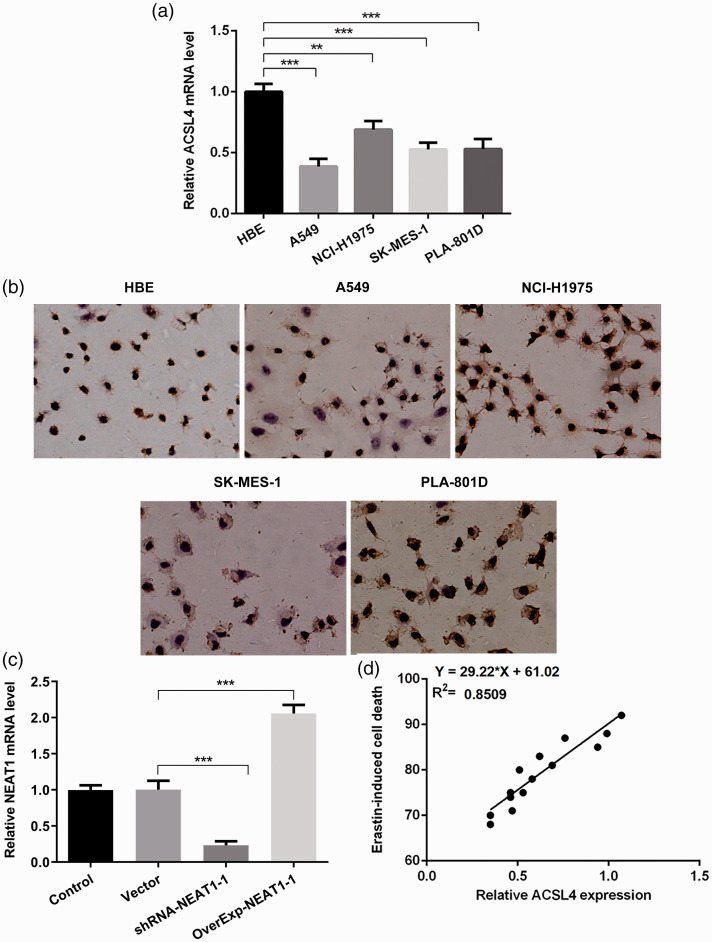
Erastin-induced cell death was positively correlated with ACSL4 level. NEAT1 regulated levels of ACSL4 and proteins related to the ferroptosis and classical apoptosis pathways. Levels of ACSL4, SLC7A11, and GPX4 were decreased more by NEAT1 silencing plus erastin than by erastin alone.
NEAT1 regulates ferroptosis and ferroptosis sensitivity, with the latter depending on ACSL4, suggesting that targeting NEAT1 or ACSL4 may be a viable therapeutic approach to the treatment of NSCLC.
铁死亡是由铁依赖性脂质过氧化物积累引起的,其敏感性可能受酰基辅酶A合成酶长链家族成员4(ACSL4)调控。非小细胞肺癌(NSCLC)可通过改变某些蛋白质的表达来抵抗氧化应激并降低肿瘤细胞对铁死亡的敏感性。NSCLC中铁死亡敏感性的相关机制尚未完全明确。
采用双荧光素酶报告基因检测法来证实长链非编码(lnc)RNA NEAT1与ACSL4之间的靶向关系。运用NEAT1功能的过表达和沉默检测来确定其在细胞死亡(通过TUNEL染色)和脂质过氧化(通过丙二醛水平)中的作用。在接受或未接受铁死亡诱导剂erastin处理的NSCLC细胞中,通过蛋白质免疫印迹法评估铁死亡相关蛋白(SLCA11、GPX4和TFR4)的表达。
Erastin诱导的细胞死亡与ACSL4水平呈正相关。NEAT1调节ACSL4以及与铁死亡和经典凋亡途径相关的蛋白质水平。与单独使用erastin相比,NEAT1沉默加erastin使ACSL4、SLC7A11和GPX4的水平降低得更多。
NEAT1调节铁死亡及其敏感性,后者依赖于ACSL4,这表明靶向NEAT1或ACSL4可能是治疗NSCLC的一种可行治疗方法。