Department of Molecular Laboratory Medicine, Graduate School of Medical Sciences, Kumamoto University, 1-1-1 Honjo, Chuo-ku, Kumamoto, 860-8556, Japan.
Department of Oral and Maxillofacial Surgery, Graduate School of Medical Sciences, Kumamoto University, Kumamoto, 860-8556, Japan.
Sci Rep. 2021 Mar 17;11(1):6150. doi: 10.1038/s41598-021-85743-z.
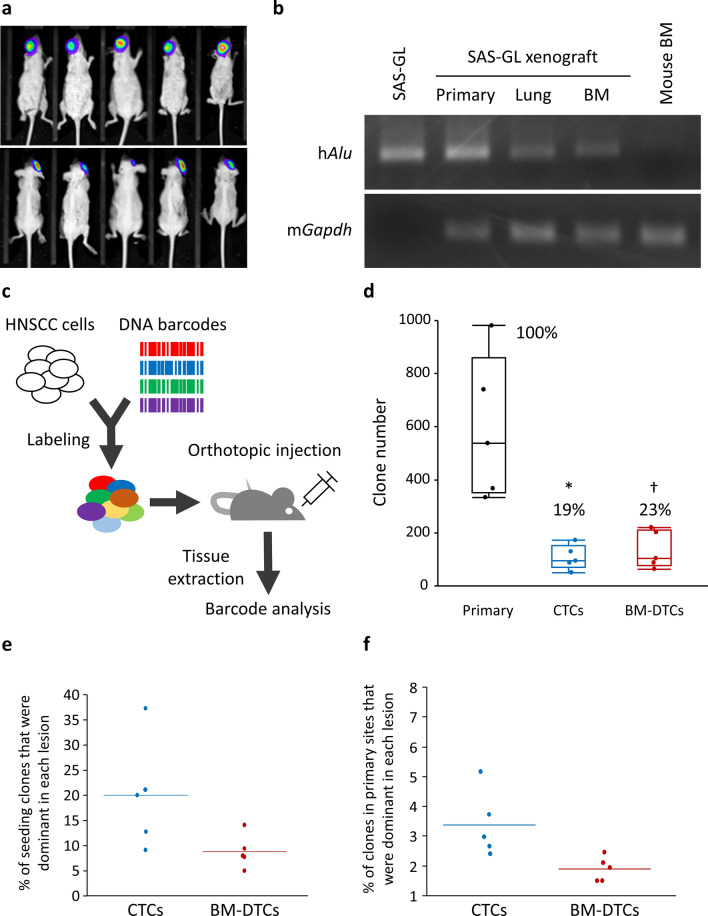
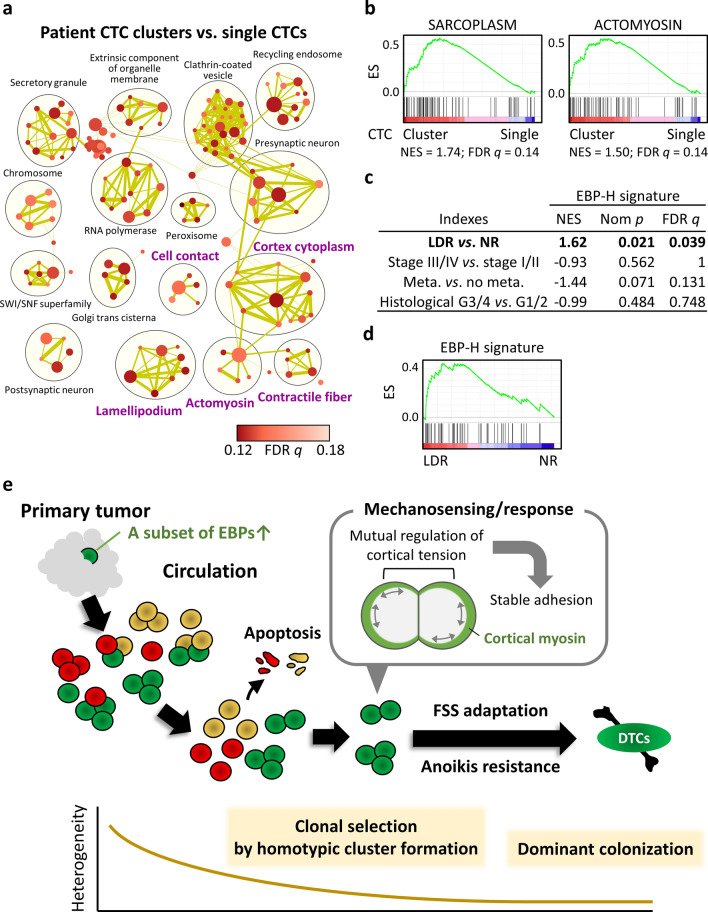
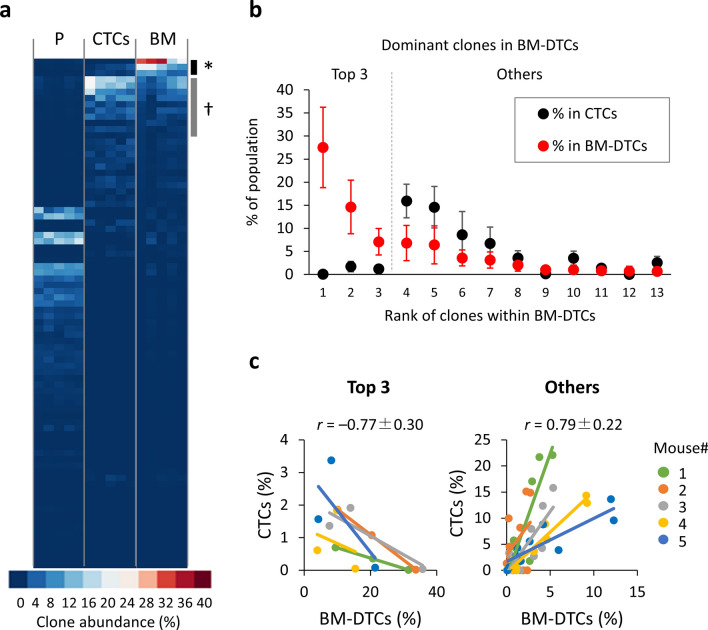
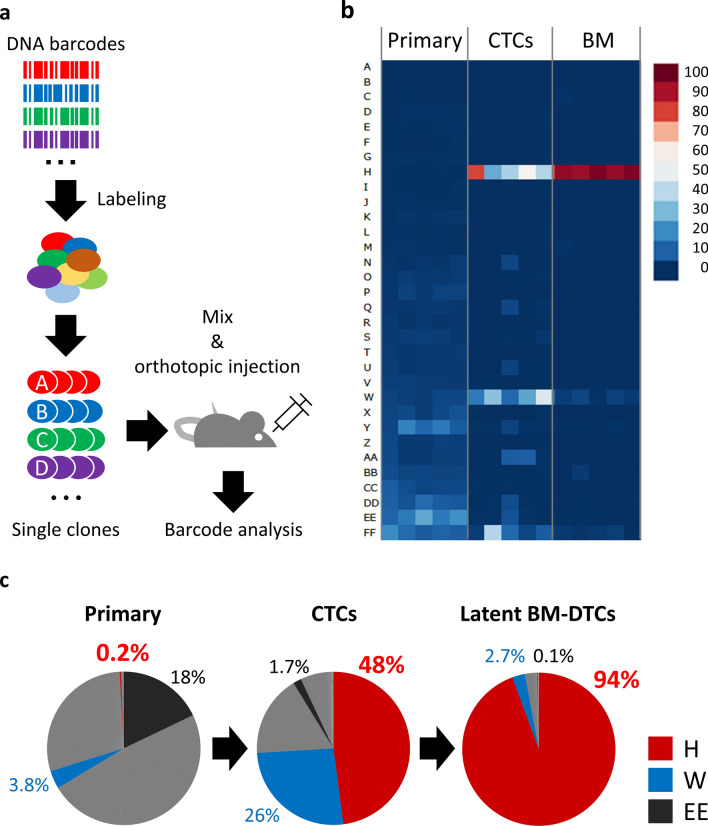
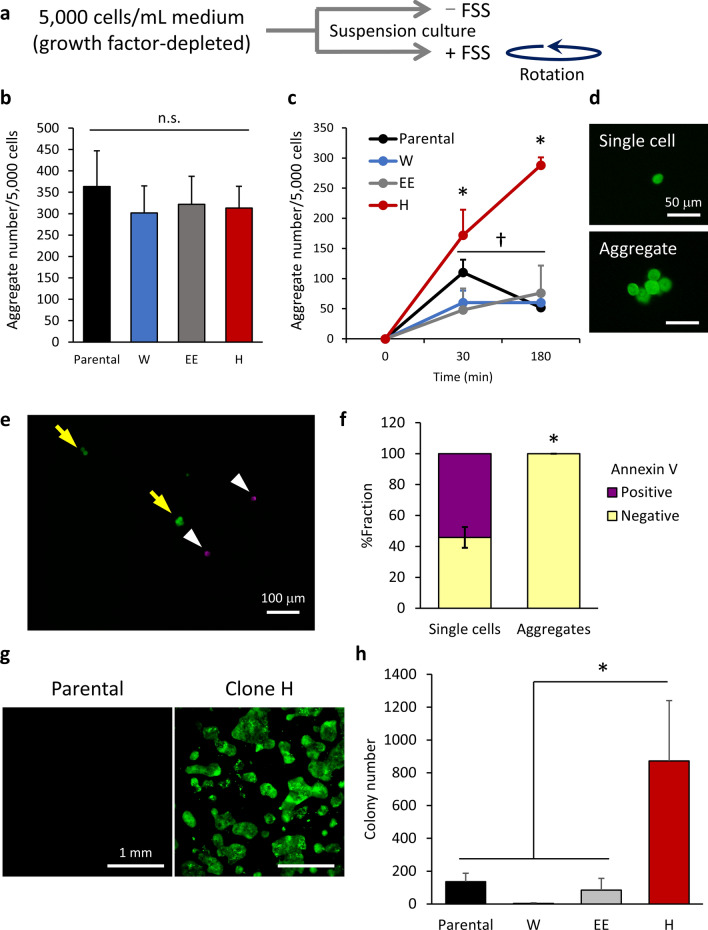
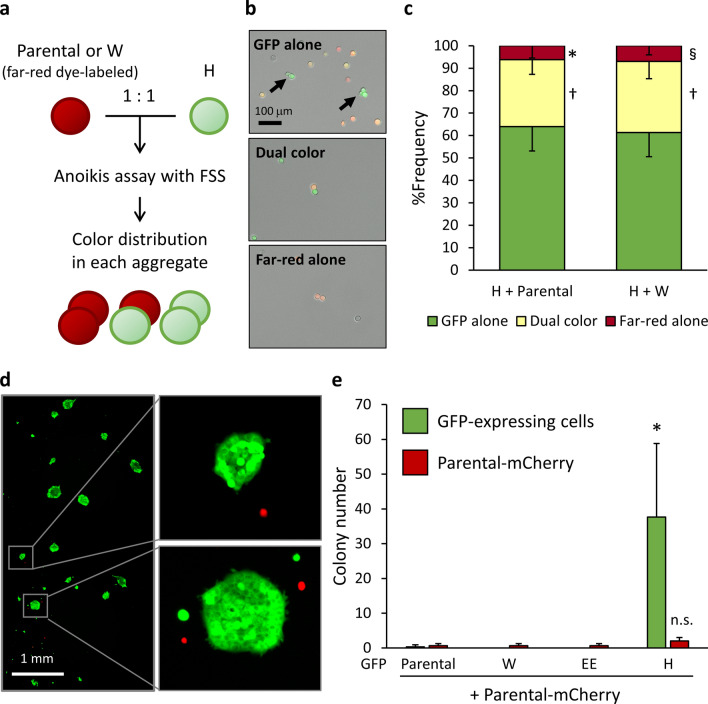
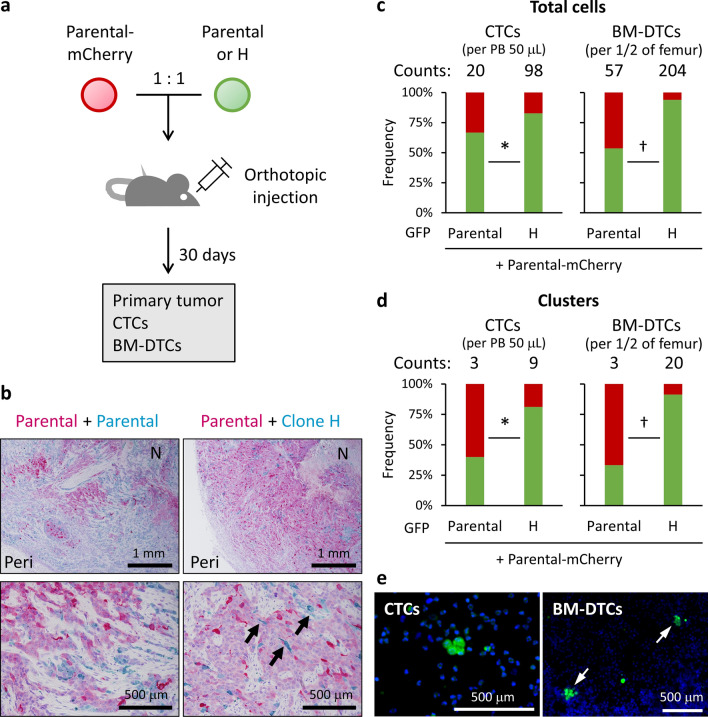
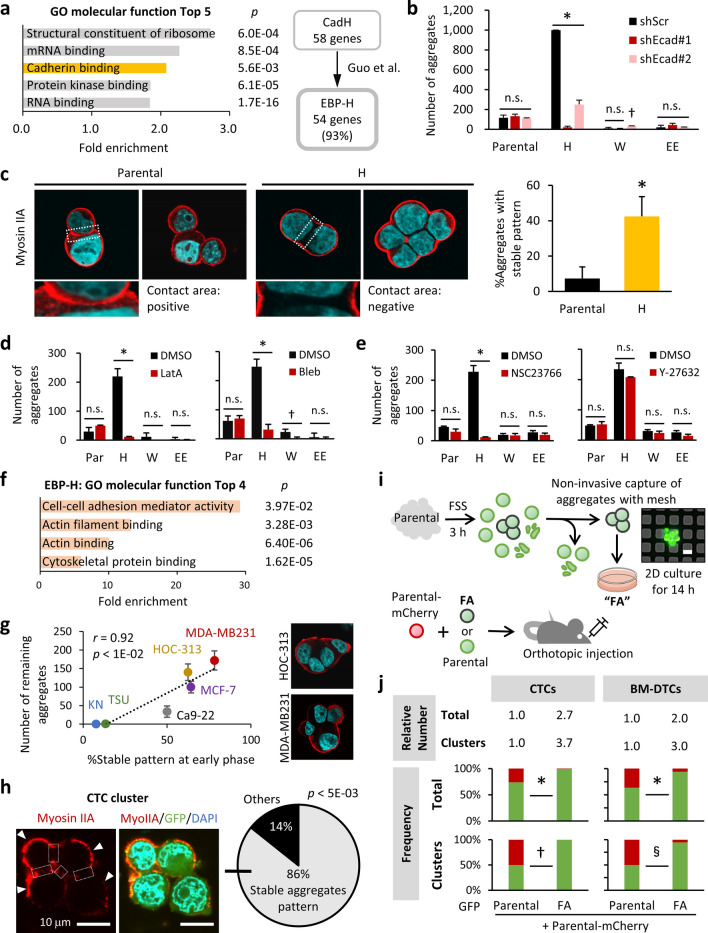
Once disseminated tumor cells (DTCs) arrive at a metastatic organ, they remain there, latent, and become seeds of metastasis. However, the clonal composition of DTCs in a latent state remains unclear. Here, we applied high-resolution DNA barcode tracking to a mouse model that recapitulated the metastatic dormancy of head and neck squamous cell carcinoma (HNSCC). We found that clones abundantly circulated peripheral blood dominated DTCs. Through analyses of multiple barcoded clonal lines, we identified specific subclonal population that preferentially generated homotypic circulating tumor cell (CTC) clusters and dominated DTCs. Despite no notable features under static conditions, this population significantly generated stable cell aggregates that were resistant to anoikis under fluid shear stress (FSS) conditions in an E-cadherin-dependent manner. Our data from various cancer cell lines indicated that the ability of aggregate-constituting cells to regulate cortical actin-myosin dynamics governed the aggregates' stability in FSS. The CTC cluster-originating cells were characterized by the expression of a subset of E-cadherin binding factors enriched with actin cytoskeleton regulators. Furthermore, this expression signature was associated with locoregional and metastatic recurrence in HNSCC patients. These results reveal a biological selection of tumor cells capable of generating FSS-adaptive CTC clusters, which leads to distant colonization.
一旦播散的肿瘤细胞 (DTCs) 到达转移器官,它们就会潜伏在那里,并成为转移的种子。然而,处于潜伏状态的 DTCs 的克隆组成仍不清楚。在这里,我们应用高分辨率 DNA 条码跟踪技术,对一种能够重现头颈部鳞状细胞癌 (HNSCC) 转移休眠的小鼠模型进行了研究。我们发现,大量循环于外周血中的克隆主导着 DTCs。通过对多个条码化克隆系的分析,我们确定了特定的亚克隆群体,这些群体优先产生同型循环肿瘤细胞 (CTC) 簇,并主导 DTCs。尽管在静态条件下没有明显特征,但这群细胞显著地产生了稳定的细胞聚集物,这些聚集物在流体剪切力 (FSS) 条件下以依赖 E-钙粘蛋白的方式抵抗失巢凋亡。我们从各种癌细胞系获得的数据表明,聚集形成细胞调节皮质肌动球蛋白动力学的能力控制了 FSS 中聚集物的稳定性。CTC 簇起源细胞的特征是表达一组富含肌动蛋白细胞骨架调节剂的 E-钙粘蛋白结合因子。此外,这种表达特征与 HNSCC 患者的局部区域和远处转移复发有关。这些结果揭示了一种能够产生适应 FSS 的 CTC 簇的肿瘤细胞的生物学选择,从而导致远处定植。