Eboshida Natsuki, Hamada Atsuko, Higaki Mirai, Obayashi Fumitaka, Ito Nanako, Yamasaki Sachiko, Tani Ryouji, Shintani Tomoaki, Koizumi Koichi, Yanamoto Souichi
Department of Oral Oncology, Graduate School of Biomedical and Health Sciences, Hiroshima University, Hiroshima, Japan.
Center of Oral Clinical Examination, Hiroshima University Hospital, Hiroshima, Japan.
PLoS One. 2024 Dec 27;19(12):e0309178. doi: 10.1371/journal.pone.0309178. eCollection 2024.
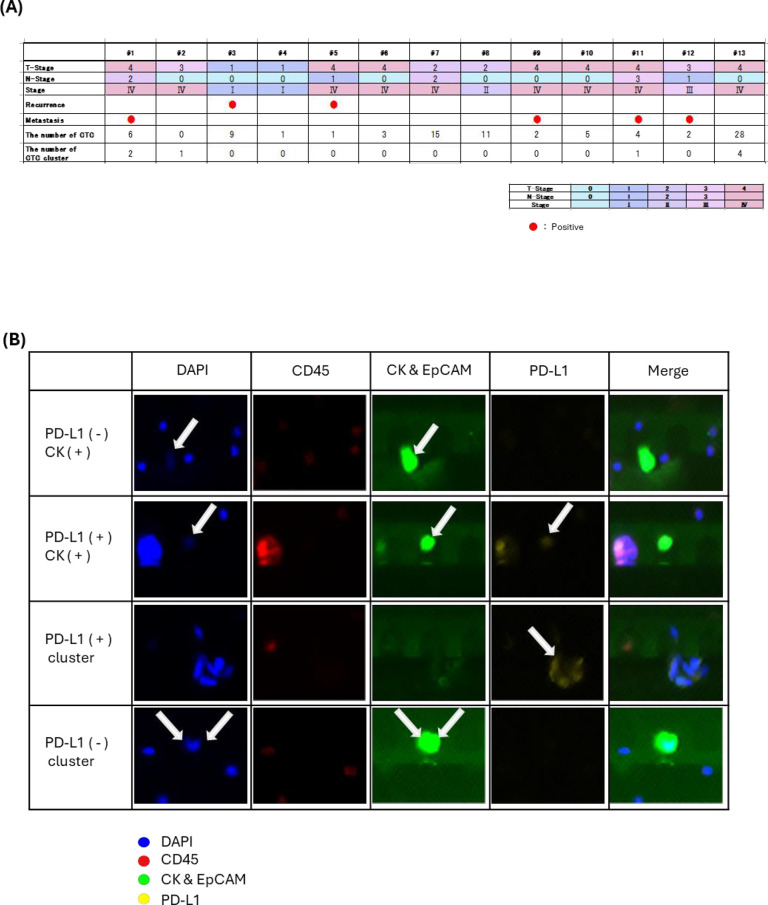
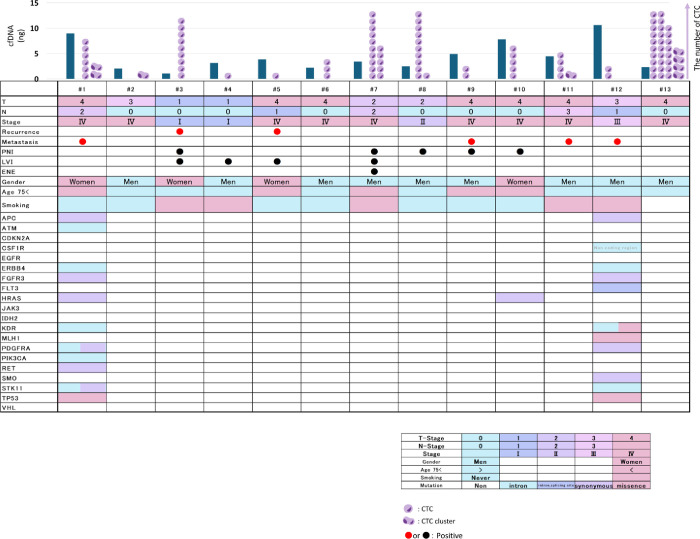
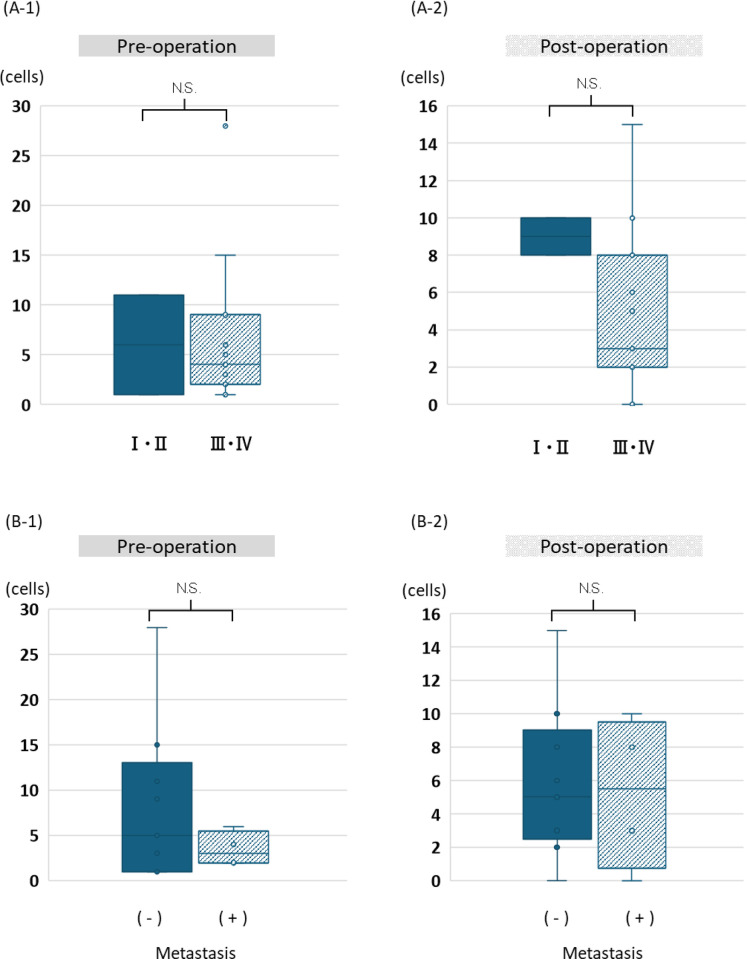
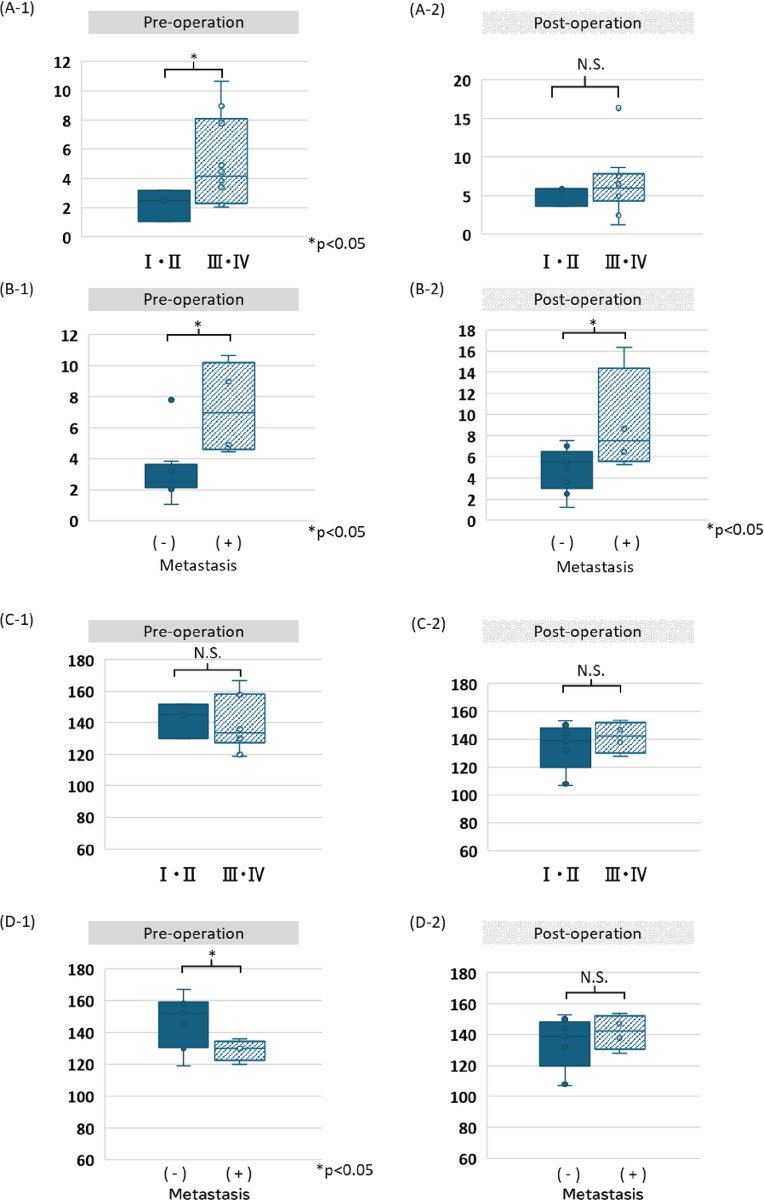
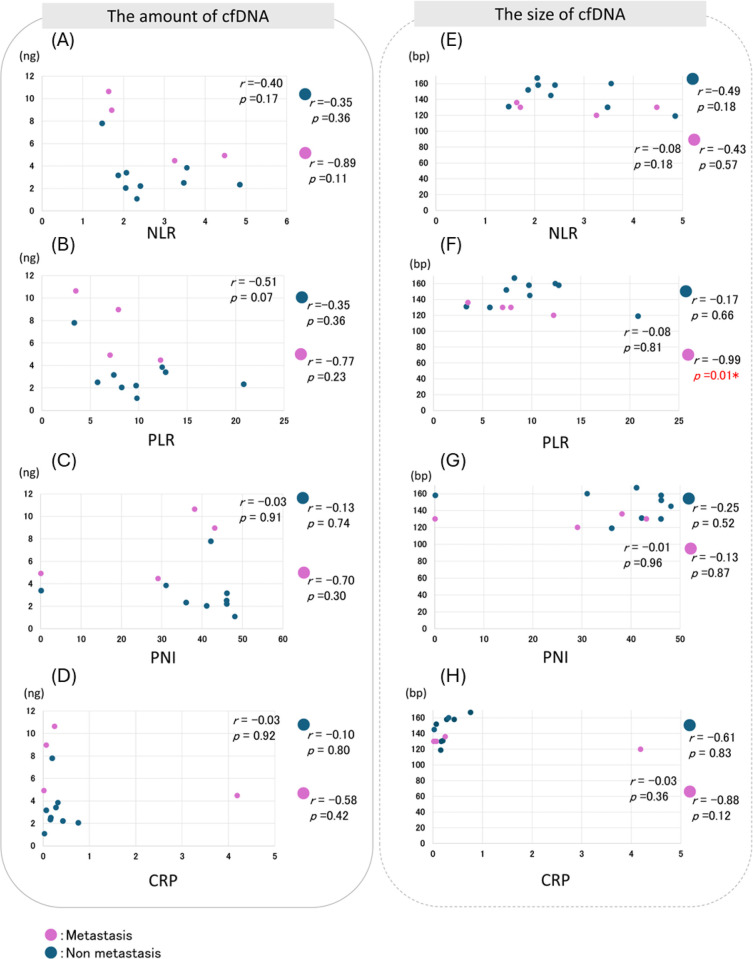
Metastasis in patients with oral squamous cell carcinoma has been associated with a poor prognosis. However, sensitive and reliable tests for monitoring their occurrence are unavailable, with the exception of PET-CT. Circulating tumor cells and cell-free DNA have emerged as promising biomarkers for determining treatment efficacy and as prognostic predictors in solid tumors such as breast cancer and colorectal cancer. Hence, this study aimed to determine the potential role of liquid biopsy, circulating tumor cells, and cell-free DNA as biomarkers of oral squamous cell carcinoma. Thirteen patients with primary oral squamous cell carcinoma who visited our hospital between 2022 and 2023 were recruited, and plasma samples were collected from each patient preoperatively and postoperatively. We examined the relationship between the prognosis, the number of circulating tumor cells per four milliliters of peripheral blood, and the amount of cell-free DNA per milliliter of serum or the gene mutation in cell-free DNA. We observed no correlation between the number of preoperative circulating tumor cells and metastatic events. However, the number of circulating tumor cell clusters or the amount of preoperative cell-free DNA in metastatic cases was higher than that in non-metastatic cases. In oral squamous cell carcinoma, circulating tumor cell clusters or cell-free DNA levels may help inform management decisions regarding metastasis. However, further studies are required to provide a possible window for therapeutic interventions.
口腔鳞状细胞癌患者发生转移与预后不良相关。然而,除正电子发射断层扫描-计算机断层扫描(PET-CT)外,尚无用于监测转移发生的灵敏且可靠的检测方法。循环肿瘤细胞和游离DNA已成为用于确定实体瘤(如乳腺癌和结直肠癌)治疗效果及预后预测的有前景的生物标志物。因此,本研究旨在确定液体活检、循环肿瘤细胞和游离DNA作为口腔鳞状细胞癌生物标志物的潜在作用。招募了2022年至2023年间来我院就诊的13例原发性口腔鳞状细胞癌患者,并在术前和术后采集每位患者的血浆样本。我们研究了预后、每四毫升外周血中循环肿瘤细胞数量、每毫升血清中游离DNA量或游离DNA中的基因突变之间的关系。我们观察到术前循环肿瘤细胞数量与转移事件之间无相关性。然而,转移病例中循环肿瘤细胞簇数量或术前游离DNA量高于非转移病例。在口腔鳞状细胞癌中,循环肿瘤细胞簇或游离DNA水平可能有助于为转移相关的管理决策提供依据。然而,需要进一步研究以提供可能的治疗干预窗口。