Broce Iris J, Castruita Patricia A, Yokoyama Jennifer S
Memory and Aging Center, Department of Neurology, Weill Institute for Neurosciences, University of California, San Francisco, San Francisco, CA, United States.
Department of Family Medicine and Public Health, University of California, San Diego, San Diego, CA, United States.
Front Neurosci. 2021 Mar 1;15:639078. doi: 10.3389/fnins.2021.639078. eCollection 2021.
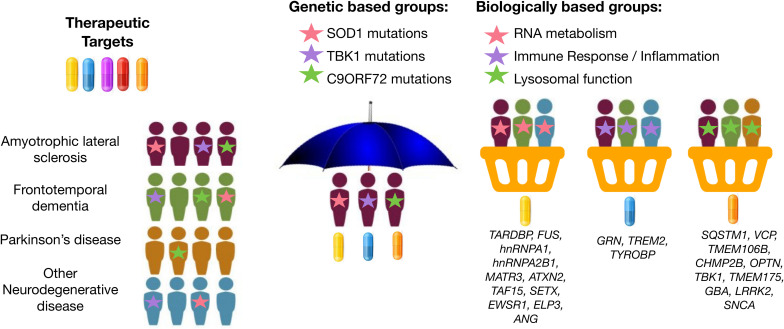
Amyotrophic lateral sclerosis (ALS) and frontotemporal dementia (FTD) are two devastating and intertwined neurodegenerative diseases. Historically, ALS and FTD were considered distinct disorders given differences in presenting clinical symptoms, disease duration, and predicted risk of developing each disease. However, research over recent years has highlighted the considerable clinical, pathological, and genetic overlap of ALS and FTD, and these two syndromes are now thought to represent different manifestations of the same neuropathological disease spectrum. In this review, we discuss the need to shift our focus from studying ALS and FTD in isolation to identifying the biological mechanisms that drive these diseases-both common and distinct-to improve treatment discovery and therapeutic development success. We also emphasize the importance of genomic data to facilitate a "precision medicine" approach for treating ALS and FTD.
肌萎缩侧索硬化症(ALS)和额颞叶痴呆(FTD)是两种毁灭性且相互关联的神经退行性疾病。从历史上看,鉴于ALS和FTD在临床表现、疾病持续时间以及每种疾病的预测发病风险方面存在差异,它们被认为是不同的病症。然而近年来的研究凸显了ALS和FTD在临床、病理及遗传方面存在相当大的重叠,现在认为这两种综合征代表了同一神经病理疾病谱的不同表现形式。在本综述中,我们讨论了有必要将研究重点从孤立地研究ALS和FTD,转向确定驱动这些疾病的共同和独特的生物学机制,以提高治疗方法的发现及治疗研发的成功率。我们还强调了基因组数据对于促进采用“精准医学”方法治疗ALS和FTD的重要性。