Su Yushen, Zeng Zhirui, Rong Dongyun, Yang Yushi, Wu Bei, Cao Yu
Clinical Medical School, Guizhou Medical University, Guiyang, Guizhou 550025, P.R. China.
School of Basic Medicine, Guizhou Medical University, Guiyang, Guizhou 550025, P.R. China.
Oncol Lett. 2021 Apr;21(4):289. doi: 10.3892/ol.2021.12550. Epub 2021 Feb 12.
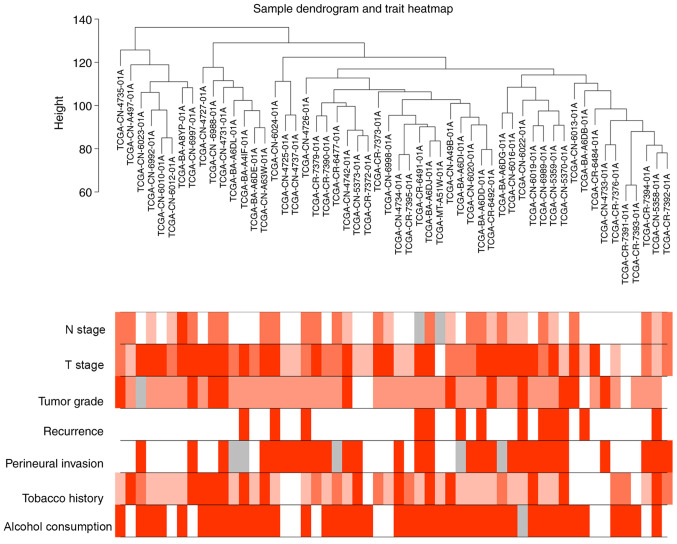
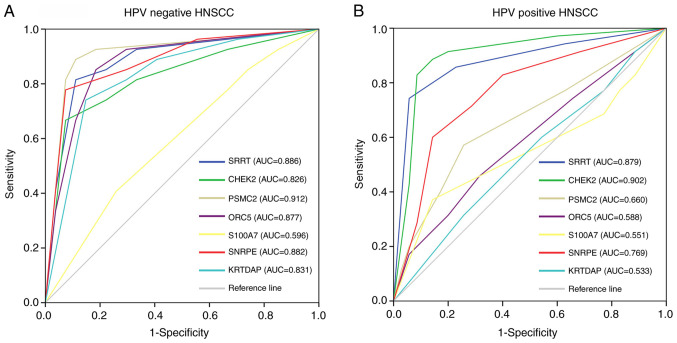
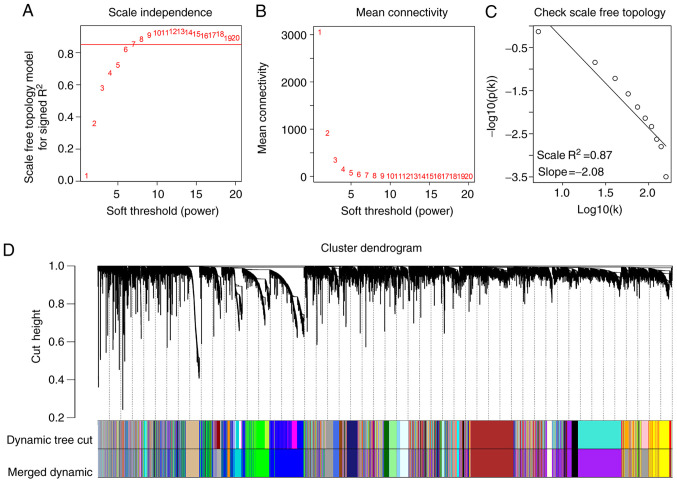
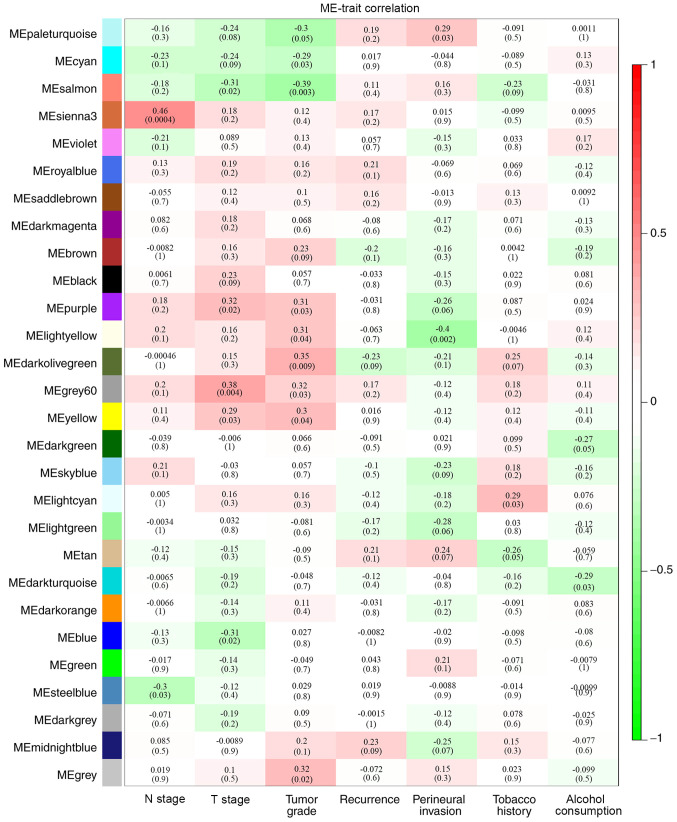
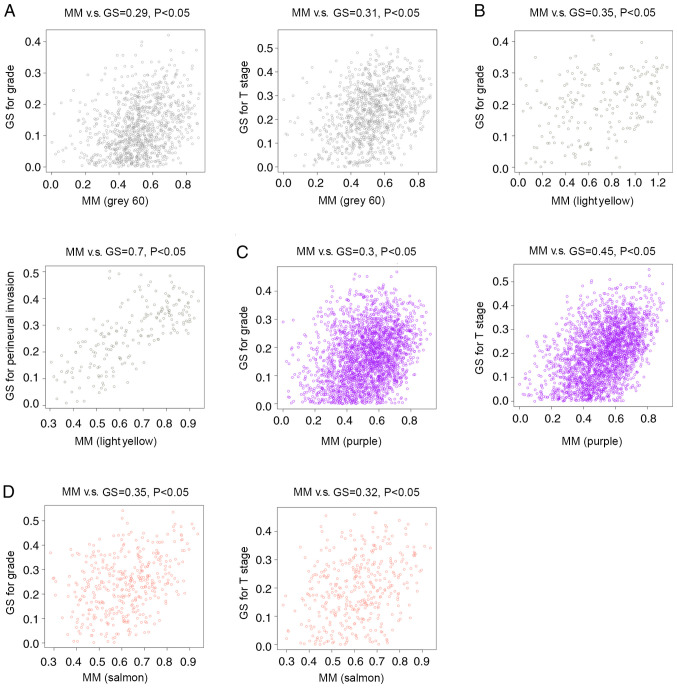
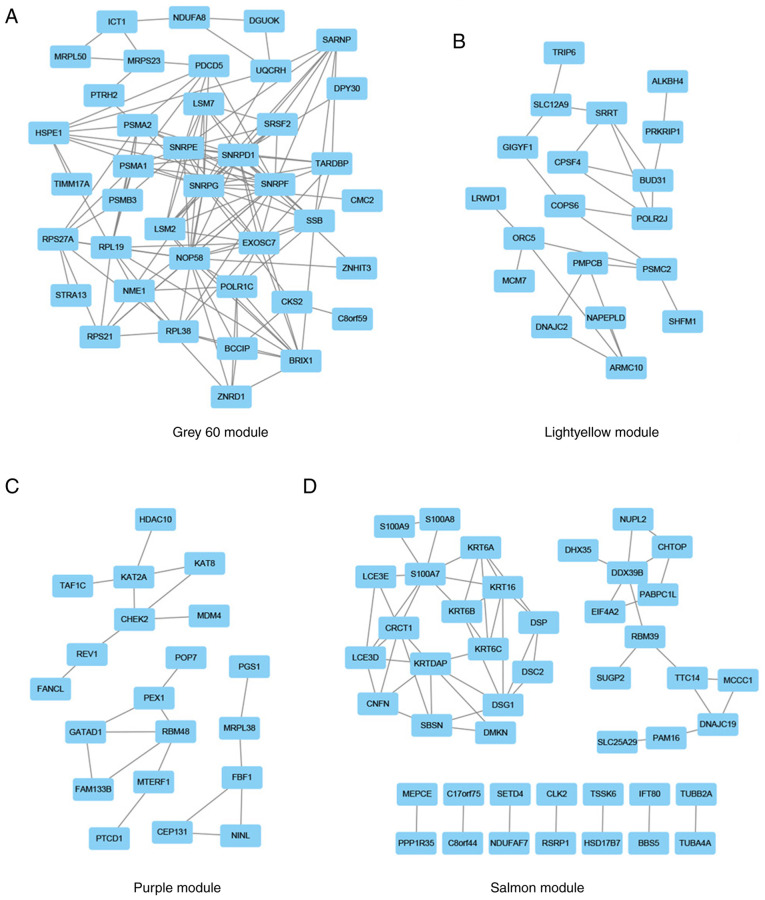
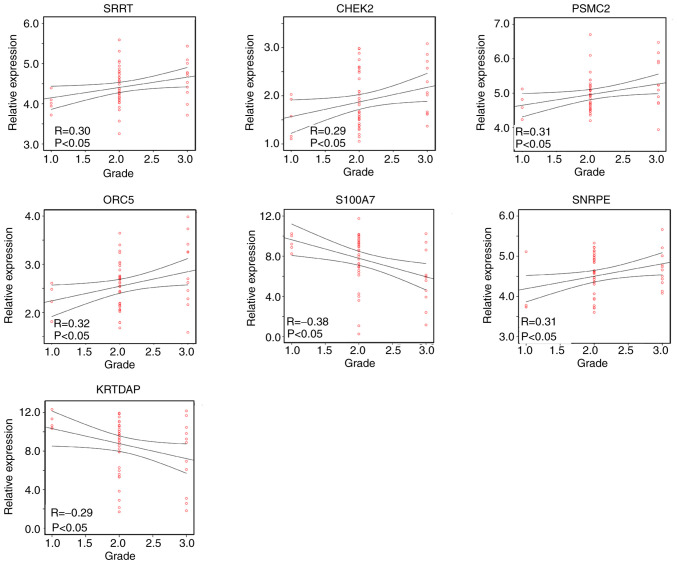
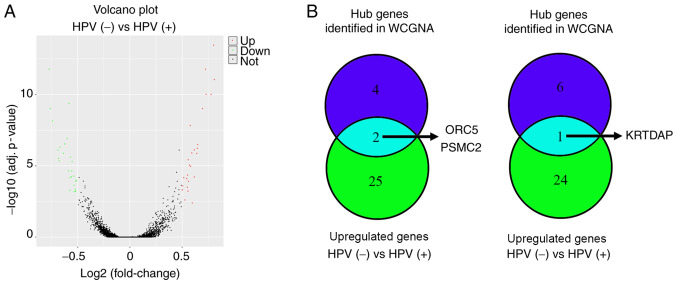
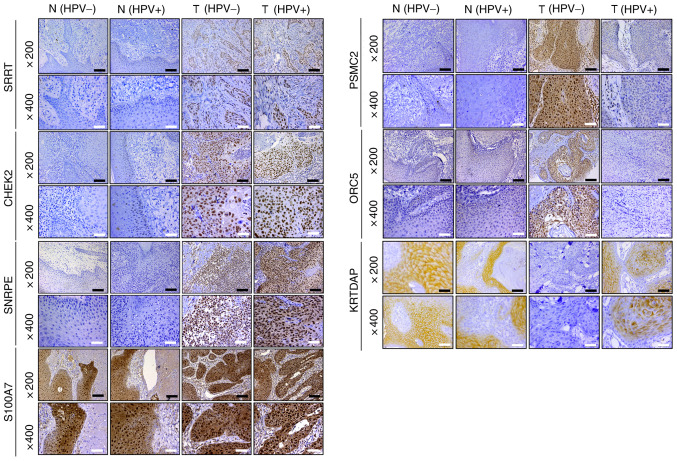
The prognosis of patients with human papillomavirus (HPV)-negative head and neck squamous cell carcinoma (HNSCC) is poorer than those with HPV-positive HNSCC. The present study aimed to identify novel and specific biomarkers of HPV-negative HNSCC using bioinformatics analysis and associated experiments. The gene expression profiles of HPV-negative HNSCC tissues and corresponding clinical data were downloaded from The Cancer Genome Atlas database and used in a weighted gene co-expression network analysis. Genes in clinically significant co-expression modules were used to construct a protein-protein interaction (PPI) network. The genes demonstrating a high degree score in the PPI network and a high correlation with tumor grade were considered hub genes. The diagnostic value of the hub genes associated with HPV-negative and HPV-positive HNSCC was analyzed using differential expression gene (DEG) analysis, immunohistochemical (IHC) staining and a receiver operating characteristic (ROC) curve analysis. Seven genes [Serrate RNA effector molecule (SRRT), checkpoint kinase 2 (CHEK2), small nuclear ribonucleoprotein polypeptide E (SNRPE), proteasome 26S subunit ATPase 2 (PSMC2), origin recognition complex subunit 5 (ORC5), S100 calcium binding protein A7 and keratinocyte differentiation associated protein (KRTDAP)] were demonstrated to be hub genes in clinically significant co-expression modules. DEG, IHC and ROC curve analyses revealed that SRRT, CHEK2 and SNRPE were significantly upregulated in HPV-negative and HPV-positive HNSCC tissues compared with in adjacent tissues, and these genes demonstrated a high diagnostic value for distinguishing HNSCC tissues. However, PSMC2, ORC5 and KRTDAP were the only differentially expressed genes identified in HPV-negative HNSCC tissues, and these genes demonstrated a high diagnostic value for HPV-negative HNSCC. PSMC2, ORC5 and KRTDAP may therefore serve as novel and specific biomarkers for HPV-negative HNSCC, potentially improving the diagnosis and treatment of patients with HPV-negative HNSCC.
人乳头瘤病毒(HPV)阴性的头颈部鳞状细胞癌(HNSCC)患者的预后比HPV阳性的HNSCC患者更差。本研究旨在通过生物信息学分析和相关实验,鉴定HPV阴性HNSCC的新型特异性生物标志物。从癌症基因组图谱数据库下载HPV阴性HNSCC组织的基因表达谱和相应的临床数据,并用于加权基因共表达网络分析。具有临床意义的共表达模块中的基因用于构建蛋白质-蛋白质相互作用(PPI)网络。在PPI网络中显示高分且与肿瘤分级高度相关的基因被视为枢纽基因。使用差异表达基因(DEG)分析、免疫组织化学(IHC)染色和受试者工作特征(ROC)曲线分析,分析与HPV阴性和HPV阳性HNSCC相关的枢纽基因的诊断价值。七个基因[锯齿状RNA效应分子(SRRT)、检查点激酶2(CHEK2)、小核核糖核蛋白多肽E(SNRPE)、蛋白酶体26S亚基ATP酶2(PSMC2)、复制起点识别复合体亚基5(ORC5)、S100钙结合蛋白A7和角质形成细胞分化相关蛋白(KRTDAP)]被证明是具有临床意义的共表达模块中的枢纽基因。DEG、IHC和ROC曲线分析显示,与相邻组织相比,SRRT、CHEK2和SNRPE在HPV阴性和HPV阳性HNSCC组织中显著上调,并且这些基因在区分HNSCC组织方面具有较高的诊断价值。然而,PSMC2、ORC5和KRTDAP是在HPV阴性HNSCC组织中鉴定出的仅有的差异表达基因,并且这些基因对HPV阴性HNSCC具有较高诊断价值。因此,PSMC2、ORC5和KRTDAP可能作为HPV阴性HNSCC的新型特异性生物标志物,有可能改善HPV阴性HNSCC患者的诊断和治疗。