Department of Radiation Oncology, Affiliated Cancer Hospital & Institute of Guangzhou Medical University, State Key Laboratory of Respiratory Diseases, Guangzhou Institute of Respiratory Disease, Guangzhou, 510095, P. R. China.
The First Tumor Department, Maoming People's Hospital, Maoming, 525000, P. R. China.
BMC Cancer. 2020 Mar 30;20(1):266. doi: 10.1186/s12885-020-06728-1.
Lymphovascular invasion (LOI), a key pathological feature of head and neck squamous cell carcinoma (HNSCC), is predictive of poor survival; however, the associated clinical characteristics and underlying molecular mechanisms remain largely unknown.
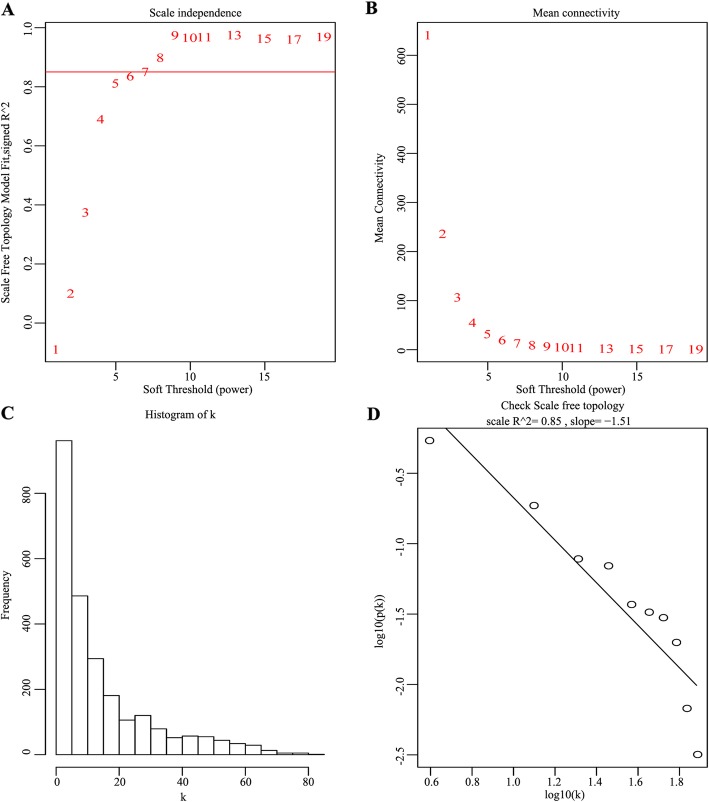
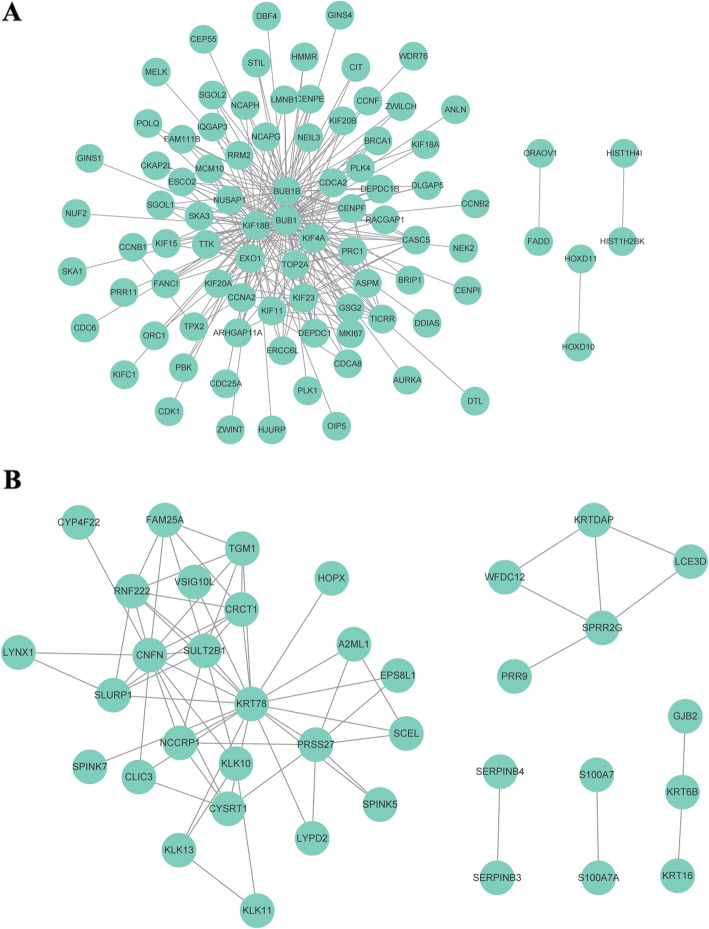
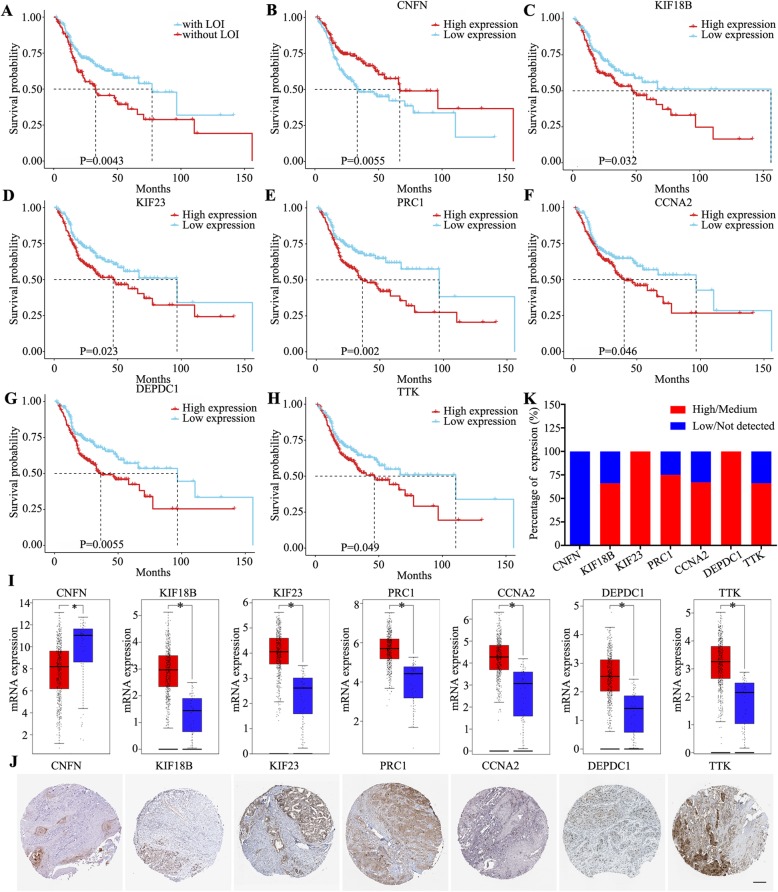
We performed weighted gene co-expression network analysis to construct gene co-expression networks and investigate the relationship between key modules and the LOI clinical phenotype. Functional enrichment and KEGG pathway analyses were performed with differentially expressed genes. A protein-protein interaction network was constructed using Cytoscape, and module analysis was performed using MCODE. Prognostic value, expression analysis, and survival analysis were conducted using hub genes; GEPIA and the Human Protein Atlas database were used to determine the mRNA and protein expression levels of hub genes, respectively. Multivariable Cox regression analysis was used to establish a prognostic risk formula and the areas under the receiver operating characteristic curve (AUCs) were used to evaluate prediction efficiency. Finally, potential small molecular agents that could target LOI were identified with DrugBank.
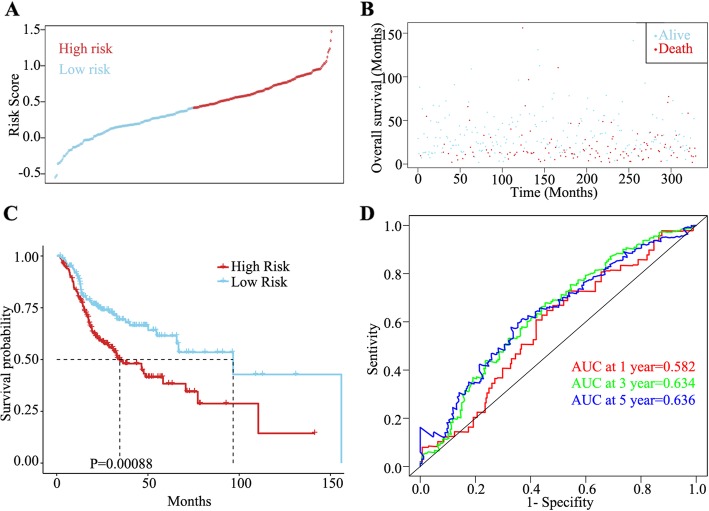
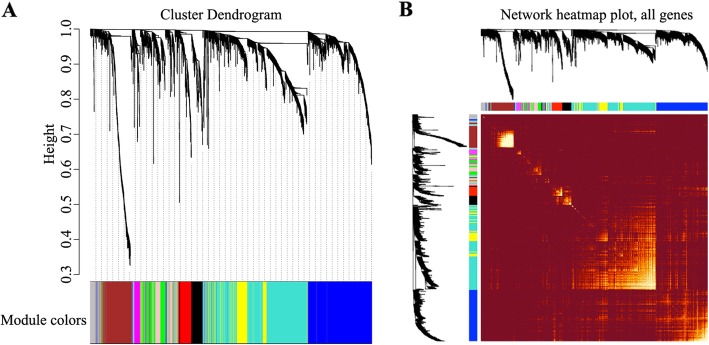
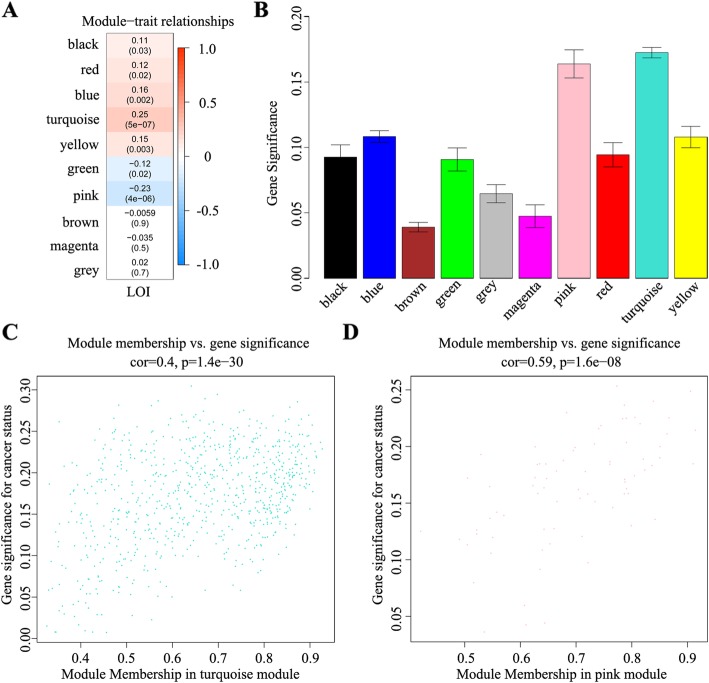
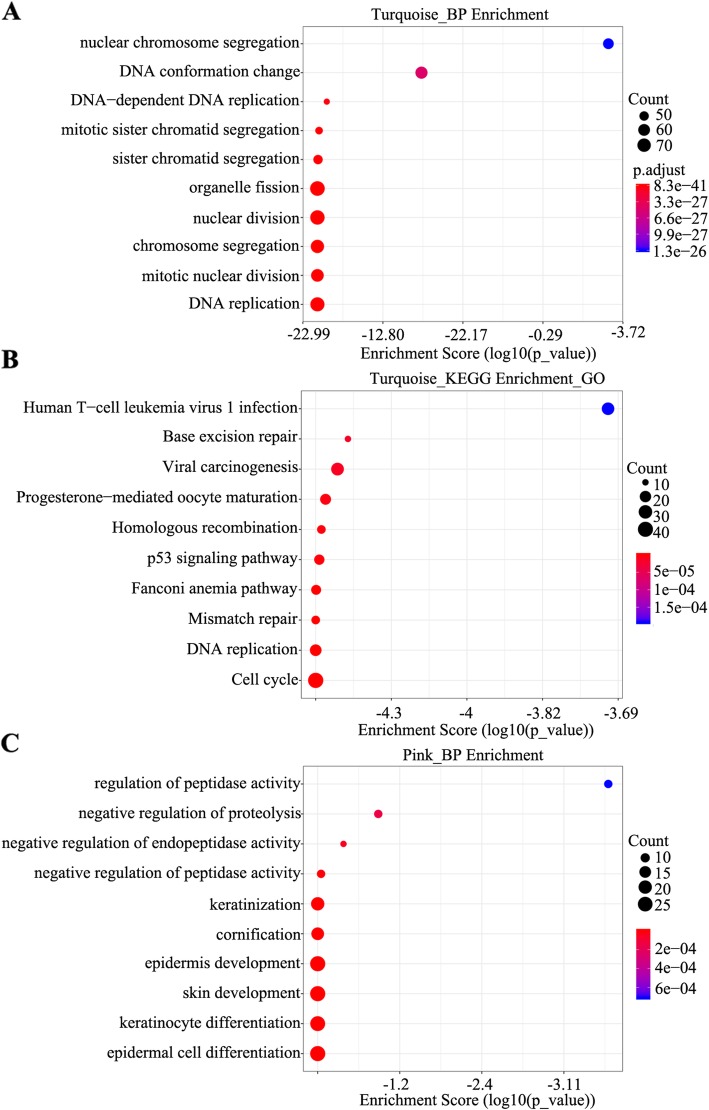
Ten co-expression modules in two key modules (turquoise and pink) associated with LOI were identified. Functional enrichment and KEGG pathway analysis revealed that turquoise and pink modules played significant roles in HNSCC progression. Seven hub genes (CNFN, KIF18B, KIF23, PRC1, CCNA2, DEPDC1, and TTK) in the two modules were identified and validated by survival and expression analyses, and the following prognostic risk formula was established: [risk score = EXP * 0.32636 + EXP * (- 0.07544)]. The low-risk group showed better overall survival than the high-risk group (P < 0.0001), and the AUCs for 1-, 3-, and 5-year overall survival were 0.582, 0.634, and 0.636, respectively. Eight small molecular agents, namely XL844, AT7519, AT9283, alvocidib, nelarabine, benzamidine, L-glutamine, and zinc, were identified as novel candidates for controlling LOI in HNSCC (P < 0.05).
The two-mRNA signature (CNFN and DEPDC1) could serve as an independent biomarker to predict LOI risk and provide new insights into the mechanisms underlying LOI in HNSCC. In addition, the small molecular agents appear promising for LOI treatment.
脉管侵犯(LOI)是头颈部鳞状细胞癌(HNSCC)的关键病理特征,与不良预后相关;然而,其相关的临床特征和潜在的分子机制在很大程度上仍不清楚。
我们进行了加权基因共表达网络分析,构建基因共表达网络,并研究关键模块与 LOI 临床表型之间的关系。采用差异表达基因进行功能富集和 KEGG 通路分析。使用 Cytoscape 构建蛋白质-蛋白质相互作用网络,并使用 MCODE 进行模块分析。使用 hub 基因进行预后价值、表达分析和生存分析;使用 GEPIA 和人类蛋白质图谱数据库分别确定 hub 基因的 mRNA 和蛋白质表达水平。采用多变量 Cox 回归分析建立预后风险公式,并采用接收者操作特征曲线下面积(AUC)评估预测效率。最后,使用 DrugBank 鉴定针对 LOI 的潜在小分子药物。
在与 LOI 相关的两个关键模块(绿松石色和粉红色)中鉴定出十个共表达模块。功能富集和 KEGG 通路分析表明,绿松石色和粉红色模块在 HNSCC 进展中发挥重要作用。在两个模块中确定了七个 hub 基因(CNFN、KIF18B、KIF23、PRC1、CCNA2、DEPDC1 和 TTK),并通过生存和表达分析进行了验证,建立了以下预后风险公式:[风险评分=EXP0.32636+EXP(-0.07544)]。低风险组的总生存率明显优于高风险组(P<0.0001),1、3 和 5 年总生存率的 AUC 分别为 0.582、0.634 和 0.636。鉴定出八种小分子药物,即 XL844、AT7519、AT9283、alvocidib、nelarabine、苯甲脒、L-谷氨酰胺和锌,它们可能是控制 HNSCC 中 LOI 的新型候选药物(P<0.05)。
该两基因特征(CNFN 和 DEPDC1)可作为预测 LOI 风险的独立生物标志物,并为 LOI 在 HNSCC 中的机制提供新的见解。此外,小分子药物似乎有望用于 LOI 治疗。