Corrado Iolanda, Cascelli Nicoletta, Ntasi Georgia, Birolo Leila, Sannia Giovanni, Pezzella Cinzia
Department of Chemical Sciences, University of Naples Federico II, Complesso Universitario di Monte Sant'Angelo, Naples, Italy.
Department of Agricultural Sciences, University of Naples Federico II, Naples, Italy.
Front Bioeng Biotechnol. 2021 Mar 1;9:616908. doi: 10.3389/fbioe.2021.616908. eCollection 2021.
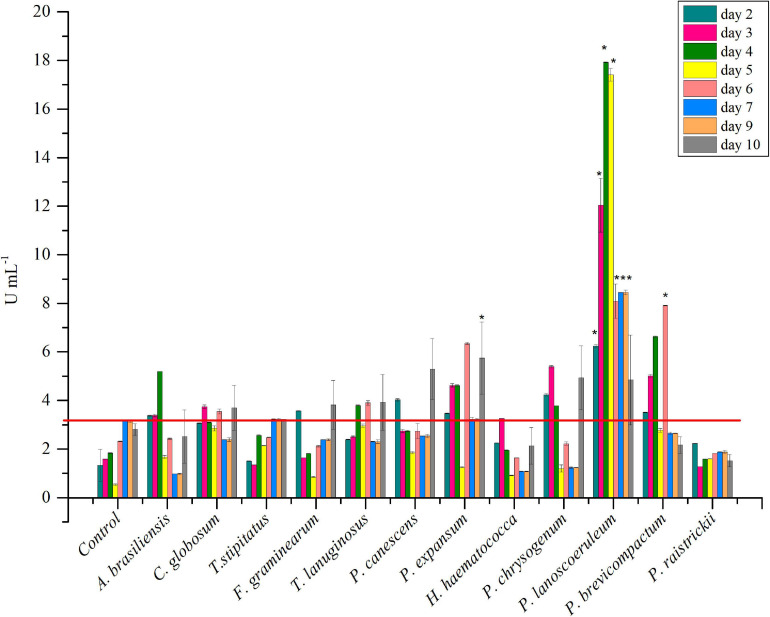
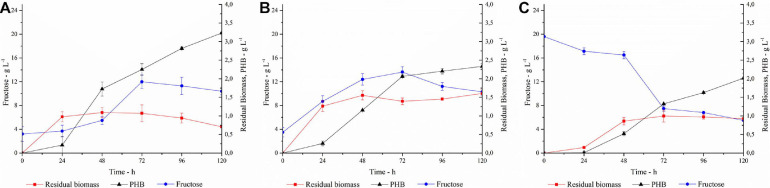
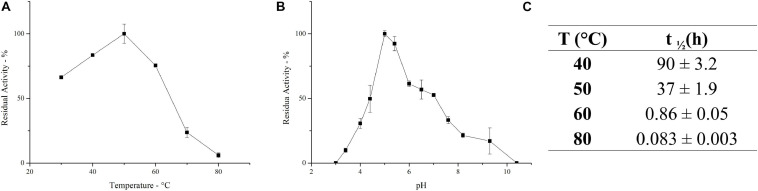
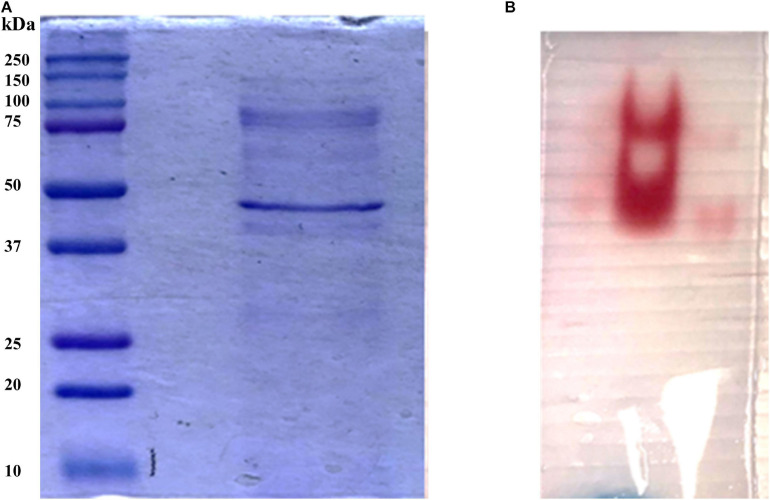
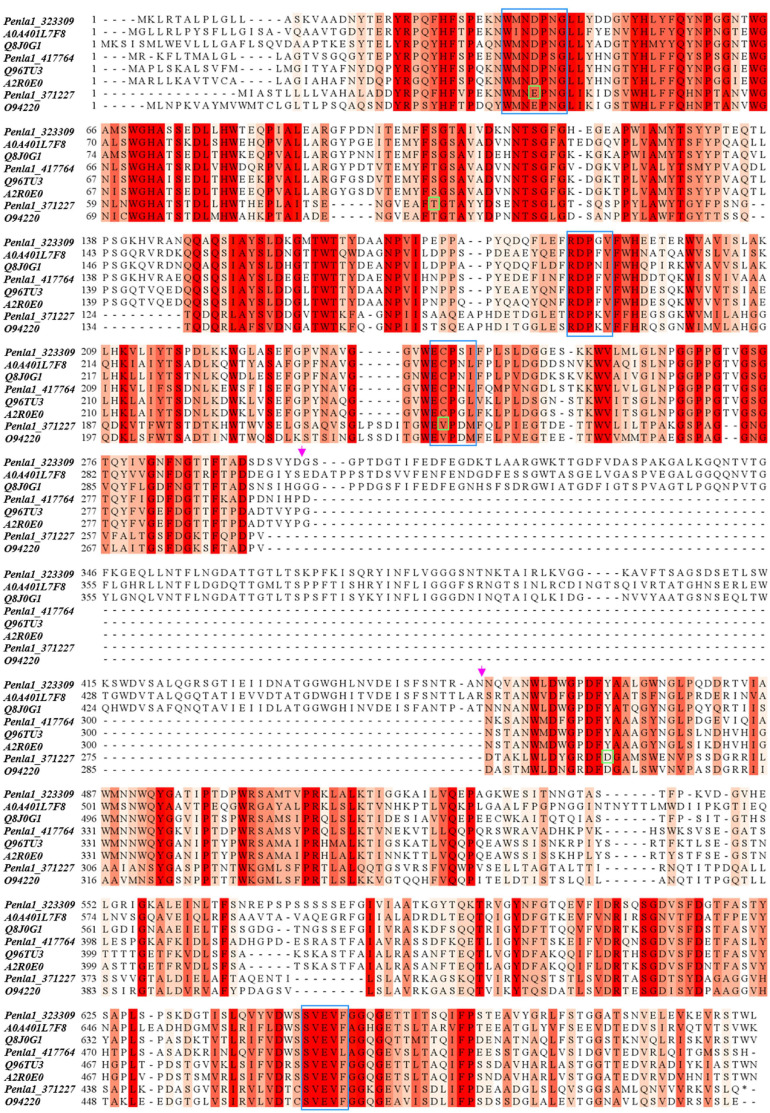
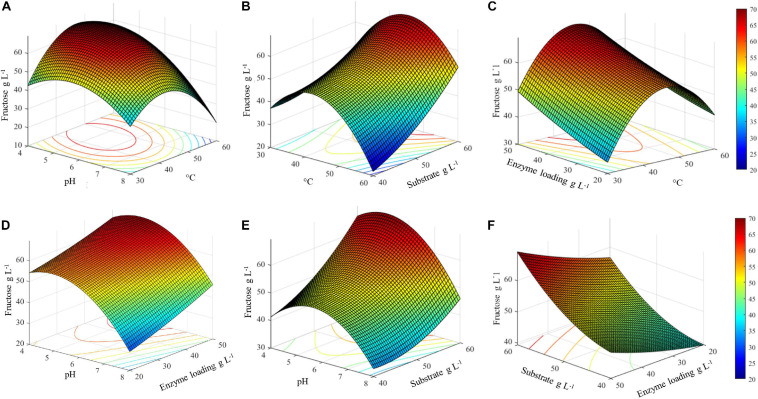
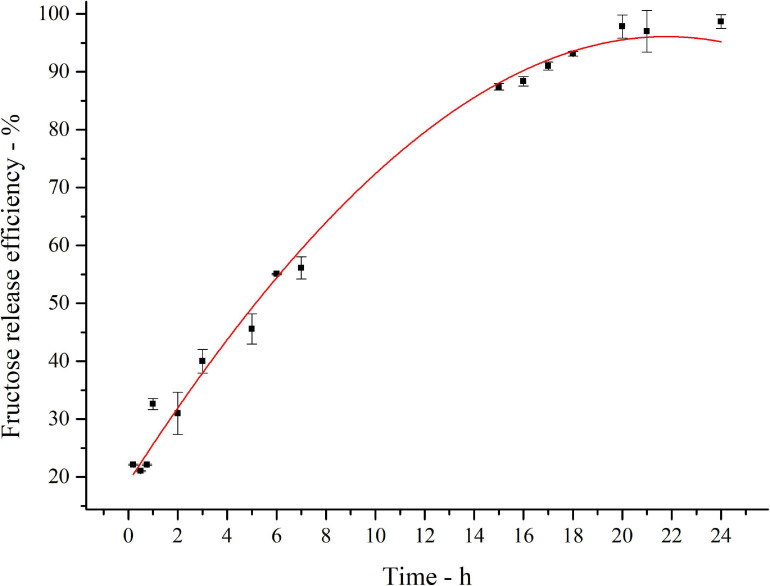
Inulin, a polydisperse fructan found as a common storage polysaccharide in the roots of several plants, represents a renewable non-food biomass resource for the synthesis of bio-based products. Exploitation of inulin-containing feedstocks requires the integration of different processes, including inulinase production, saccharification of inulin, and microbial fermentation for the conversion of released sugars into added-value products. In this work paper, a new microbial source of inulinase, , was identified through the screening of a fungal library. Inulinase production using inulin as C-source was optimized, reaching up to 28 U mL at the 4th day of growth. The fungal inulinase mixture () was characterized for pH and temperature stability and activity profile, and its isoenzymes composition was investigated by proteomic strategies. Statistical optimization of inulin hydrolysis was performed using a central composite rotatable design (CCRD), by analyzing the effect of four factors. In the optimized conditions (T, 45.5°C; pH, 5.1; substrate concentration, 60 g L; enzyme loading, 50 U g ), up to 96% inulin is converted in fructose within 20 h. The integration of in a process for polyhydroxyalkanoate (PHA) production by from inulin was tested in both separated hydrolysis and fermentation (SHF) and simultaneous saccharification and fermentation (SSF). A maximum of 3.2 g L of PHB accumulation, corresponding to 82% polymer content, was achieved in the SSF. The proved efficiency in inulin hydrolysis and its effective integration into a SSF process pave the way to a profitable exploitation of the enzymatic mixture in inulin-based biorefineries.
菊粉是一种多分散的果聚糖,在几种植物的根部作为常见的储存多糖被发现,它是用于合成生物基产品的可再生非食品生物质资源。对含菊粉原料的开发需要整合不同的工艺,包括菊粉酶的生产、菊粉的糖化以及将释放的糖转化为增值产品的微生物发酵。在本文中,通过对真菌文库的筛选,鉴定出了一种新的菊粉酶微生物来源。以菊粉作为碳源生产菊粉酶的工艺得到了优化,在生长第4天时酶活达到28 U/mL。对真菌菊粉酶混合物()的pH稳定性、温度稳定性和活性曲线进行了表征,并通过蛋白质组学策略研究了其同工酶组成。采用中心复合旋转设计(CCRD),通过分析四个因素的影响,对菊粉水解进行了统计优化。在优化条件下(温度45.5°C;pH 5.1;底物浓度60 g/L;酶负载量50 U/g),20小时内高达96%的菊粉可转化为果糖。在分批水解发酵(SHF)和同步糖化发酵(SSF)中,测试了将该酶整合到利用菊粉生产聚羟基脂肪酸酯(PHA)的过程中。在SSF中,最大可积累3.2 g/L的聚羟基丁酸酯(PHB),聚合物含量达82%。该酶在菊粉水解方面已证实的效率及其有效整合到SSF工艺中,为基于菊粉的生物精炼厂中该酶混合物的盈利性开发铺平了道路。