Volova Tatiana G, Kiselev Evgeniy G, Demidenko Alexey V, Zhila Natalia O, Nemtsev Ivan V, Lukyanenko Anna V
Basic Department of Biotechnology, School of Fundamental Biology and Biotechnology, Siberian Federal University, 660041 Krasnoyarsk, Russia.
Institute of Biophysics SB RAS, Federal Research Center "Krasnoyarsk Science Center SB RAS", 660036 Krasnoyarsk, Russia.
Polymers (Basel). 2021 Dec 30;14(1):132. doi: 10.3390/polym14010132.
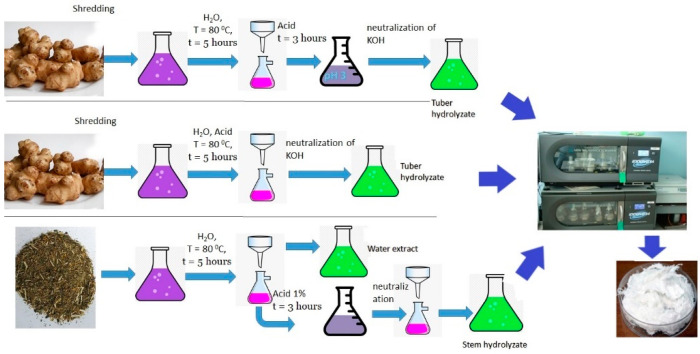
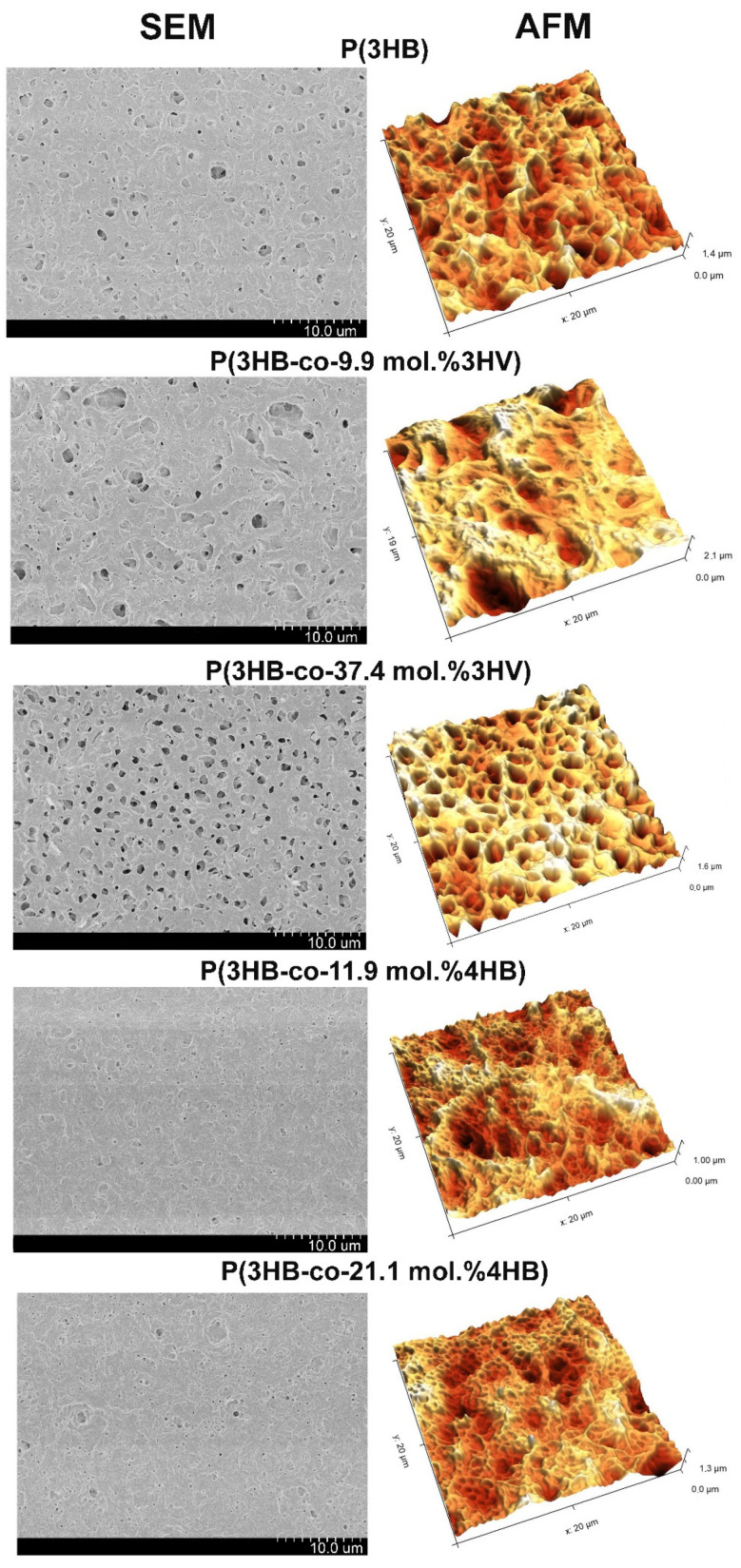
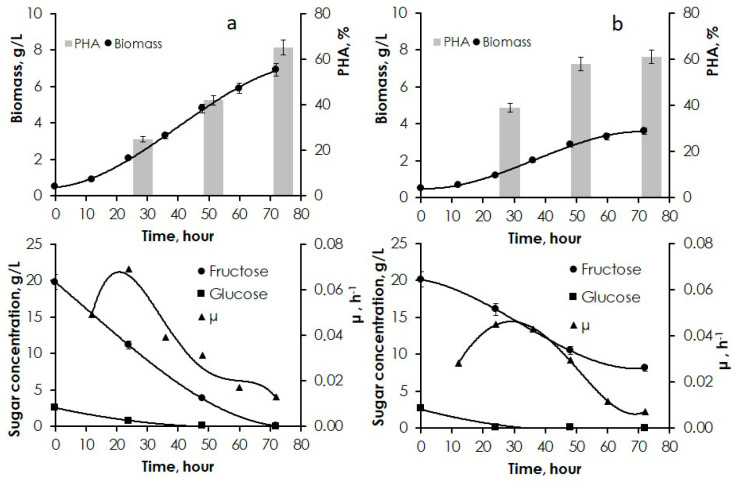
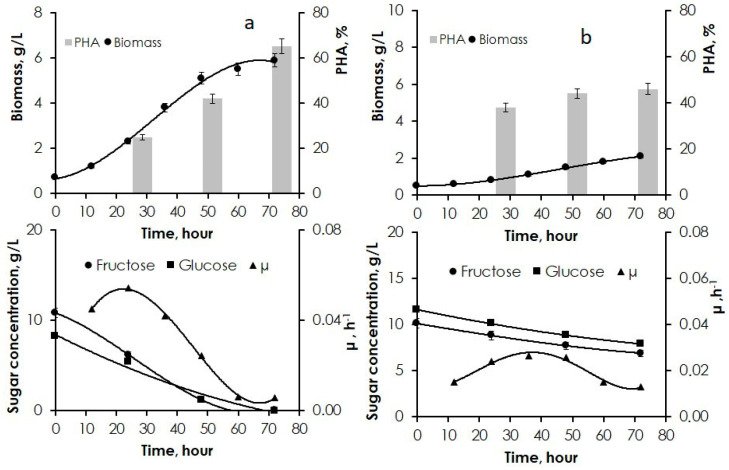
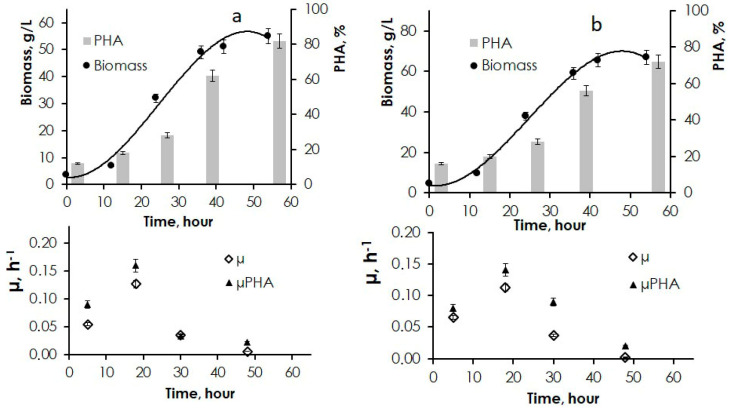
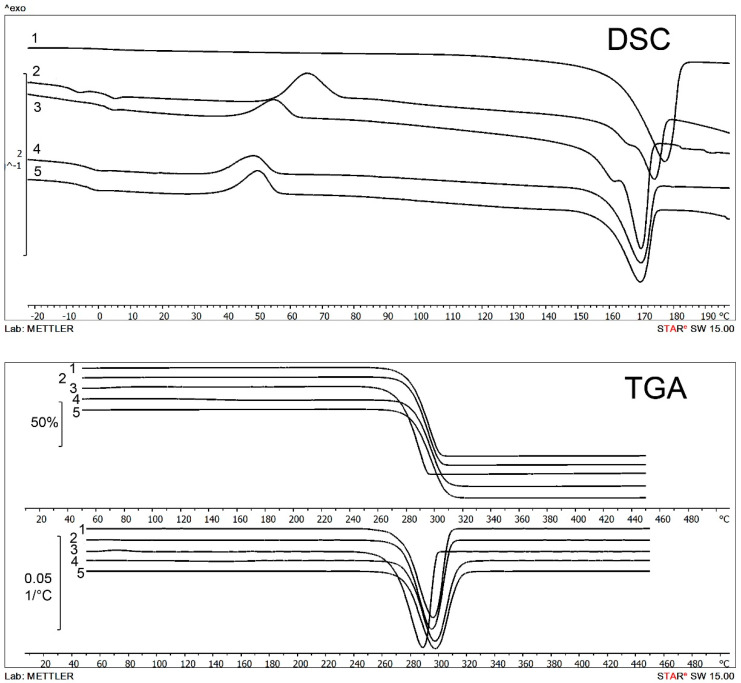
One of the major challenges in PHA biotechnology is optimization of biotechnological processes of the entire synthesis, mainly by using new inexpensive carbon substrates. A promising substrate for PHA synthesis may be the sugars extracted from the Jerusalem artichoke. In the present study, hydrolysates of Jerusalem artichoke (JA) tubers and vegetative biomass were produced and used as carbon substrate for PHA synthesis. The hydrolysis procedure (the combination of aqueous extraction and acid hydrolysis, process temperature and duration) influenced the content of reducing substances (RS), monosaccharide contents, and the fructose/glucose ratio. All types of hydrolysates tested as substrates for cultivation of three strains- B-10646 and B 5786 and B 8562-were suitable for PHA synthesis, producing different biomass concentrations and polymer contents. The most productive process, conducted in 12-L fermenters, was achieved on hydrolysates of JA tubers (X = 66.9 g/L, 82% PHA) and vegetative biomass (55.1 g/L and 62% PHA) produced by aqueous extraction of sugars at 80 °C followed by acid hydrolysis at 60 °C, using the most productive strain, B-10646. The effects of JA hydrolysates on physicochemical properties of PHAs were studied for the first time. P(3HB) specimens synthesized from the JA hydrolysates, regardless of the source (tubers or vegetative biomass), hydrolysis conditions, and PHA producing strain employed, exhibited the 100-120 °C difference between the T and T, prevailing of the crystalline phase over the amorphous one (C between 69 and 75%), and variations in weight average molecular weight (409-480) kDa. Supplementation of the culture medium of B-10646 grown on JA hydrolysates with potassium valerate and ε-caprolactone resulted in the synthesis of P(3HB-co-3HV) and P(3HB-co-4HB) copolymers that had decreased degrees of crystallinity and molecular weights, which influenced the porosity and surface roughness of polymer films prepared from them. The study shows that JA hydrolysates used as carbon source enabled productive synthesis of PHAs, comparable to synthesis from pure sugars. The next step is to scale up PHA synthesis from JA hydrolysates and conduct the feasibility study. The present study contributes to the solution of the critical problem of PHA biotechnology-finding widely available and inexpensive substrates.
聚羟基脂肪酸酯(PHA)生物技术面临的主要挑战之一是优化整个合成过程的生物技术工艺,主要方法是使用新型廉价碳源。从菊芋中提取的糖类可能是一种有前景的PHA合成底物。在本研究中,制备了菊芋(JA)块茎和营养生物质的水解产物,并将其用作PHA合成的碳源。水解过程(水相萃取和酸水解的组合、工艺温度和持续时间)影响了还原糖含量、单糖含量以及果糖/葡萄糖比例。作为培养三株菌株(B - 10646、B 5786和B 8562)底物测试的所有类型水解产物都适合PHA合成,产生了不同的生物质浓度和聚合物含量。在12升发酵罐中进行的最有效的过程是使用最高产菌株B - 10646,以80℃水相萃取糖类后在60℃进行酸水解所制备的JA块茎水解产物(X = 66.9 g/L,82% PHA)和营养生物质水解产物(55.1 g/L和62% PHA)为原料实现的。首次研究了JA水解产物对PHA物理化学性质的影响。由JA水解产物合成的聚(3 - 羟基丁酸酯)(P(3HB))样品,无论其来源(块茎或营养生物质)、水解条件以及所使用的PHA生产菌株如何,均表现出熔点(Tm)和玻璃化转变温度(Tg)之间相差100 - 120℃,结晶相占主导地位超过非晶相(结晶度(C)在69%至75%之间),且重均分子量(409 - 480)kDa存在变化。在以JA水解产物为培养基培养的B - 10646培养基中添加戊酸和ε - 己内酯,导致合成了结晶度和分子量降低的聚(3 - 羟基丁酸酯 - 共 - 3 - 羟基戊酸酯)(P(3HB - co - 3HV))和聚(3 - 羟基丁酸酯 - 共 - 4 - 羟基丁酸酯)(P(3HB - co - 4HB))共聚物,这影响了由它们制备的聚合物薄膜的孔隙率和表面粗糙度。该研究表明,用作碳源的JA水解产物能够高效合成PHA,与从纯糖合成相当。下一步是扩大从JA水解产物合成PHA的规模并进行可行性研究。本研究有助于解决PHA生物技术的关键问题——找到广泛可得且廉价的底物。