Labib Mary, Bohm Clara, MacRae Jennifer M, Bennett Paul N, Wilund Kenneth R, McAdams-DeMarco Mara, Jhamb Manisha, Mustata Stefan, Thompson Stephanie
Division of Nephrology, University of Alberta, Edmonton, Alberta, Canada.
Department of Internal Medicine, Rady Faculty of Health Sciences, University of Manitoba, Winnipeg, Manitoba, Canada.
Kidney Int Rep. 2020 Dec 18;6(3):657-668. doi: 10.1016/j.ekir.2020.12.001. eCollection 2021 Mar.
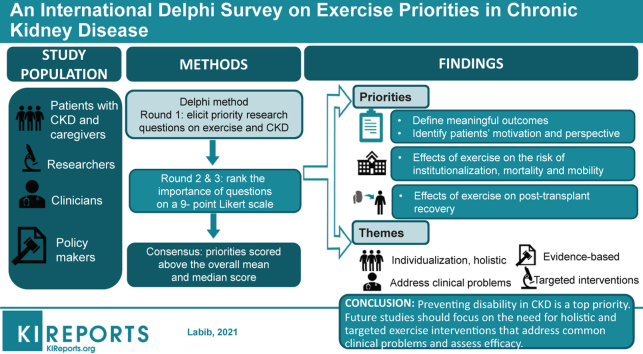
Defining the role of exercise in chronic kidney disease (CKD) is a top research priority for people with CKD. We aimed to achieve consensus on specific research priorities in exercise and CKD among an international panel of stakeholders.
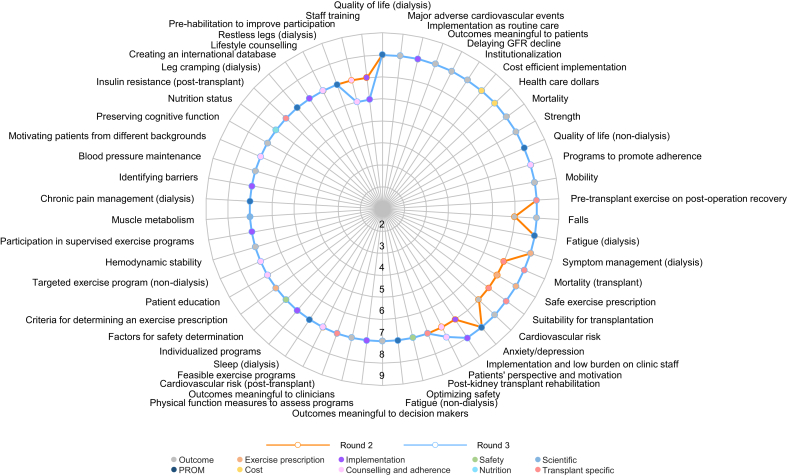
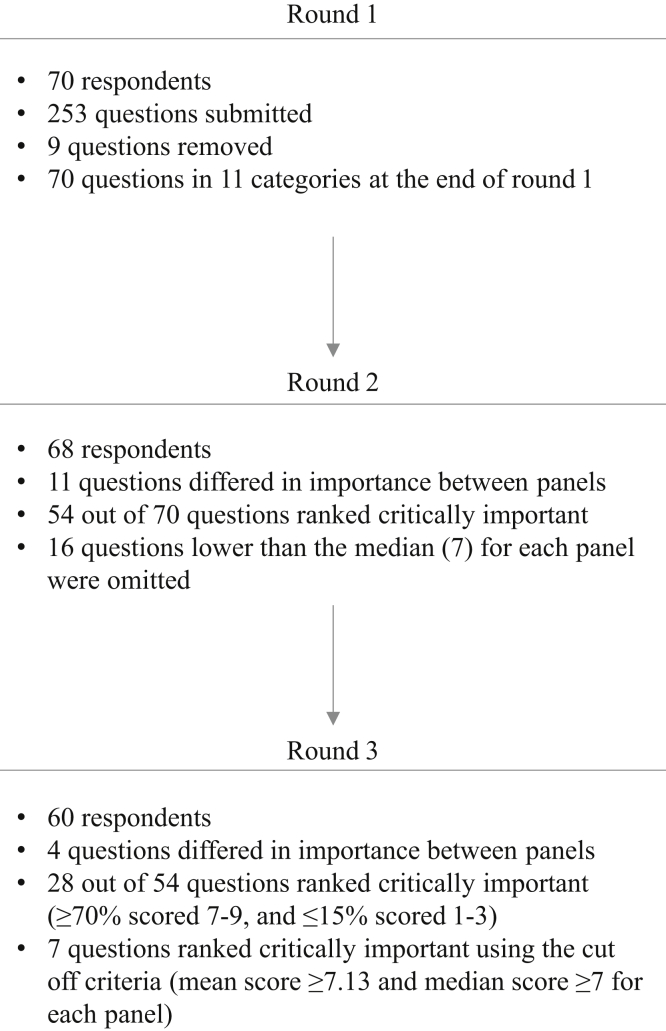
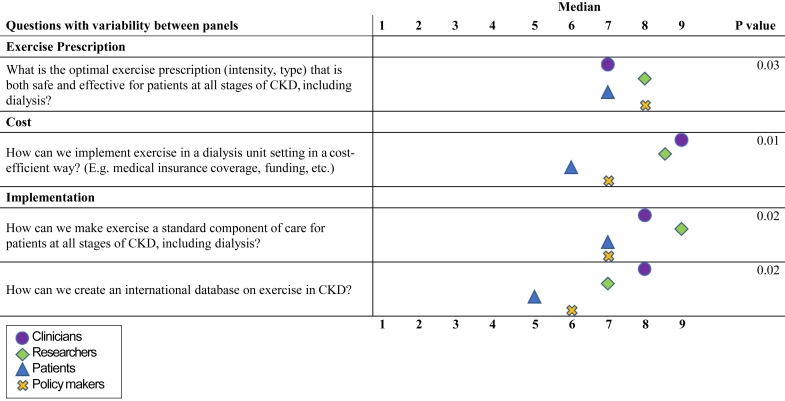
Using the Delphi method, patients/caregivers, researchers, clinicians, and policymakers submitted their top research priorities in round 1 and ranked their importance in rounds 2 and 3 using a 9-point Likert scale. The mean, median, and proportion of scores ranked 7 to 9 were calculated. Consensus was defined as priorities that scored above the overall mean and median score within each stakeholder panel. Qualitative description was used to understand participants' rankings.
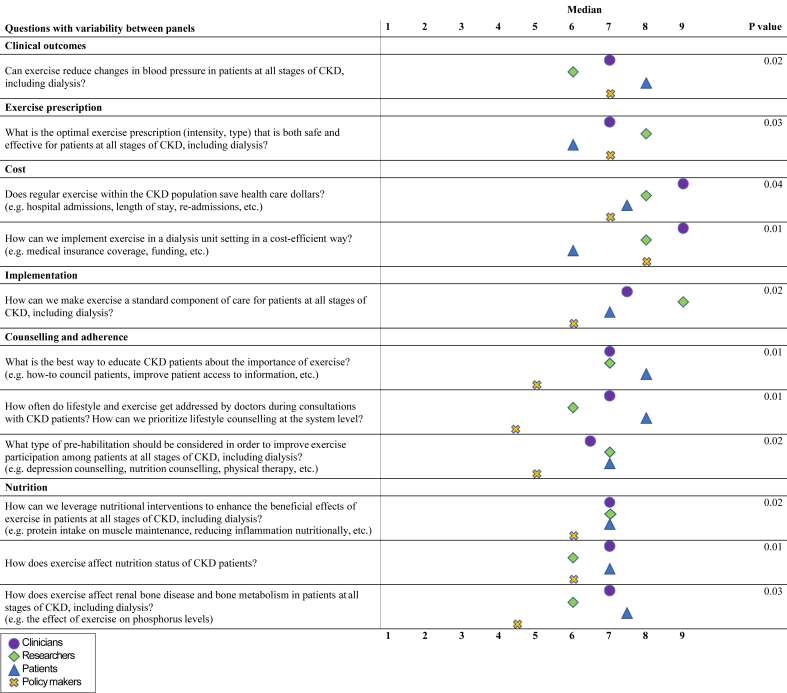
Seventy participants (78% response) completed round 1: 15 (21.4%) clinicians, 33 (47.1%) researchers, 13 (18.6%) policymakers, and 9 (12.9%) patients; (85.7%) completed round 3. The top research priorities were defining exercise-related outcomes meaningful to patients, identifying patients' motivation and perspective towards exercise, understanding the effect of exercise on the risk of institutionalization, mortality, and mobility, and understanding the effect of pre- and post-transplant exercise on postoperative recovery. Themes from the qualitative analysis were individualization, personal experience, and holistic approach to exercise (patients), the need to address common clinical problems (clinicians), developing targeted interventions (researchers), and the importance of evidence-based development versus implementation (policymakers).
Preventing physical disability was a common priority. Policymakers emphasized that more efficacy studies were needed. Other panels expressed the need for holistic and targeted exercise interventions and for outcomes that address common clinical problems.
明确运动在慢性肾脏病(CKD)中的作用是CKD患者的首要研究重点。我们旨在就运动与CKD特定研究重点在国际利益相关者小组中达成共识。
采用德尔菲法,患者/护理人员、研究人员、临床医生和政策制定者在第一轮提交他们的首要研究重点,并在第二轮和第三轮使用9点李克特量表对其重要性进行排序。计算得分在7至9分的平均值、中位数和比例。共识定义为每个利益相关者小组中得分高于总体平均和中位数的重点。采用定性描述来理解参与者的排名。
70名参与者(回复率78%)完成了第一轮:15名(21.4%)临床医生、33名(47.1%)研究人员、13名(18.6%)政策制定者和9名(12.9%)患者;85.7%完成了第三轮。首要研究重点包括定义对患者有意义的运动相关结果、确定患者对运动的动机和看法、了解运动对机构化风险、死亡率和活动能力的影响,以及了解移植前后运动对术后恢复的影响。定性分析的主题包括个性化(患者)、个人经历和运动的整体方法、解决常见临床问题的必要性(临床医生)、制定有针对性的干预措施(研究人员)以及循证发展与实施的重要性(政策制定者)。
预防身体残疾是一个共同的重点。政策制定者强调需要更多的疗效研究。其他小组表示需要整体和有针对性运动干预以及解决常见临床问题的结果。