1st Orthopaedic and Traumatologic Clinic, IRCCS Istituto Ortopedico Rizzoli, Via Pupilli, 1, 40136, Bologna, Italy.
Department of Biomedical and Neuromotor Science-DIBINEM, University of Bologna, Bologna, Italy.
J Orthop Traumatol. 2021 Mar 17;22(1):13. doi: 10.1186/s10195-021-00574-y.
Total hip arthroplasty (THA) in patients with Paget's disease can be associated with technical difficulties related to deformities and altered mechanical bone properties, and hypervascularity leads to significative intra-operative bleeding. The purpose of this registry and single-institution study was to investigate overall survival and causes of failure of THA in pagetic patients, together with an analysis of the clinical and radiological complications.
Registry-based survival and complication analysis, type of fixation, intra- and post-operative complications, clinical (pharmacological history, blood transfusions, Harris hip score [HHS]) and radiographic (cup orientation, stem axial alignment, osteolysis around the cup and the stem and heterotopic ossification [HO]) data were reviewed.
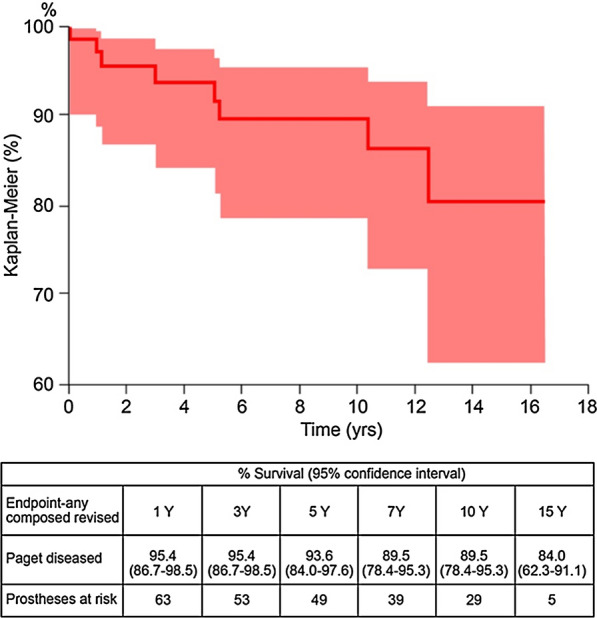
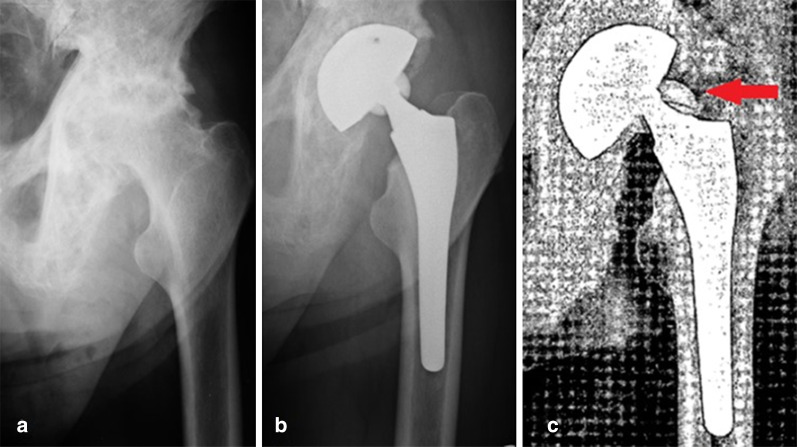
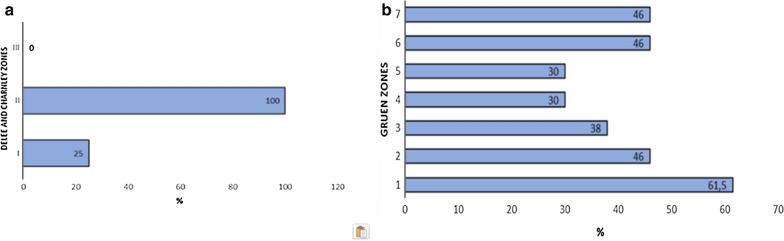
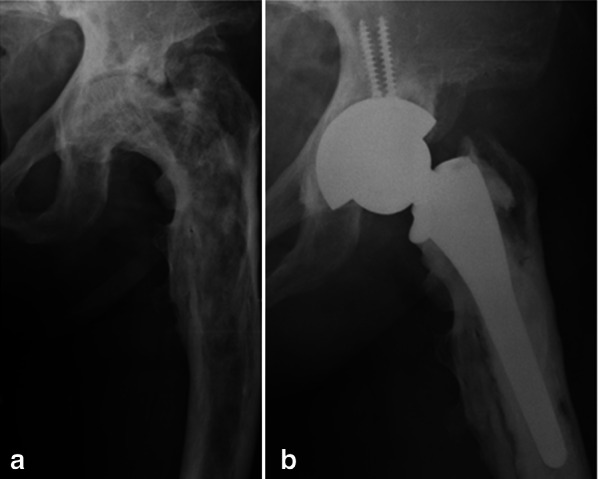
In total, 66 patients (27 males and 39 females, mean age at surgery 71.1 years for males and 74.8 years for female) from the registry study presented a 10-year survival of 89.5%. In the institutional study, involving 26 patients (14 males and 12 females, 69 years average) and 29 THAs, hip function improved significantly. Average cup orientation was 40.5°, while varus stem alignment was 13.8%. In total, 52% of hips had heterotopic ossifications. Peri-acetabular osteolysis was in 13.8% of implants and in 45% of hips was found around the stem. Allogenic and autologous blood transfusion rate were 68.2% and 31.8%, respectively, with an average transfusion of 2 units of blood (range 1-6 units). HHS improved by an average of 34 points, with excellent result in 64.3% of patients. Two implants failed, one due to traumatic ceramic head fracture 64 months after surgery, and one due to mobilization of the cup on the second post-operative day.
THA surgery in Paget's patients is a safe procedure, and implant survival is only partly affected by bone remodelling and choice of fixation. The post-operative functional outcome is largely similar to that of other patients. Bleeding-related complications are the main complications; a careful pharmacological strategy should be recommended to decrease the risk of transfusions and of HO development.
Level III.
在患有 Pagetic 病的患者中进行全髋关节置换术 (THA) 可能会遇到与畸形和骨骼机械特性改变相关的技术困难,以及由于血运丰富导致显著的术中出血。本注册研究和单机构研究的目的是调查 Pagetic 患者 THA 的总体生存率和失败原因,同时分析临床和影像学并发症。
基于注册的生存和并发症分析、固定类型、围手术期并发症、临床(药物治疗史、输血、Harris 髋关节评分 [HHS])和影像学(髋臼杯方向、柄轴向对齐、髋臼杯和柄周围骨溶解和异位骨化 [HO])数据进行了回顾。
在注册研究中,共有 66 名患者(27 名男性和 39 名女性,男性手术时的平均年龄为 71.1 岁,女性为 74.8 岁)的 10 年生存率为 89.5%。在机构研究中,涉及 26 名患者(14 名男性和 12 名女性,平均年龄为 69 岁)和 29 例 THA,髋关节功能显著改善。平均髋臼杯方向为 40.5°,而股骨柄呈内翻 13.8°。总共 52%的髋关节存在异位骨化。髋臼周围骨溶解在 13.8%的植入物中,在 45%的髋关节中发现。同种异体和自体输血率分别为 68.2%和 31.8%,平均输血量为 2 单位(范围 1-6 单位)。HHS 平均改善 34 分,64.3%的患者获得了优秀的结果。有 2 例植入物失败,1 例是由于术后 64 个月陶瓷股骨头创伤性骨折,1 例是由于术后第 2 天髋臼杯移位。
Pagetic 患者的 THA 手术是一种安全的手术,植入物的存活率仅部分受到骨骼重塑和固定方式的影响。术后功能结果与其他患者基本相似。与出血相关的并发症是主要并发症;应推荐谨慎的药物治疗策略,以降低输血和 HO 发展的风险。
III 级。