Department of Otolaryngology-Head Neck Surgery, Third Xiangya Hospital, Central South University, Changsha, 410013, Hunan, China.
Sci Rep. 2021 Mar 18;11(1):6206. doi: 10.1038/s41598-021-85785-3.
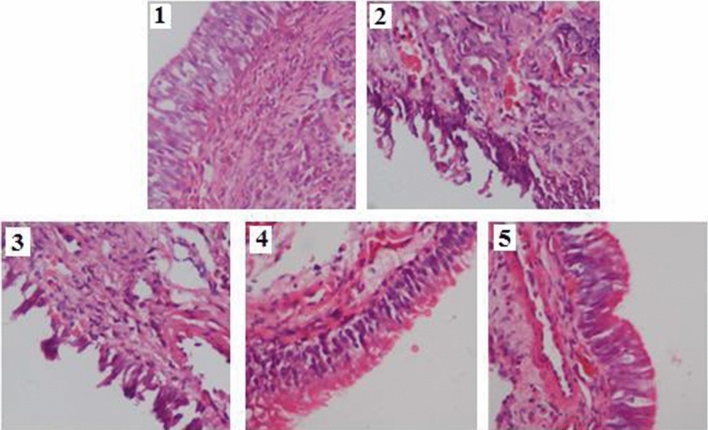
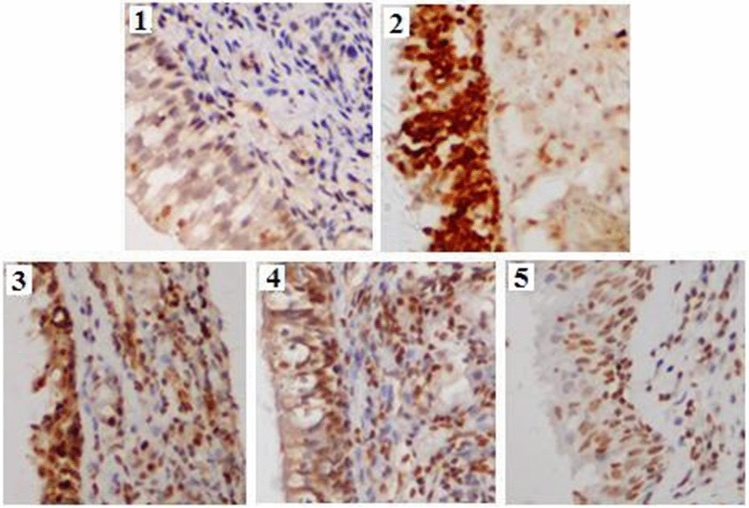
High mobility group box 1 (HMGB1) has been known to involve in the pathogenesis of many inflammatory diseases. The aim of this study was to establish animal model of acute rhinosinusitis (ARS), and determine whether ethyl pyruvate (EP) attenuate inflammatory response of sinonasal mucosa by inhibiting HMGB1 in ARS animals. Thirty-six Sprague Dawley (SD) rat were used as follows: six normal controls without intervention (group 1); thirty rats were used for establishment of ARS rats model by nasal insertion of Merocel sponge, and model rats without any treatments (group 2), treated with nasal drops of sterile saline (group 3), 10 μl EP (group 4), and 20 μl EP (group 5), twice a day for 5 days, respectively. Bacterial culture was done regularly and the main bacterial strains were identified using matrix-assisted laser desorption/ionization time of flight mass spectrometry. HMGB1 expression in sinonasal mucosa was detected by immunohistochemistry and RT-PCR. Serum levels of HMGB1, IL-6, and TNF-α were determined by ELISA. Data from 29 of 36 rats that had completed research were analyzed. Bacterial colony formation unit (CFU) of nasal secretion was significantly higher in each group of ARS rats compared with controls (p < 0.001). ARS rats treated with EP had only slightly decreased CFU, but significantly attenuated inflammatory response of sinonasal mucosa and decreased HMGB1 expression compared to those treated with saline alone (p < 0.001). Serum levels of HMGB1, IL-6 and TNF-α were significantly higher in ARS rats compared to controls, and decreased by EP treatments (p < 0.001). Nasal sponge packing led to acute inflammatory response of nasal sinus in rats, and increased the expression of HMGB1, IL-6, and TNF-α. Nasal drops with EP could attenuate the inflammation of sinonasal mucosa through inhibiting the expression of HMGB1, IL-6 and TNF-α in ARS rats.
高迁移率族蛋白 B1(HMGB1)已被证实参与多种炎症性疾病的发病机制。本研究旨在建立急性鼻-鼻窦炎(ARS)动物模型,并确定乙基丙酮酸(EP)是否通过抑制 ARS 动物的 HMGB1 来减轻鼻-鼻窦黏膜的炎症反应。36 只 Sprague Dawley(SD)大鼠分为以下 6 组:6 只正常对照组(不干预,组 1);30 只大鼠通过鼻腔插入 Merocel 海绵建立 ARS 大鼠模型,不给予任何治疗(组 2)、鼻腔滴注无菌生理盐水(组 3)、10μl EP(组 4)和 20μl EP(组 5),每天两次,连续 5 天。定期进行细菌培养,并使用基质辅助激光解吸/电离飞行时间质谱对主要细菌株进行鉴定。采用免疫组化和 RT-PCR 检测鼻-鼻窦黏膜中 HMGB1 的表达。采用 ELISA 法检测血清 HMGB1、IL-6 和 TNF-α 水平。36 只大鼠中有 29 只完成了研究,对其数据进行分析。与对照组相比,每组 ARS 大鼠的鼻分泌物细菌集落形成单位(CFU)均显著升高(p<0.001)。与单独生理盐水治疗组相比,EP 治疗组 CFU 略有下降,但鼻-鼻窦黏膜炎症反应明显减轻,HMGB1 表达降低(p<0.001)。与对照组相比,ARS 大鼠血清 HMGB1、IL-6 和 TNF-α 水平明显升高,经 EP 治疗后降低(p<0.001)。鼻腔填塞海绵可导致大鼠鼻-鼻窦急性炎症反应,并增加 HMGB1、IL-6 和 TNF-α 的表达。EP 滴鼻可通过抑制 ARS 大鼠 HMGB1、IL-6 和 TNF-α 的表达减轻鼻-鼻窦黏膜炎症。