Aziz Tavga Ahmed
Department of Pharmacology and Toxicology, College of Pharmacy, University of Sulaimani, Sulaimani City, Iraq.
Cancer Manag Res. 2021 Mar 12;13:2349-2357. doi: 10.2147/CMAR.S300495. eCollection 2021.
A previous study revealed a pronounced protective effect of combining quercetin (QC) with sitagliptin (STN) in testicular tissue. Accordingly, this study was designed to evaluate the cardioprotective effects of QC and STN each alone or in combination in doxorubicin (DOX)-induced cardiotoxicity in the rats.
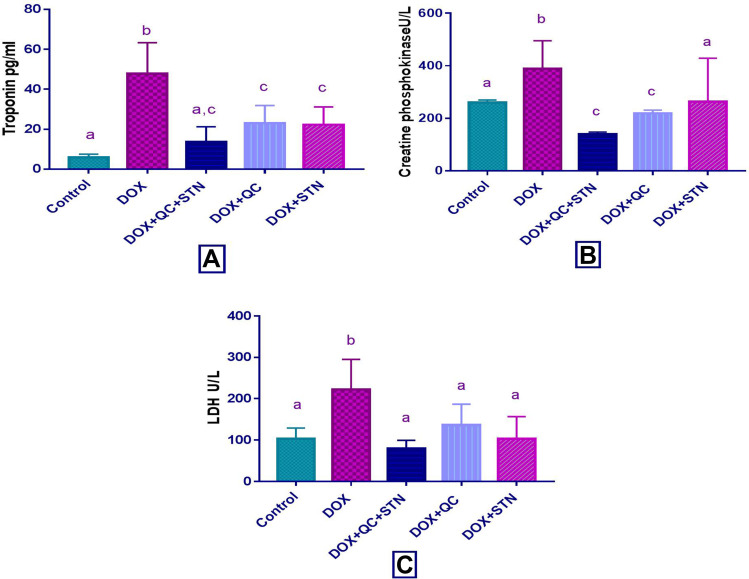
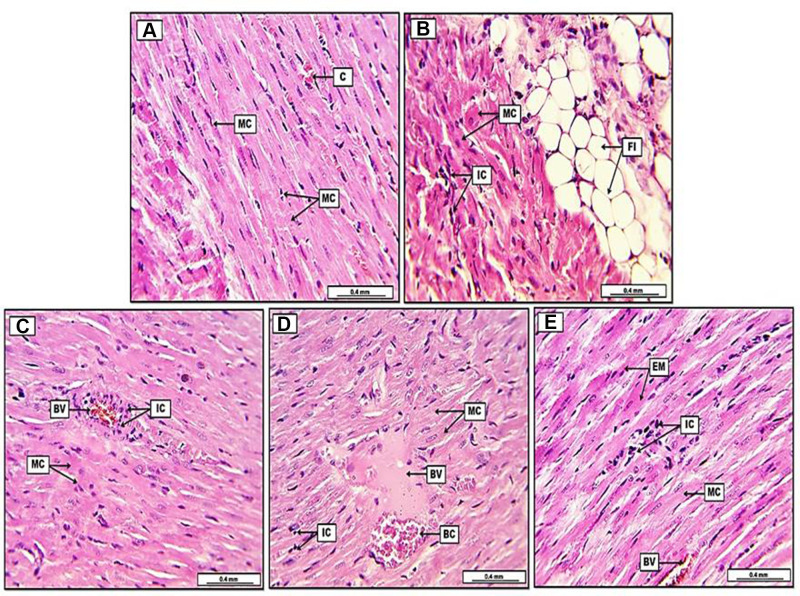
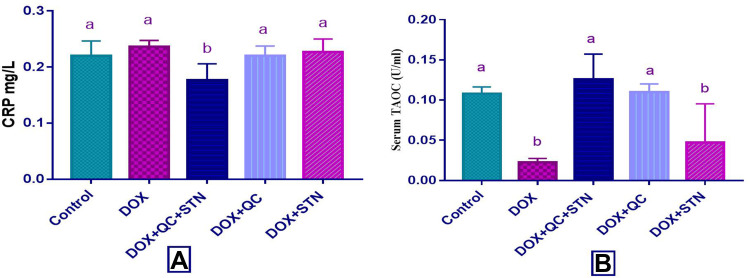
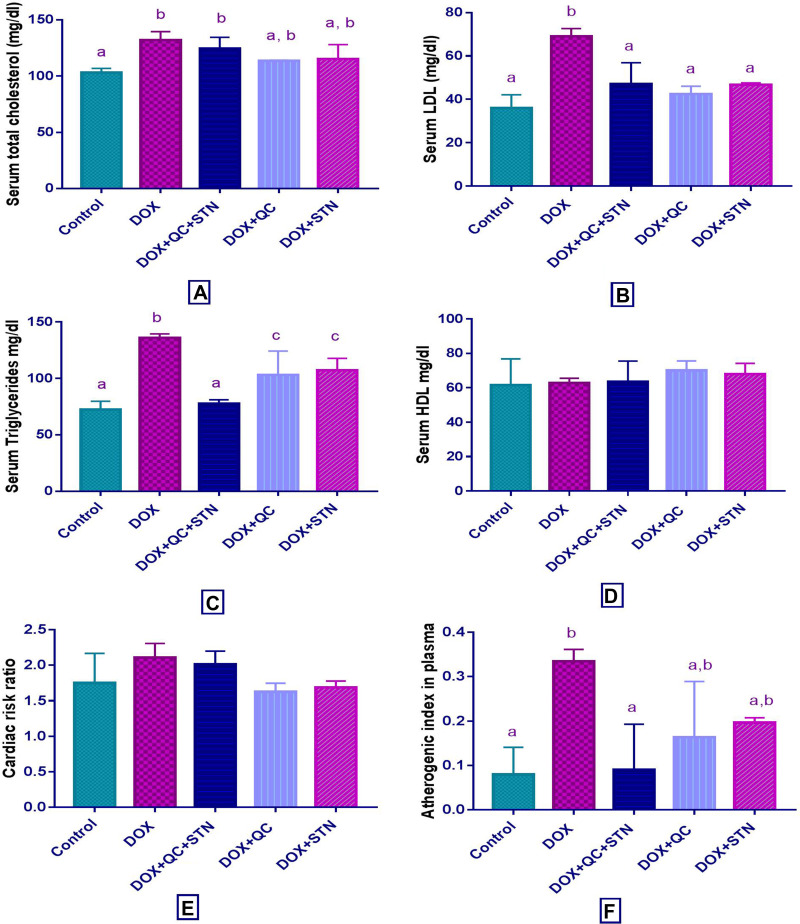
Thirty male adult Wistar rats were divided into five groups: the first group (control) treated with sodium chloride, the second group treated with DOX (3 mg/kg I.P. injection), the third group treated with DOX with a combination of QC (80 mg/kg), and STN (10 mg/kg), the fourth group treated with DOX and QC and the fifth group treated with DOX and STN. Blood was collected on day 22 and used for assessment of serum troponin, lactate dehydrogenase (LDH), creatine phosphokinase (CPK), total lipid profile, C-reactive protein (CRP), and total antioxidant capacity (TAOC). Atherogenic indices were also calculated. Cardiac tissue was sent for histopathological analysis.
DOX produced a significant increase in the level of troponin, LDH, CKP, CRP, total cholesterol (TC), low-density lipoprotein (LDL), triglycerides (TG), and atherogenic index of plasma; and significantly decreased TAOC. The combination of quercetin and sitagliptin was more effective than each treatment alone in restoring the level of troponin, LDH, CKP, CRP, Cholesterol, LDL, TG, atherogenic index of plasma and significantly increased TAOC compared to DOX treated group. The histopathological finding also supports the biochemical results.
The study revealed the cardioprotective effects of the combination of QC and STN which could be attributed to the additive effects of this combination through antioxidant, anti-inflammatory, lipid lowering and anti-atherogenic activities; suggesting it as a good therapeutic candidate to be tested in the clinical setting.
先前的一项研究揭示了槲皮素(QC)与西他列汀(STN)联合应用对睾丸组织具有显著的保护作用。因此,本研究旨在评估QC和STN单独或联合应用对阿霉素(DOX)诱导的大鼠心脏毒性的心脏保护作用。
将30只成年雄性Wistar大鼠分为五组:第一组(对照组)用氯化钠处理,第二组用DOX(腹腔注射3mg/kg)处理,第三组用DOX联合QC(80mg/kg)和STN(10mg/kg)处理,第四组用DOX和QC处理,第五组用DOX和STN处理。在第22天采集血液,用于评估血清肌钙蛋白、乳酸脱氢酶(LDH)、肌酸磷酸激酶(CPK)、总血脂谱、C反应蛋白(CRP)和总抗氧化能力(TAOC)。还计算了致动脉粥样硬化指数。将心脏组织送去进行组织病理学分析。
DOX使肌钙蛋白、LDH、CKP、CRP、总胆固醇(TC)、低密度脂蛋白(LDL)、甘油三酯(TG)水平以及血浆致动脉粥样硬化指数显著升高;并使TAOC显著降低。与单独使用每种药物相比,槲皮素和西他列汀联合应用在恢复肌钙蛋白、LDH、CKP、CRP、胆固醇、LDL、TG水平以及血浆致动脉粥样硬化指数方面更有效,并且与DOX处理组相比,显著提高了TAOC。组织病理学结果也支持生化结果。
该研究揭示了QC和STN联合应用的心脏保护作用,这可能归因于该联合应用通过抗氧化、抗炎、降脂和抗动脉粥样硬化活性产生的相加作用;表明它是一种可在临床环境中进行测试的良好治疗候选药物。