Department of Medicine, Division of Dermatology, University of Massachusetts Medical School, Worcester, MA, United States.
Front Immunol. 2021 Mar 2;12:624517. doi: 10.3389/fimmu.2021.624517. eCollection 2021.
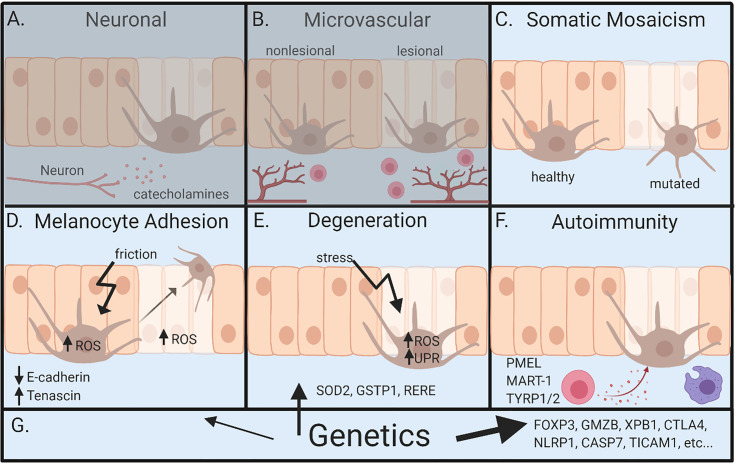
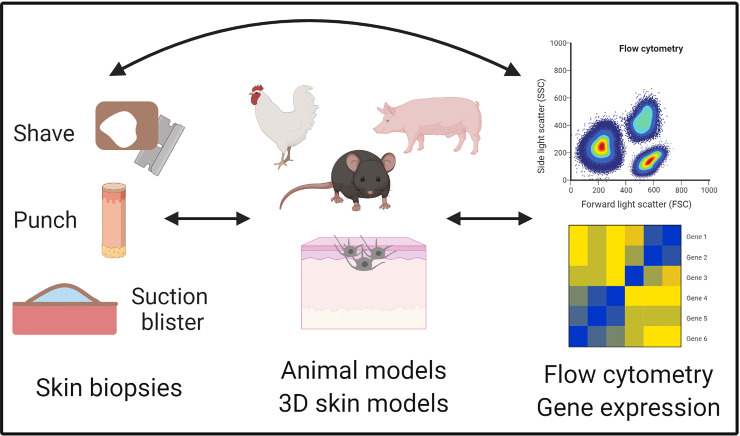
Vitiligo is a disease of the skin characterized by the appearance of white spots. Significant progress has been made in understanding vitiligo pathogenesis over the past 30 years, but only through perseverance, collaboration, and open-minded discussion. Early hypotheses considered roles for innervation, microvascular anomalies, oxidative stress, defects in melanocyte adhesion, autoimmunity, somatic mosaicism, and genetics. Because theories about pathogenesis drive experimental design, focus, and even therapeutic approach, it is important to consider their impact on our current understanding about vitiligo. Animal models allow researchers to perform mechanistic studies, and the development of improved patient sample collection methods provides a platform for translational studies in vitiligo that can also be applied to understand other autoimmune diseases that are more difficult to study in human samples. Here we discuss the history of vitiligo translational research, recent advances, and their implications for new treatment approaches.
白癜风是一种以皮肤出现白斑为特征的疾病。在过去的 30 年中,人们对白癜风发病机制的理解取得了重大进展,但这只是通过坚持不懈、合作和开放的讨论才实现的。早期的假说考虑了神经支配、微血管异常、氧化应激、黑素细胞黏附缺陷、自身免疫、体细突变和遗传学的作用。由于发病机制的理论推动了实验设计、重点,甚至治疗方法,因此考虑它们对我们当前对白癜风的理解的影响很重要。动物模型使研究人员能够进行机制研究,而改进的患者样本采集方法的发展为白癜风的转化研究提供了一个平台,这些研究也可用于了解其他在人类样本中更难研究的自身免疫性疾病。在这里,我们讨论白癜风转化研究的历史、最新进展及其对新治疗方法的意义。