Yin Lan, Yang Yuhan, Zhu Wanglong, Xian Yu, Han Zhengyu, Huang Houyi, Peng Liaotian, Zhang Kun, Zhao Ye
School of Bioscience and Technology, Chengdu Medical College, Chengdu, China.
Front Oncol. 2021 Mar 2;11:620907. doi: 10.3389/fonc.2021.620907. eCollection 2021.
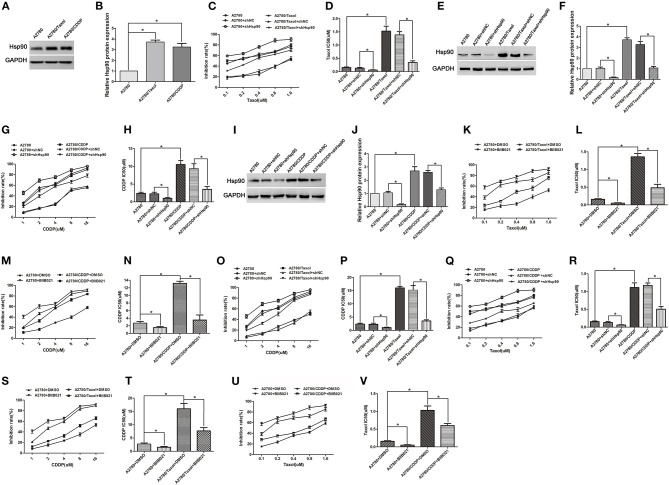
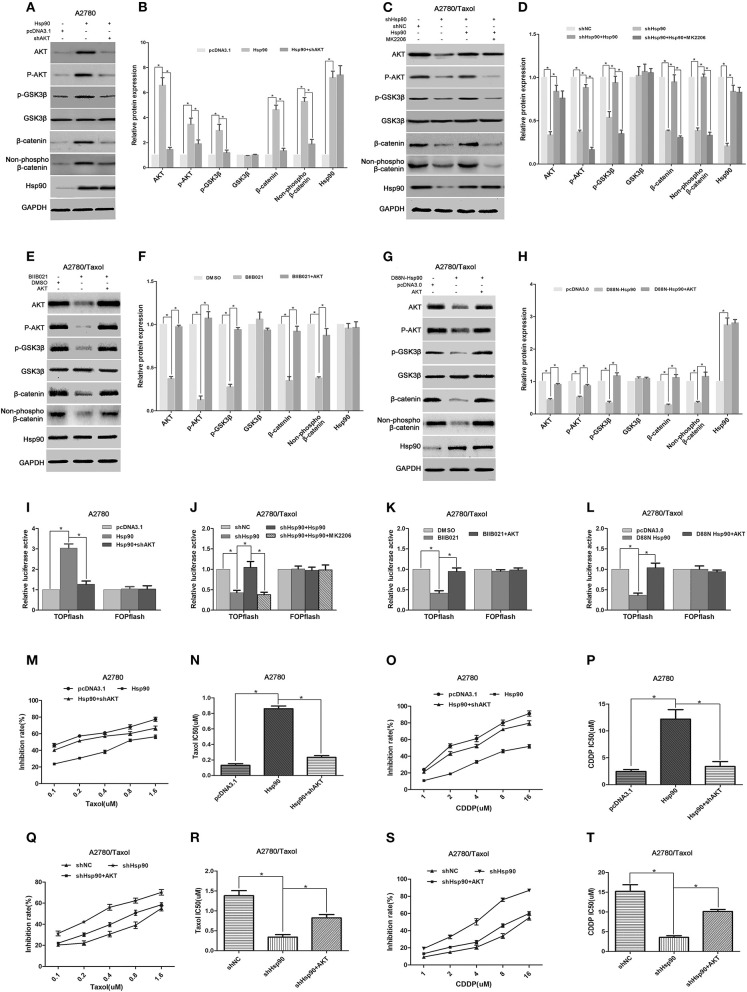
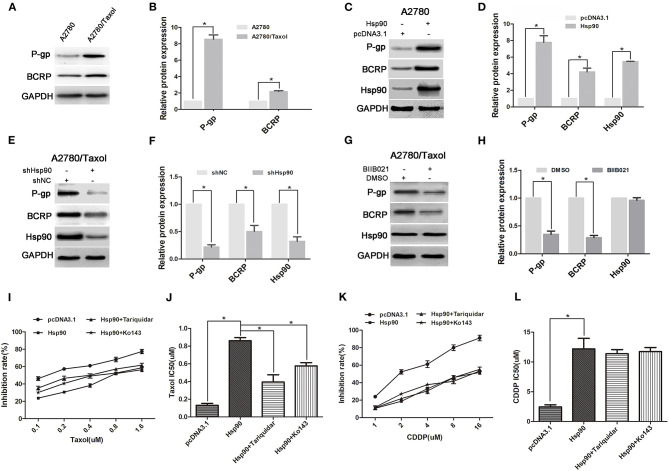
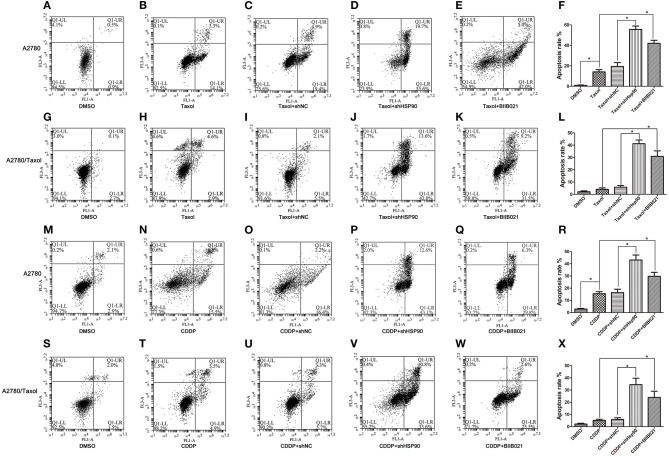
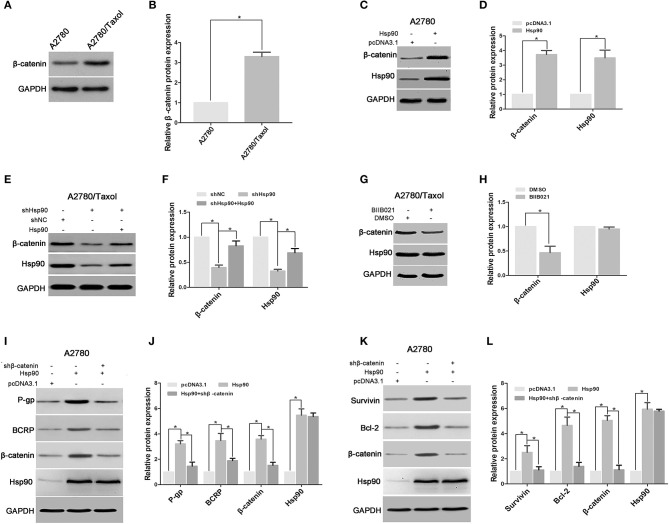
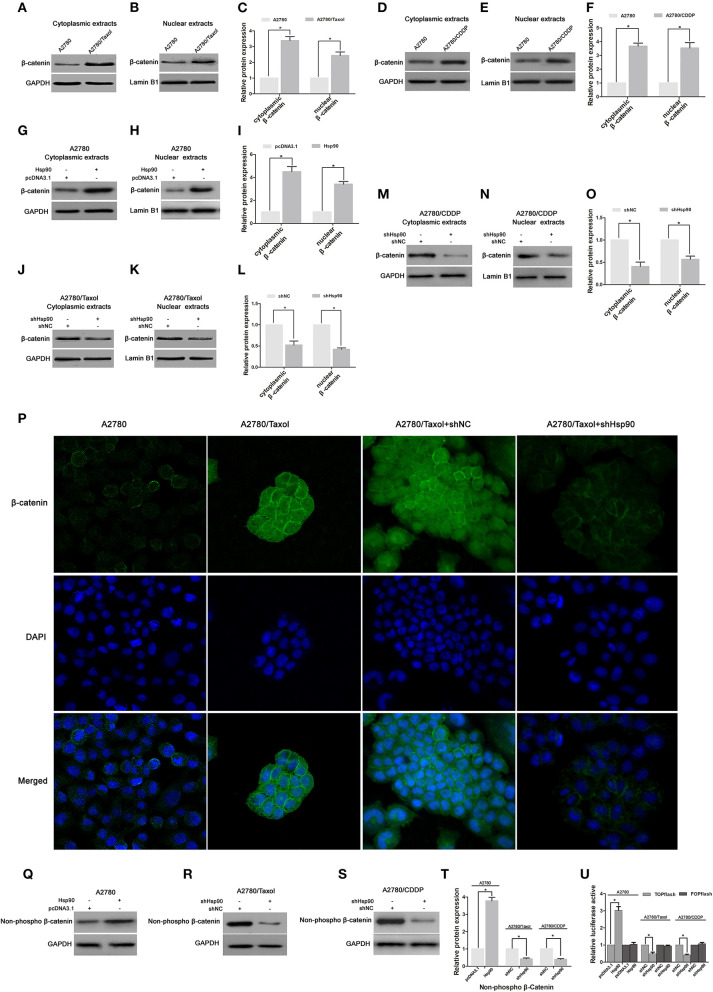
Ovarian cancer is the most lethal gynaecologic tumor, with which multi-drug resistance as the major therapeutic hindrance. Heat shock protein 90 (Hsp90) has been involved in cancer malignant behaviors. However, its role and mechanism in multi-drug resistance of ovarian cancer remains poorly understood. Our results demonstrated that Hsp90 was overexpressed in multi-drug resistant ovarian cancer cells. Hsp90 downregulation by shHsp90 or inhibitor BIIB021 increased the sensitivity of multi-drug resistant ovarian cancer cells to paclitaxel and cisplatin, and augmented the drugs-induced apoptosis. Hsp90 positively regulated the expressions of multi-drug resistance protein 1 (P-gp/MDR1), breast cancer resistance protein (BCRP), Survivin and Bcl-2 expressions closely associated with multi-drug resistance. Moreover, overexpression of Hsp90 promoted β-catenin accumulation, while Hsp90 downregulation decreased the accumulation, nuclear translocation and transcriptional activity of β-catenin. We also identified that β-catenin was responsible for Hsp90-mediated expressions of P-gp, BCRP, Survivin, and Bcl-2. Furthermore, Hsp90 enhanced the AKT/GSK3β signaling, and AKT signaling played a critical role in Hsp90-induced accumulation and transcriptional activity of β-catenin, as well as multi-drug resistance to paclitaxel and cisplatin. In conclusion, Hsp90 enhanced the AKT/GSK3β/β-catenin signaling to induce multi-drug resistance of ovarian cancer. Suppressing Hsp90 chemosensitized multi-drug resistant ovarian cancer cells via impairing the AKT/GSK3β/β-catenin signaling, providing a promising therapeutic strategy for a successful treatment of ovarian cancer.
卵巢癌是最致命的妇科肿瘤,多药耐药是其主要治疗障碍。热休克蛋白90(Hsp90)参与癌症的恶性行为。然而,其在卵巢癌多药耐药中的作用和机制仍知之甚少。我们的结果表明,Hsp90在多药耐药的卵巢癌细胞中过表达。通过shHsp90或抑制剂BIIB021下调Hsp90可增加多药耐药卵巢癌细胞对紫杉醇和顺铂的敏感性,并增强药物诱导的细胞凋亡。Hsp90正向调节与多药耐药密切相关的多药耐药蛋白1(P-gp/MDR1)、乳腺癌耐药蛋白(BCRP)、生存素和Bcl-2的表达。此外,Hsp90的过表达促进β-连环蛋白的积累,而Hsp90的下调则降低β-连环蛋白的积累、核转位和转录活性。我们还确定β-连环蛋白负责Hsp90介导的P-gp、BCRP、生存素和Bcl-2的表达。此外,Hsp90增强了AKT/GSK3β信号通路,AKT信号通路在Hsp90诱导的β-连环蛋白积累和转录活性以及对紫杉醇和顺铂的多药耐药中起关键作用。总之,Hsp90增强AKT/GSK3β/β-连环蛋白信号通路以诱导卵巢癌的多药耐药。抑制Hsp90可通过损害AKT/GSK3β/β-连环蛋白信号通路使多药耐药的卵巢癌细胞对化疗敏感,为成功治疗卵巢癌提供了一种有前景的治疗策略。