Restorative Dentistry and Biomaterial Sciences, Harvard School of Dental Medicine, Boston, MA 02115, USA.
Oral Medicine, Infection and Immunity, Harvard School of Dental Medicine, Boston, MA 02115, USA.
Aging (Albany NY). 2021 Mar 19;13(6):7943-7952. doi: 10.18632/aging.202843.
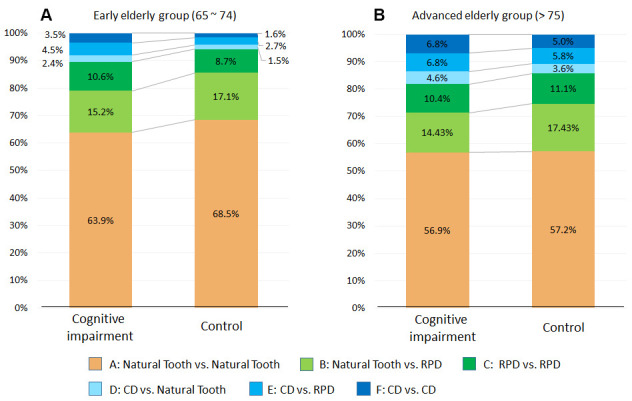
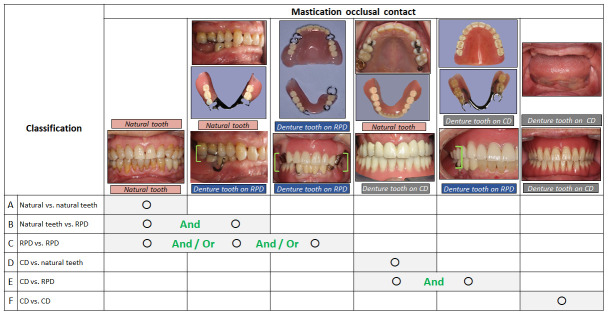
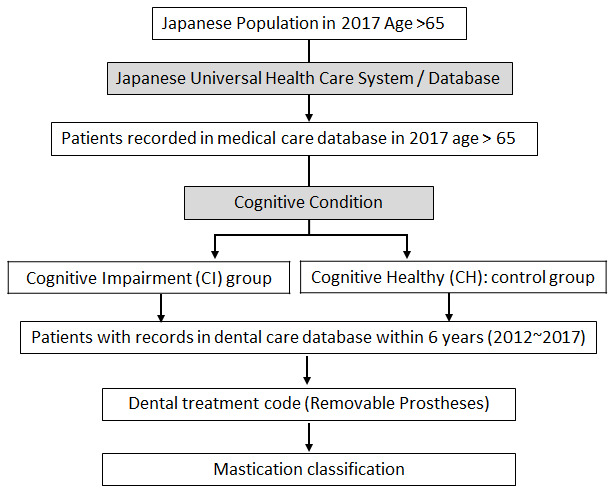
Cognitive health is subject to decline with increasing numbers of lost teeth which impacts mastication. This study is a descriptive data analysis of the association between masticatory and cognitive conditions using a large database. We obtained the dental and medical records from Japan's universal healthcare system (UHCS) from the national database in 2017. The data from 94% of the Japanese population aged 65 and over is included. It is inclusive of diagnostic codes for various types of cognitive impairment, as well as dental treatment records from 2012 to 2017. The cognitive impairment group was compared to those without a diagnosis of cognitive impairment. Crude odds ratio between loss of mastication with natural teeth (exposure) and cognitive impairments (outcome) were compared. Patients who have lost masticatory function are likely to have cognitive impairment with an odds ratio of 1.89 (p<0.0001) for early elderly (aged 65-75) and 1.33 (p<0.0001) for advanced elderly (over 75). Patients who are edentulous and function with complete dentures are likely to have cognitive impairment with an odds ratio of 2.38 (p<0.0001) and 1.38 (p<0.0001), respectively. The data shows a convincing and significant result of an association between cognitive health and oral health, related to masticatory conditions.
认知健康会随着失牙数量的增加而下降,从而影响咀嚼。本研究使用大型数据库对咀嚼和认知状况之间的关联进行描述性数据分析。我们从日本全民医保系统(UHCS)的国家数据库中获取了 2017 年的牙科和医疗记录。该数据库涵盖了 94%的 65 岁及以上的日本人口,包括各种类型认知障碍的诊断代码,以及 2012 年至 2017 年的牙科治疗记录。将认知障碍组与未被诊断为认知障碍的组进行比较。比较了咀嚼天然牙丧失(暴露)与认知障碍(结局)之间的粗比值比。咀嚼功能丧失的患者发生认知障碍的可能性更大,比值比分别为 1.89(p<0.0001)(年龄在 65-75 岁的早期老年人)和 1.33(p<0.0001)(年龄超过 75 岁的晚期老年人)。全口无牙且使用全口义齿的患者发生认知障碍的可能性更大,比值比分别为 2.38(p<0.0001)和 1.38(p<0.0001)。这些数据显示了认知健康与口腔健康之间存在关联,且与咀嚼状况有关,这一关联具有令人信服且显著的结果。