Molecular and Cellular Immunology Unit, UCL Great Ormond Street Institute of Child Health, University College London, London, United Kingdom.
Laboratory of Clinical Immunology and Microbiology, National Institute of Allergy and Infectious Diseases, National Institutes of Health, Bethesda, Maryland, USA.
Hum Gene Ther. 2021 Sep;32(17-18):949-958. doi: 10.1089/hum.2020.276. Epub 2021 May 6.
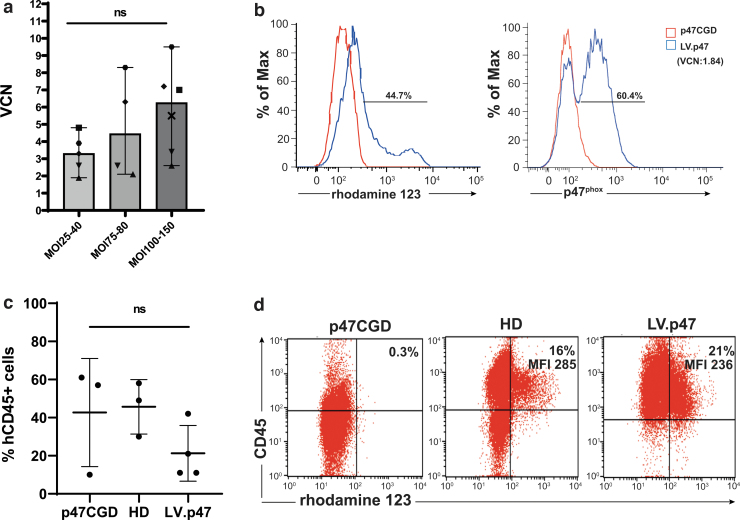
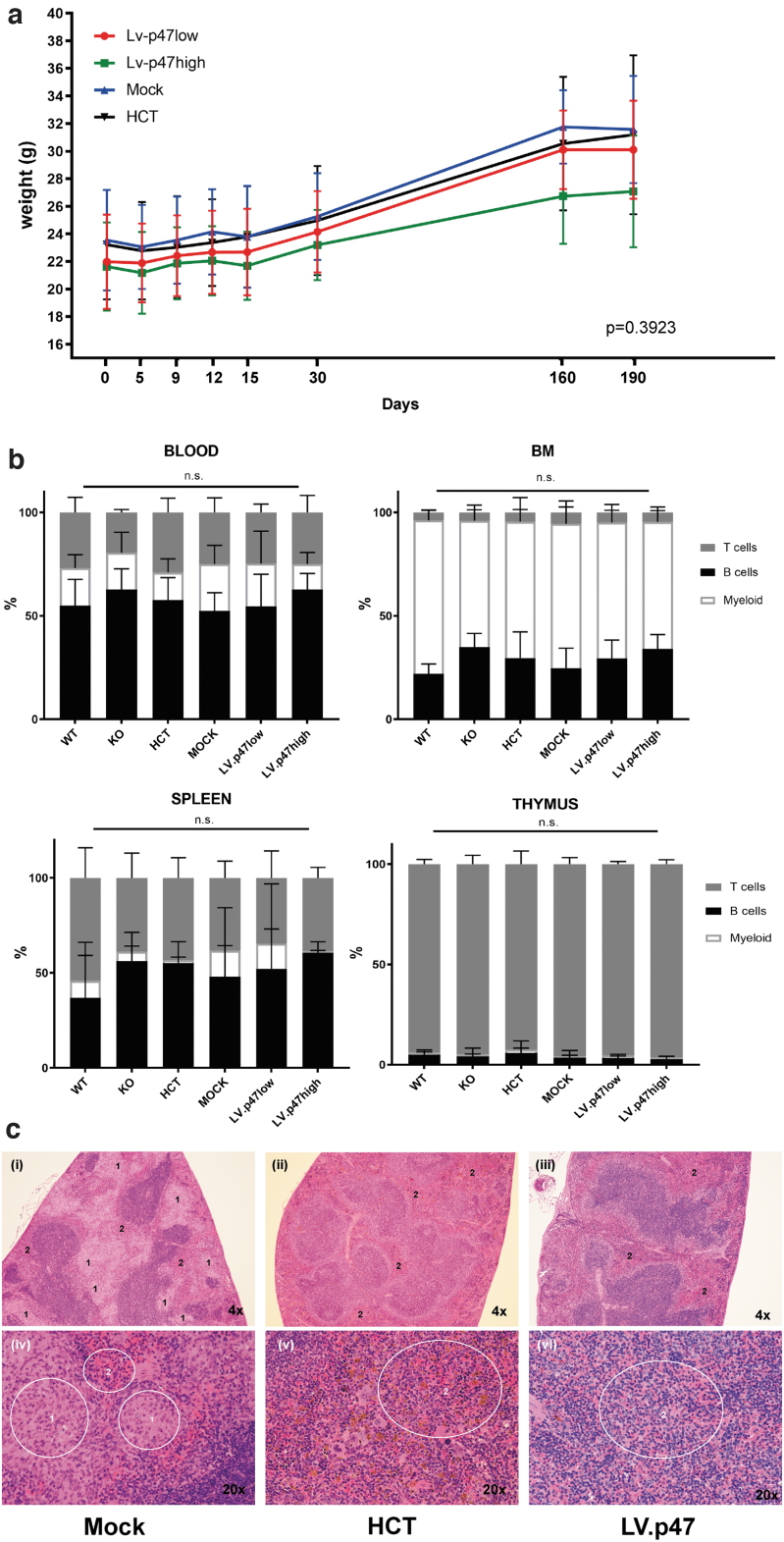
Chronic granulomatous disease (CGD) is an inherited blood disorder of phagocytic cells that renders patients susceptible to infections and inflammation. A recent clinical trial of lentiviral gene therapy for the most frequent form of CGD, X-linked, has demonstrated stable correction over time, with no adverse events related to the gene therapy procedure. We have recently developed a parallel lentiviral vector for p47-deficient CGD (p47CGD), the second most common form of this disease. Using this vector, we have observed biochemical correction of CGD in a mouse model of the disease. In preparation for clinical trial approval, we have performed standardized preclinical studies following Good Laboratory Practice (GLP) principles, to assess the safety of the gene therapy procedure. We report no evidence of adverse events, including mutagenesis and tumorigenesis, in human hematopoietic stem cells transduced with the lentiviral vector. Biodistribution studies of transduced human CD34 cells indicate that the homing properties or engraftment ability of the stem cells is not negatively affected. CD34 cells derived from a p47CGD patient were subjected to an optimized transduction protocol and transplanted into immunocompromised mice. After the procedure, patient-derived neutrophils resumed their function, suggesting that gene correction was successful. These studies pave the way to a first-in-man clinical trial of lentiviral gene therapy for the treatment of p47CGD.
慢性肉芽肿病(CGD)是一种吞噬细胞遗传性血液疾病,使患者易受感染和炎症的影响。最近对最常见的 CGD 形式,X 连锁 CGD 的慢病毒基因治疗的临床试验表明,随着时间的推移稳定纠正,与基因治疗过程无关的不良事件。我们最近为 p47 缺陷 CGD(p47CGD)开发了一种平行的慢病毒载体,这是该病的第二种最常见形式。使用该载体,我们在疾病的小鼠模型中观察到 CGD 的生化纠正。为了获得临床试验批准,我们按照良好实验室规范(GLP)原则进行了标准化的临床前研究,以评估基因治疗过程的安全性。我们没有证据表明接受慢病毒载体转导的人造血干细胞发生不良事件,包括致突变和肿瘤形成。转导的人 CD34 细胞的生物分布研究表明,干细胞的归巢特性或植入能力没有受到负面影响。从 p47CGD 患者中提取的 CD34 细胞经过优化的转导方案处理后移植到免疫缺陷小鼠中。该程序后,患者来源的中性粒细胞恢复其功能,表明基因纠正成功。这些研究为 p47CGD 治疗的首例慢病毒基因治疗人体临床试验铺平了道路。