California Medical Clinic for Headache, 2001 Santa Monica Blvd, Santa Monica, CA, 90404, USA.
Lundbeck La Jolla Research Center, 10035 Road to the Cure, Suite 250, San Diego, CA, USA.
BMC Neurol. 2021 Mar 19;21(1):126. doi: 10.1186/s12883-021-02123-w.
Eptinezumab, an anti-calcitonin gene-related peptide monoclonal antibody recently approved in the United States for preventive treatment of migraine in adults, was found to be well tolerated in double-blind, placebo-controlled studies in patients with episodic and chronic migraine. The objective of the PREVAIL study was to evaluate the long-term safety, immunogenicity, and impact on patient-reported outcomes of repeat doses of eptinezumab in patients with chronic migraine.
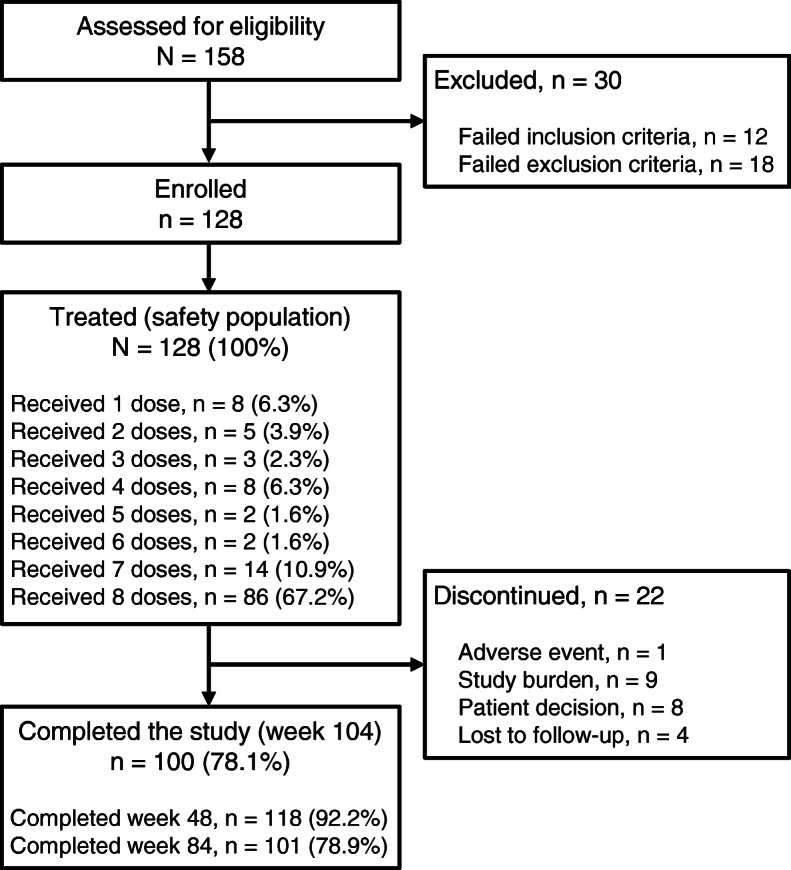
PREVAIL was an open-label, phase 3 trial comprising a 48-week treatment phase followed by a second 48-week treatment phase. Adults with chronic migraine received eptinezumab 300 mg by 30-min intravenous administration every 12 weeks for up to 8 doses. Patients were followed for 20 weeks after the final infusion (end-of-study visit at week 104).
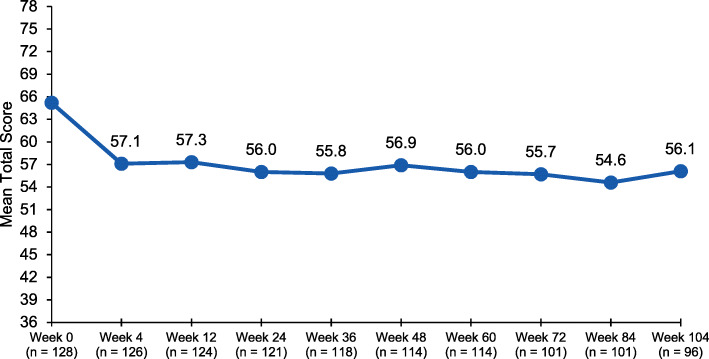
Overall, 128 adults (mean age, 41.5 years) with chronic migraine were included. During the 2 years, the most frequently reported treatment-emergent adverse events were nasopharyngitis (14.1%), upper respiratory tract infection (7.8%), sinusitis (7.8%), influenza (6.3%), bronchitis (5.5%), and migraine (5.5%). The rate of study-drug discontinuation due to adverse events was 6.3%, which included 3 patients with infusion-related hypersensitivity. The incidence of anti-eptinezumab antibodies peaked at week 24 and declined despite continued dosing, to nondetectable levels at week 104. Improvements in patient-reported outcomes were observed at first assessment (week 4) and generally sustained through week 104.
In adults with chronic migraine, eptinezumab 300 mg demonstrated a favorable safety profile, limited long-term immunogenicity, early and sustained reductions in migraine-related burden, and improvements in health-related quality of life over 2 years.
ClinicalTrials.gov (Identifier: NCT02985398 ).
依普替扎umab 是一种抗降钙素基因相关肽的单克隆抗体,最近在美国被批准用于成人偏头痛的预防性治疗,在发作性和慢性偏头痛患者的双盲、安慰剂对照研究中发现其具有良好的耐受性。PREVAIL 研究的目的是评估重复给予依普替扎umab 对慢性偏头痛患者的长期安全性、免疫原性和对患者报告结局的影响。
PREVAIL 是一项开放标签、3 期临床试验,包括 48 周的治疗期和随后的第二个 48 周的治疗期。慢性偏头痛患者每 12 周接受依普替扎umab 300mg,通过 30 分钟静脉输注,最多 8 个剂量。在最后一次输注后(第 104 周的终末研究访问)进行 20 周的随访。
共有 128 名慢性偏头痛成人(平均年龄 41.5 岁)入组。在 2 年期间,最常报告的治疗后不良事件是鼻咽炎(14.1%)、上呼吸道感染(7.8%)、鼻窦炎(7.8%)、流感(6.3%)、支气管炎(5.5%)和偏头痛(5.5%)。因不良事件而停药的研究药物发生率为 6.3%,包括 3 例输注相关过敏反应。抗依普替扎umab 抗体的发生率在第 24 周达到峰值,尽管继续给药,但在第 104 周时降至无法检测水平。患者报告的结局在首次评估(第 4 周)时得到改善,并且通常在第 104 周时持续改善。
在慢性偏头痛成人中,依普替扎umab 300mg 具有良好的安全性、有限的长期免疫原性、偏头痛相关负担的早期和持续降低以及 2 年内健康相关生活质量的改善。
ClinicalTrials.gov(标识符:NCT02985398)。