Scuderi Sarah A, Lanza Marika, Casili Giovanna, Esposito Francesca, Colarossi Cristina, Giuffrida Dario, Irene Paterniti, Cuzzocrea Salvatore, Esposito Emanuela, Campolo Michela
Department of Chemical, Biological, Pharmaceutical and Environmental Sciences, University of MessinaMessinaItaly.
IOM Ricerca SrlViagrandeItaly.
Oncol Res. 2021 Sep 7;28(7):779-790. doi: 10.3727/096504021X16161478258040. Epub 2021 Mar 19.
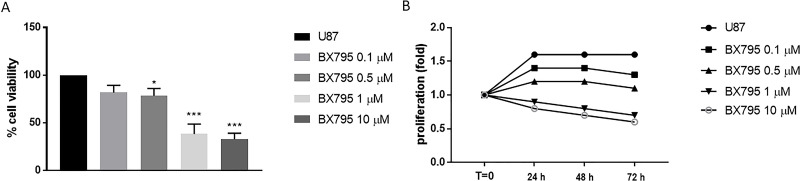
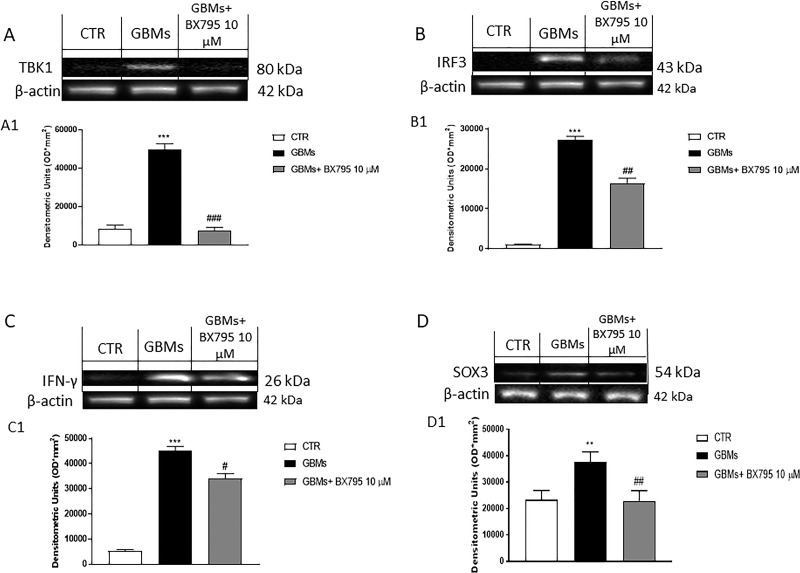
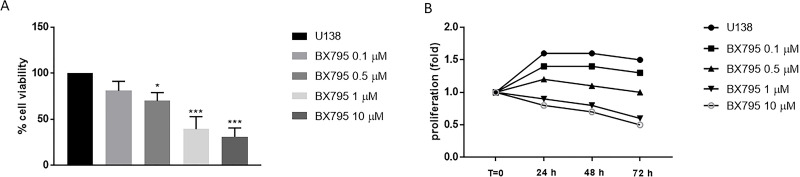
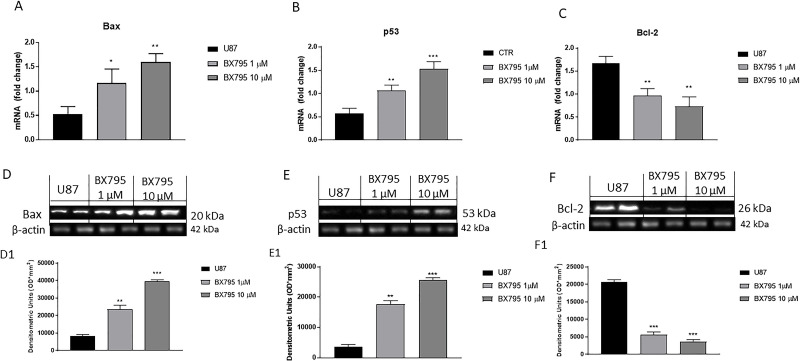
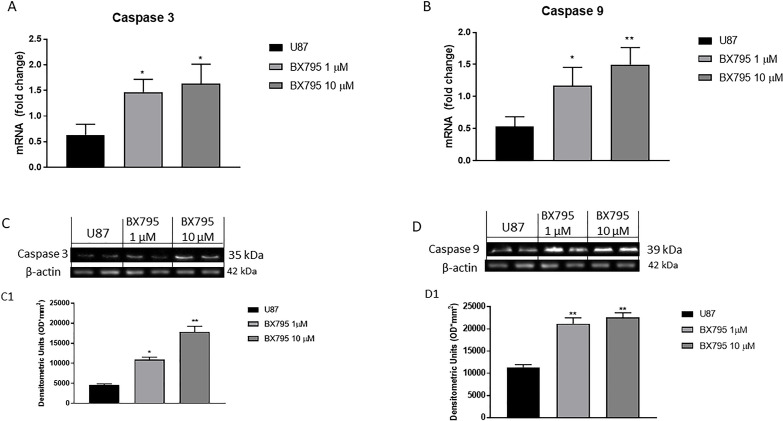
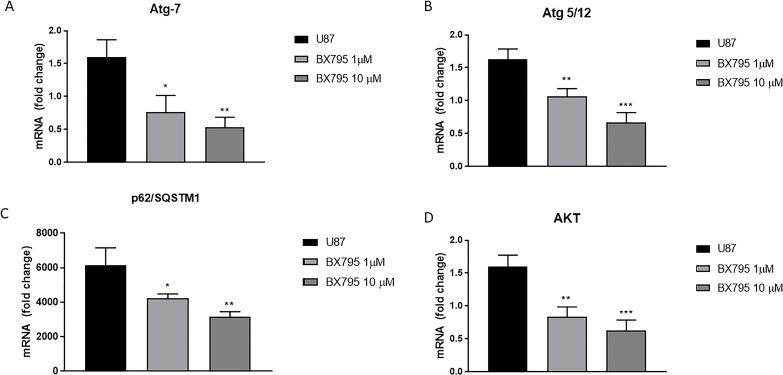
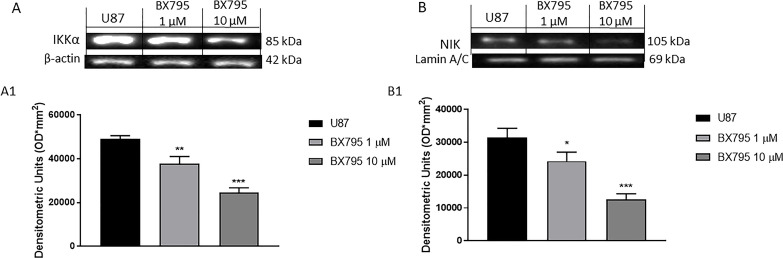
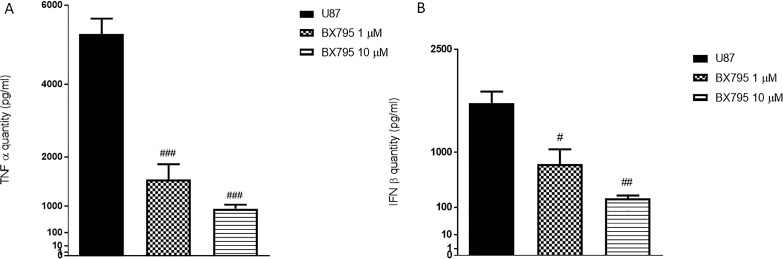
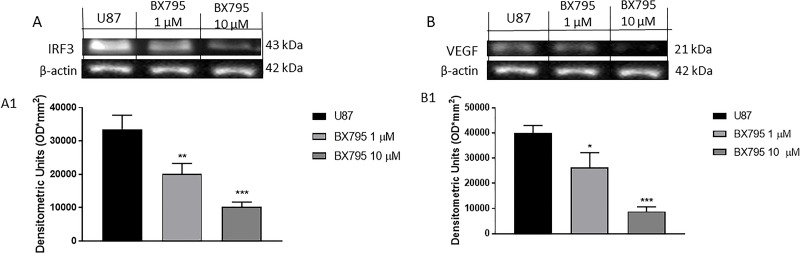
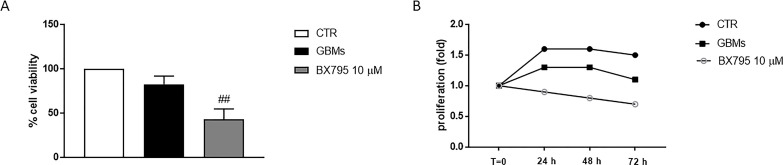
Glioma are common malignant brain tumors, among which glioblastoma multiforme (GBM) has the worst prognosis. Different studies of GBM revealed that targeting nuclear factor B (NF-B) induced an attenuation tumor proliferation and prolonged cell survival. TBK1 {TANK [TRAF (TNF (tumor-necrosis-factor) receptor-associated factor)-associated NF-B activator]-binding kinase 1} is a serine/threonine protein kinase, and it is a member of the IB kinase (IKK) family involved in NF-B pathway activation. The aim of this study was to investigate the potential effect of BX795, an inhibitor of TBK1, in an in vitro and ex vivo model of GBM. GBM cell lines (U87 and U138) and primary GBM cells were treated with different concentrations of BX795 at different time points (24, 48, and 72h) to evaluate cell viability, autophagy, inflammation, and apoptosis. Our results demonstrated that BX795 10 M was able to reduce cell viability, showing antiproliferative effect in U87, U138, and primary GBM cells. Moreover, treatment with BX795 10 M increased the proapoptotic proteins Bax, p53, caspase 3, and caspase 9, whereas the antiapoptotic Bcl-2 expression was reduced. Additionally, our results showed a marked decrease in autophagy following BX795 treatment, reducing Atg 7, Atg 5/12, and AKT expression. The anti-inflammatory effect of BX795 was demonstrated by a significantly reduction in NIK, IKK, and TNF- expression, accompanied by a downregulation of angiogenesis. Furthermore, in primary GBM cell, BX795 10 M was able to reduce TBK1 pathway activation and SOX3 expression. In conclusion, these findings showed that TBK1 is involved in GBM proliferation, demonstrating that the inhibitor BX795, thanks to its abilities, could improve therapeutic strategies for GBM treatment.
胶质瘤是常见的恶性脑肿瘤,其中多形性胶质母细胞瘤(GBM)的预后最差。对GBM的不同研究表明,靶向核因子κB(NF-κB)可导致肿瘤增殖减弱并延长细胞存活时间。TBK1 {TANK [TRAF(肿瘤坏死因子(TNF)受体相关因子)相关的NF-κB激活剂]结合激酶1}是一种丝氨酸/苏氨酸蛋白激酶,它是参与NF-κB途径激活的IκB激酶(IKK)家族的成员。本研究的目的是在GBM的体外和离体模型中研究TBK1抑制剂BX795的潜在作用。在不同时间点(24、48和72小时)用不同浓度的BX795处理GBM细胞系(U87和U138)和原发性GBM细胞,以评估细胞活力、自噬、炎症和凋亡。我们的结果表明,10 μM的BX-795能够降低细胞活力,对U87、U138和原发性GBM细胞显示出抗增殖作用。此外,用10 μM的BX795处理可增加促凋亡蛋白Bax、p53、半胱天冬酶3和半胱天冬酶9的表达,而抗凋亡蛋白Bcl-2的表达则降低。此外,我们的结果显示,BX795处理后自噬明显减少,Atg 7、Atg 5/12和AKT表达降低。BX795的抗炎作用表现为NIK、IKK和TNF-α表达显著降低,同时血管生成下调。此外,在原发性GBM细胞中,10 μM的BX795能够降低TBK1途径的激活和SOX3的表达。总之,这些发现表明TBK1参与了GBM的增殖,证明抑制剂BX795凭借其能力可以改善GBM的治疗策略。