Institute of Biochemistry II, School of Medicine, Goethe University, Frankfurt am Main, Germany.
Department of Theoretical Biophysics, Max Planck Institute of Biophysics, Frankfurt am Main, Germany.
EMBO Rep. 2020 Jan 7;21(1):e48317. doi: 10.15252/embr.201948317. Epub 2019 Nov 11.
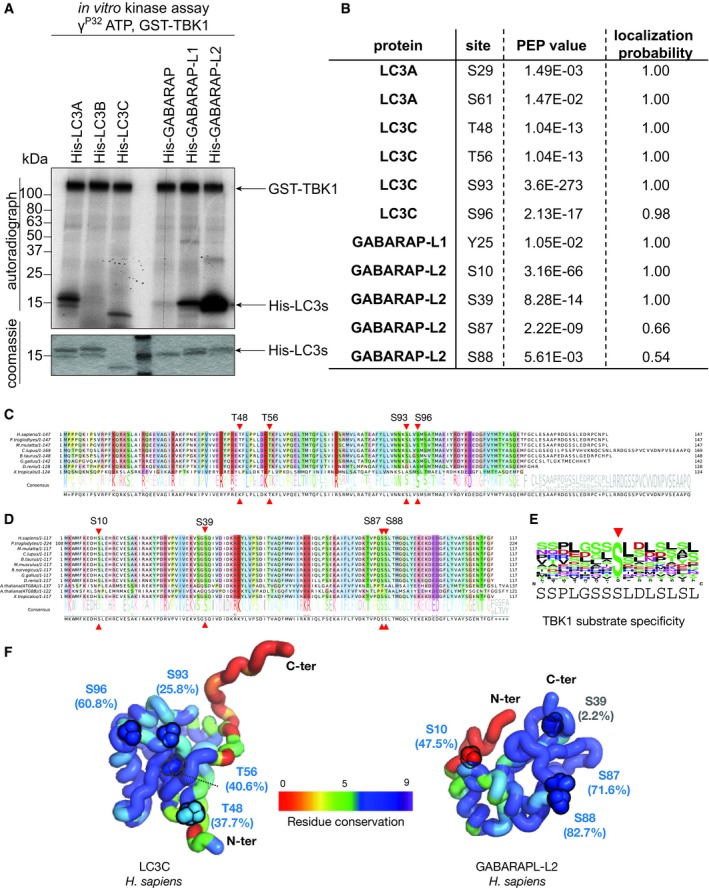
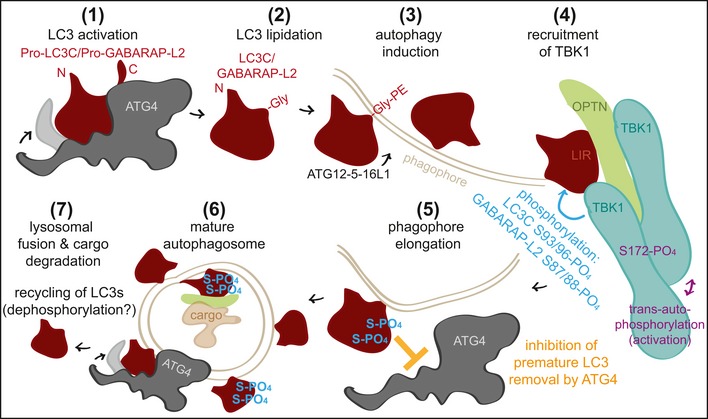
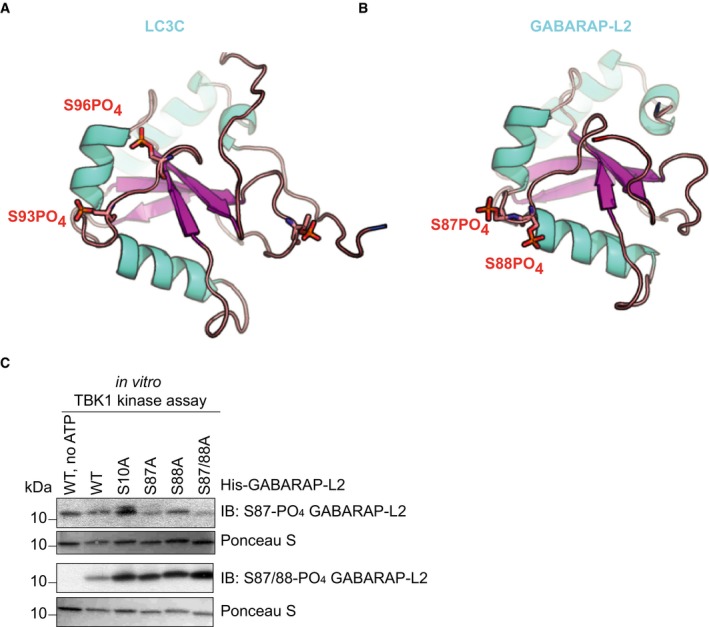
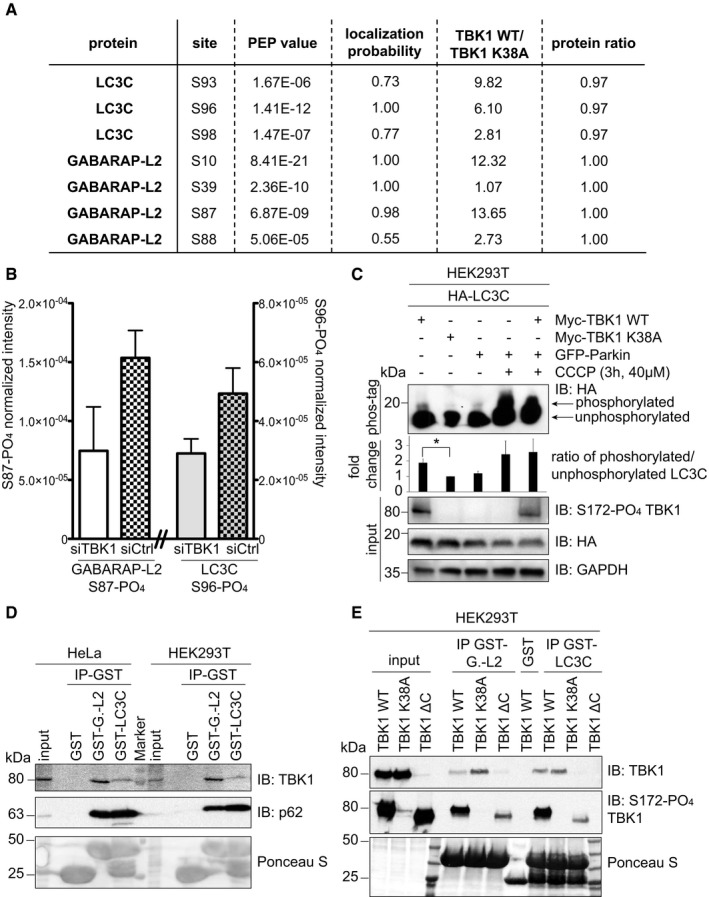
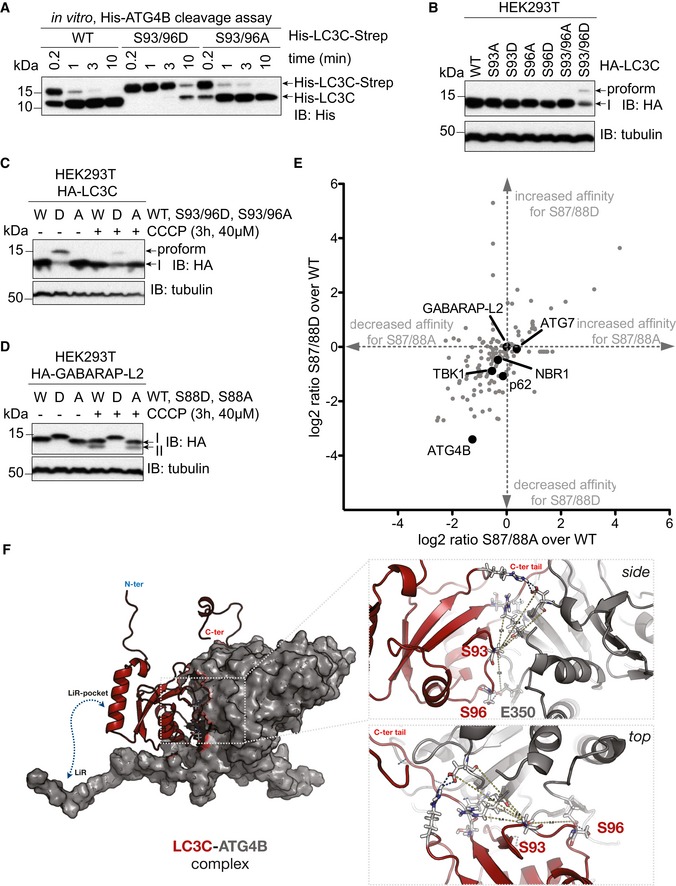
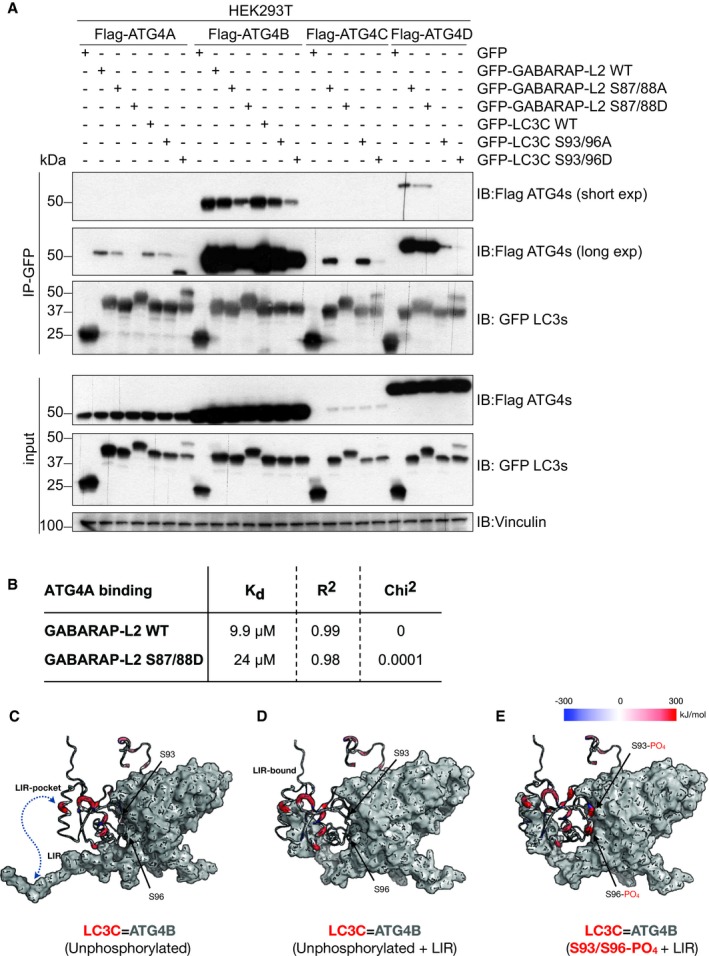
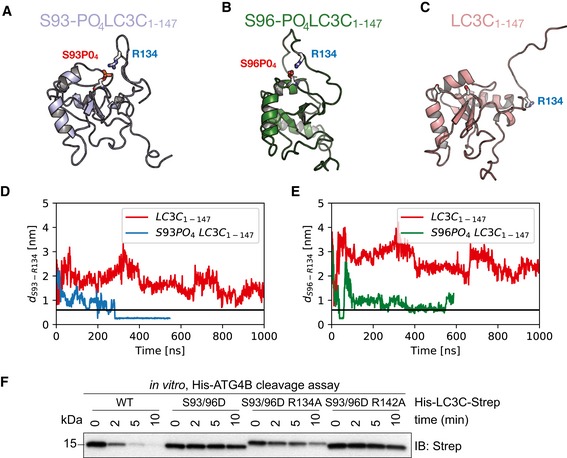
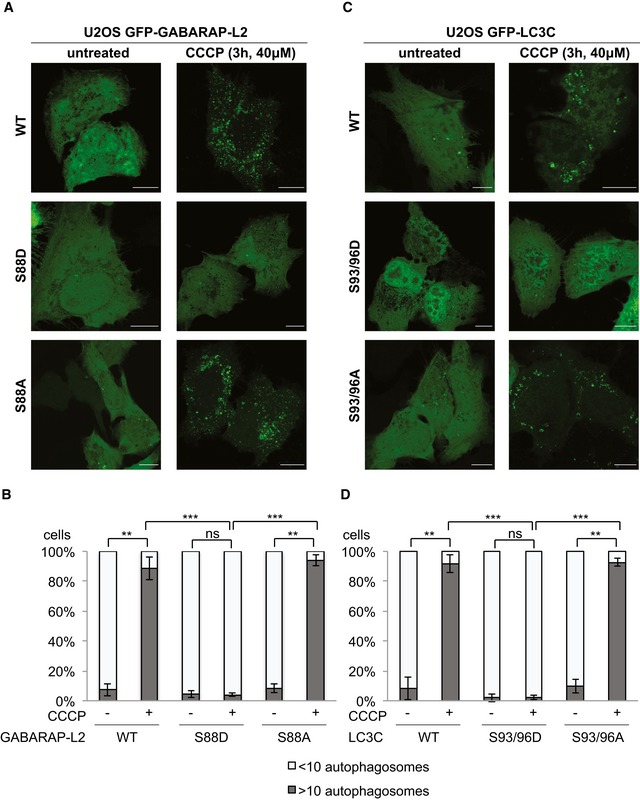
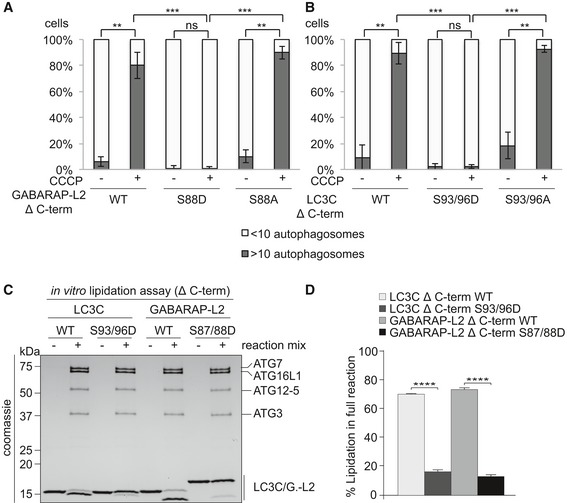
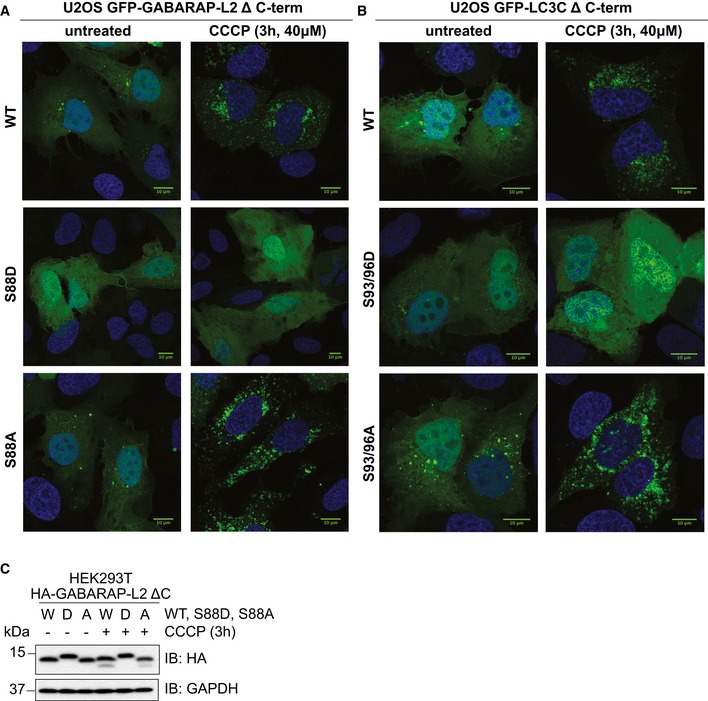
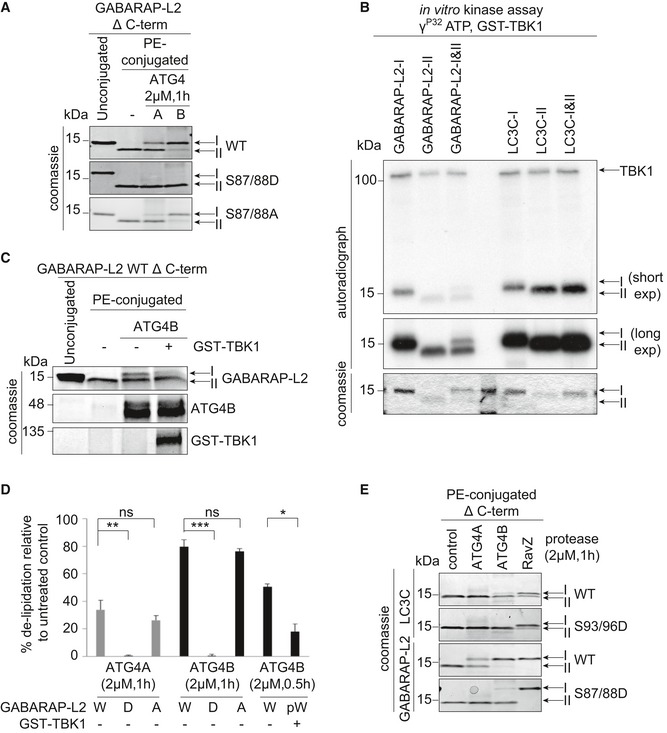
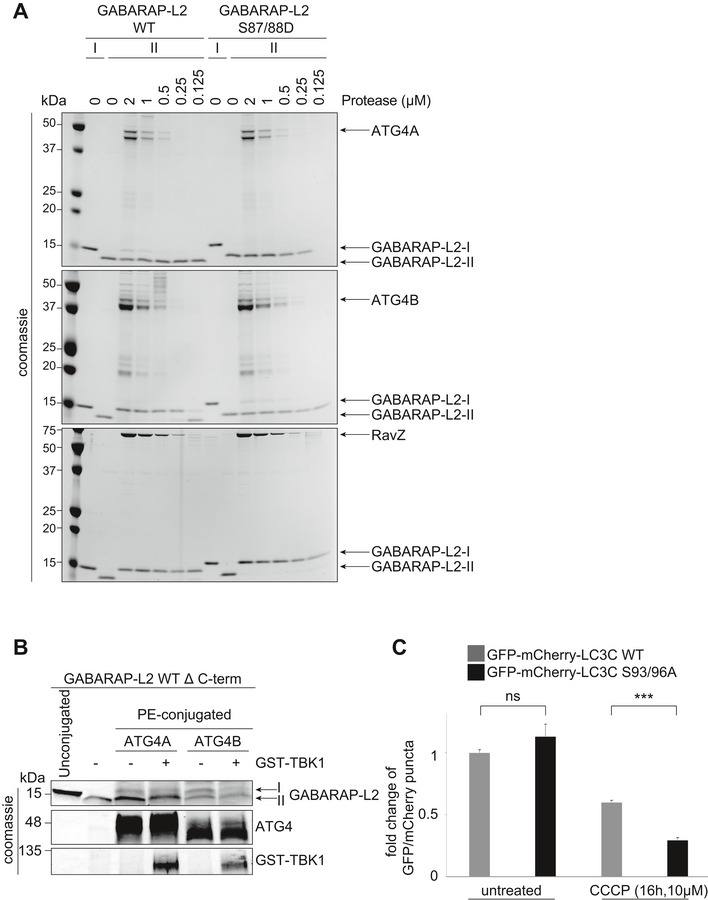
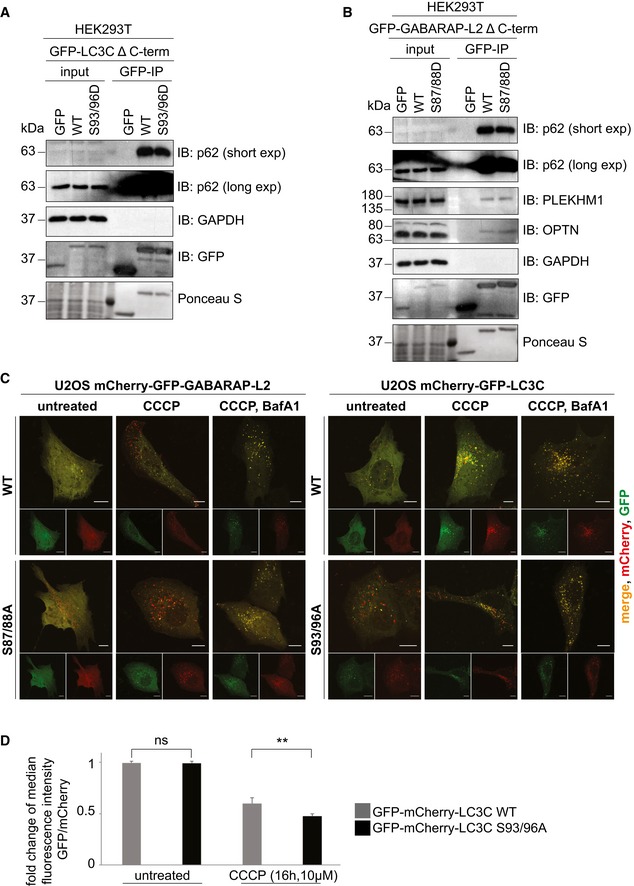
Autophagy is a highly conserved catabolic process through which defective or otherwise harmful cellular components are targeted for degradation via the lysosomal route. Regulatory pathways, involving post-translational modifications such as phosphorylation, play a critical role in controlling this tightly orchestrated process. Here, we demonstrate that TBK1 regulates autophagy by phosphorylating autophagy modifiers LC3C and GABARAP-L2 on surface-exposed serine residues (LC3C S93 and S96; GABARAP-L2 S87 and S88). This phosphorylation event impedes their binding to the processing enzyme ATG4 by destabilizing the complex. Phosphorylated LC3C/GABARAP-L2 cannot be removed from liposomes by ATG4 and are thus protected from ATG4-mediated premature removal from nascent autophagosomes. This ensures a steady coat of lipidated LC3C/GABARAP-L2 throughout the early steps in autophagosome formation and aids in maintaining a unidirectional flow of the autophagosome to the lysosome. Taken together, we present a new regulatory mechanism of autophagy, which influences the conjugation and de-conjugation of LC3C and GABARAP-L2 to autophagosomes by TBK1-mediated phosphorylation.
自噬是一种高度保守的分解代谢过程,通过溶酶体途径靶向降解有缺陷或其他有害的细胞成分。涉及翻译后修饰(如磷酸化)的调节途径在控制这一高度协调的过程中起着关键作用。在这里,我们证明 TBK1 通过磷酸化位于表面暴露的丝氨酸残基上的自噬修饰物 LC3C 和 GABARAP-L2(LC3C S93 和 S96;GABARAP-L2 S87 和 S88)来调节自噬。这种磷酸化事件通过破坏复合物来阻碍它们与加工酶 ATG4 的结合。磷酸化的 LC3C/GABARAP-L2 不能被 ATG4 从脂质体上除去,因此免受 ATG4 介导的从新生自噬体过早除去。这确保了在自噬体形成的早期步骤中始终存在脂化的 LC3C/GABARAP-L2,并有助于维持自噬体向溶酶体的单向流动。总之,我们提出了自噬的一种新的调节机制,该机制通过 TBK1 介导的磷酸化影响 LC3C 和 GABARAP-L2 与自噬体的缀合和去缀合。