Department of Rehabilitation Sciences, Ghent University, Campus UZ Gent, Corneel Heymanslaan 10, Building B3, 9000, Ghent, Belgium.
Department of Rehabilitation Sciences and Physiotherapy/Movant, Faculty of Medicine and Health Sciences, University of Antwerp, Antwerp, Belgium.
Sci Rep. 2021 Mar 19;11(1):6427. doi: 10.1038/s41598-021-85870-7.
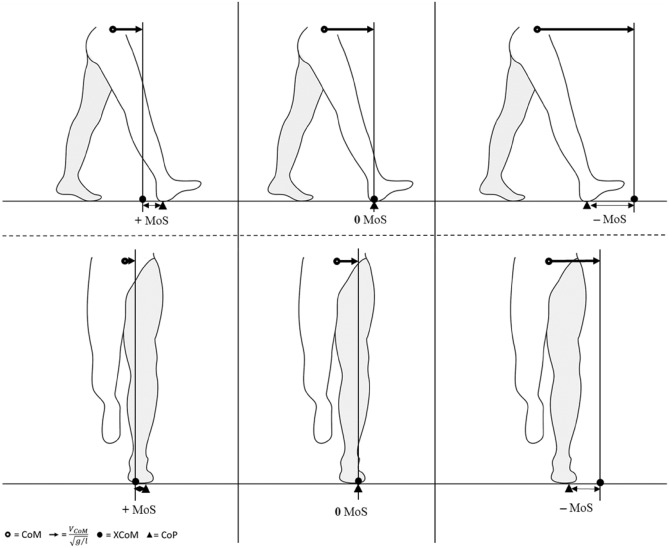
Integration of accurate vestibular, visual, and proprioceptive information is crucial in managing the centre of mass in relation to the base of support during gait. Therefore, bilateral loss of peripheral vestibular function can be highly debilitating when performing activities of daily life. To further investigate the influence of an impaired peripheral vestibular system on gait stability, spatiotemporal parameters, step-to-step variability, and mechanical stability parameters were examined in 20 patients with bilateral vestibulopathy and 20 matched healthy controls during preferred overground walking. Additionally, using a partial least squares analysis the relationship between spatiotemporal parameters of gait and the margins of stability was explored in both groups. Patients with bilateral vestibulopathy showed an increased cadence compared to healthy controls (121 ± 9 vs 115 ± 8 steps/min; p = 0.02; d = 0.77). In addition, although not significant (p = 0.07), a moderate effect size (d = 0.60) was found for step width variability (Coefficient of Variation (%); Bilateral vestibulopathy: 19 ± 11%; Healthy controls: 13 ± 5%). Results of the partial least squares analysis suggest that patients with peripheral vestibular failure implement a different balance control strategy. Instead of altering the step parameters, as is the case in healthy controls, they use the single and double support phases to control the state of the centre of mass to improve the mechanical stability.
在步态中,准确整合前庭、视觉和本体感觉信息对于管理质心相对于支撑基础至关重要。因此,当进行日常生活活动时,双侧外周前庭功能丧失可能会使人高度衰弱。为了进一步研究受损的外周前庭系统对步态稳定性的影响,我们在 20 名双侧前庭病变患者和 20 名匹配的健康对照者中,检查了他们在喜欢的地面行走时的时空参数、步长间变异性、机械稳定性参数。此外,我们使用偏最小二乘分析(PLS),在两组中探索了步态时空参数与稳定裕度之间的关系。与健康对照组相比,双侧前庭病变患者的步频增加(121±9 与 115±8 步/分钟;p=0.02;d=0.77)。此外,尽管没有统计学意义(p=0.07),但步宽变异性(变异系数(%);双侧前庭病变:19±11%;健康对照组:13±5%)具有中等效应量(d=0.60)。偏最小二乘分析的结果表明,患有外周前庭功能衰竭的患者采用了不同的平衡控制策略。他们没有像健康对照组那样改变步幅参数,而是利用单、双支撑阶段来控制质心的状态,以提高机械稳定性。