Faculty of Health Sciences, Simon Fraser University, 8888 University Drive V5A 1S6, Burnaby, British Columbia, Canada.
Curr HIV/AIDS Rep. 2021 Jun;18(3):176-185. doi: 10.1007/s11904-021-00550-5. Epub 2021 Mar 20.
Cost-effectiveness analysis (CEA) can help identify the trade-offs decision makers face when confronted with alternative courses of action for the implementation of public health strategies. Application of CEA alongside implementation scientific studies remains limited. We aimed to identify areas for future development in order to enhance the uptake and impact of model-based CEA in implementation scientific research.
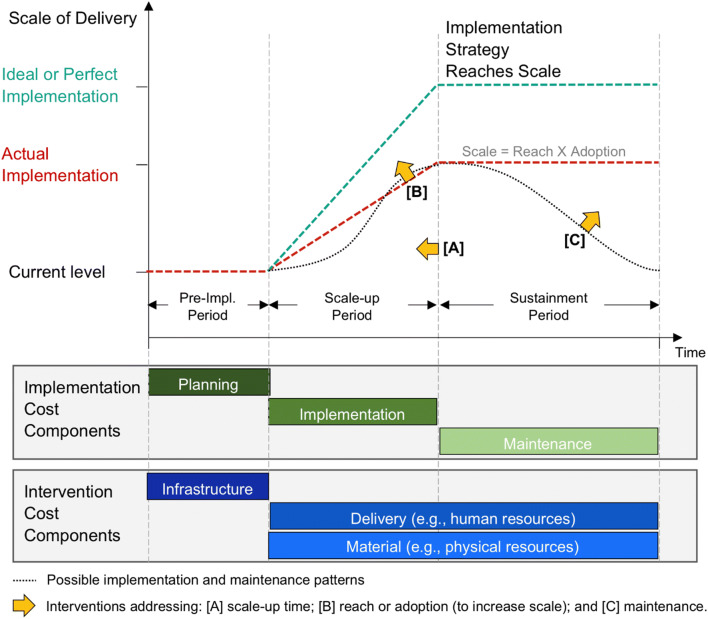
Important questions remain about how to broadly implement evidence-based public health interventions in routine practice. Establishing population-level implementation strategy components and distinct implementation phases, including planning for implementation, the time required to scale-up programs, and sustainment efforts required to maintain them, can help determine the data needed to quantify each of these elements. Model-based CEA can use these data to determine the added value associated with each of these elements across systems, settings, population subgroups, and levels of implementation to provide tailored guidance for evidence-based public health action. There is a need to integrate implementation science explicitly into CEA to adequately capture diverse real-world delivery contexts and make detailed, informed recommendations on the aspects of the implementation process that provide good value. We describe examples of how model-based CEA can integrate implementation scientific concepts and evidence to help tailor evaluations to local context. We also propose six distinct domains for methodological advancement in order to enhance the uptake and impact of model-based cost-effectiveness analysis in implementation scientific research.
目的综述:成本效益分析(CEA)可以帮助决策者在面临公共卫生策略实施的替代行动方案时,识别其所面临的权衡取舍。CEA 在实施科学研究中的应用仍然有限。我们旨在确定未来的发展方向,以提高基于模型的 CEA 在实施科学研究中的应用和影响。
最近发现:关于如何将循证公共卫生干预措施广泛应用于常规实践,仍存在许多重要问题。确定人群层面的实施策略组成部分和不同的实施阶段,包括实施规划、扩大项目所需的时间以及维持项目所需的持续努力,可以帮助确定量化这些要素所需的数据。基于模型的 CEA 可以利用这些数据,在不同系统、环境、人群亚组和实施水平上确定与这些要素相关的附加值,为循证公共卫生行动提供量身定制的指导。需要将实施科学明确纳入 CEA,以充分捕捉多样化的现实交付环境,并就实施过程中提供良好价值的方面提出详细、明智的建议。我们描述了如何将基于模型的 CEA 整合实施科学概念和证据,以帮助根据当地情况调整评估。我们还提出了六个不同的方法学发展领域,以提高基于模型的成本效益分析在实施科学研究中的应用和影响。