Department of Biomedical Data Science, Dartmouth College, New Hampshire, USA.
The Dartmouth Institute for Health Policy and Clinical Practice, Dartmouth College, New Hampshire, USA.
BMC Med Res Methodol. 2021 Mar 20;21(1):56. doi: 10.1186/s12874-021-01245-6.
Estimation that employs instrumental variables (IV) can reduce or eliminate bias due to confounding. In observational studies, instruments result from natural experiments such as the effect of clinician preference or geographic distance on treatment selection. In randomized studies the randomization indicator is typically a valid instrument, especially if the study is blinded, e.g. no placebo effect. Estimation via instruments is a highly developed field for linear models but the use of instruments in time-to-event analysis is far from established. Various IV-based estimators of the hazard ratio (HR) from Cox's regression models have been proposed.
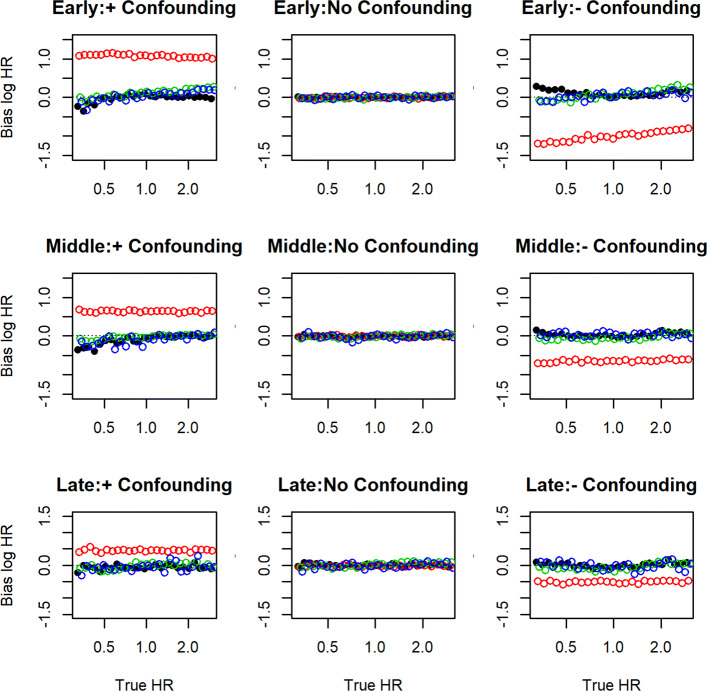
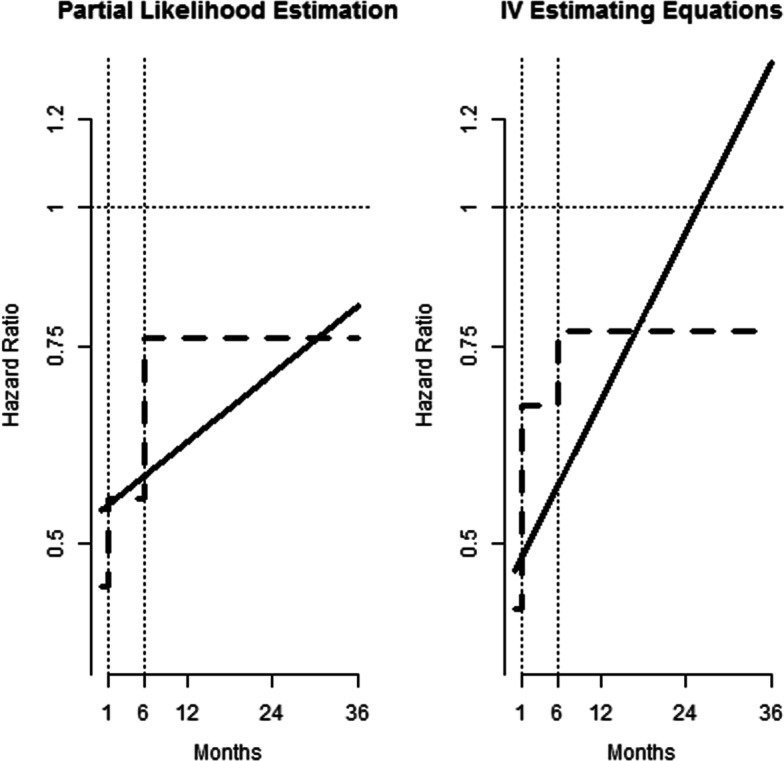
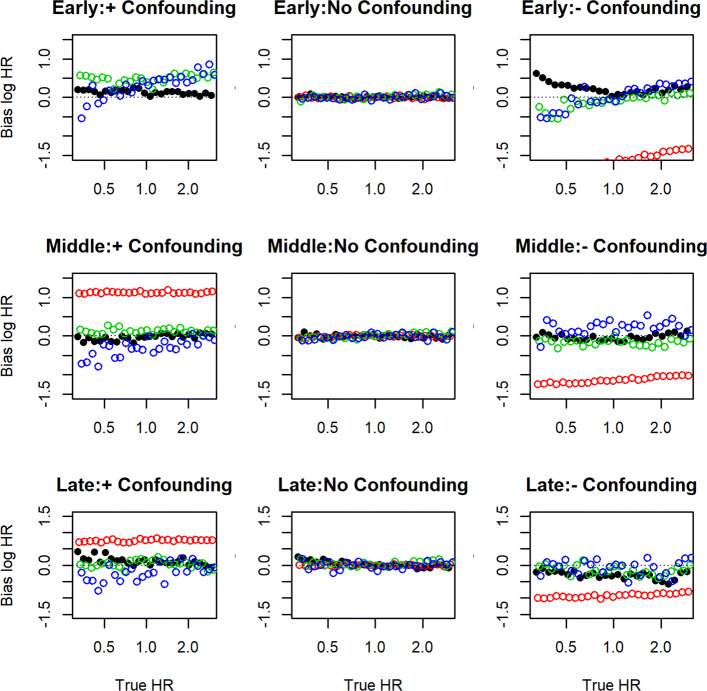
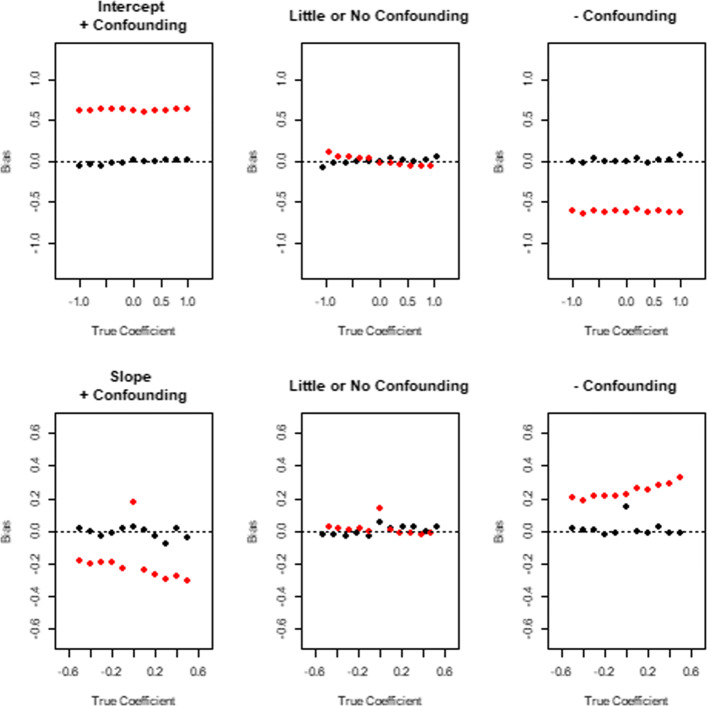
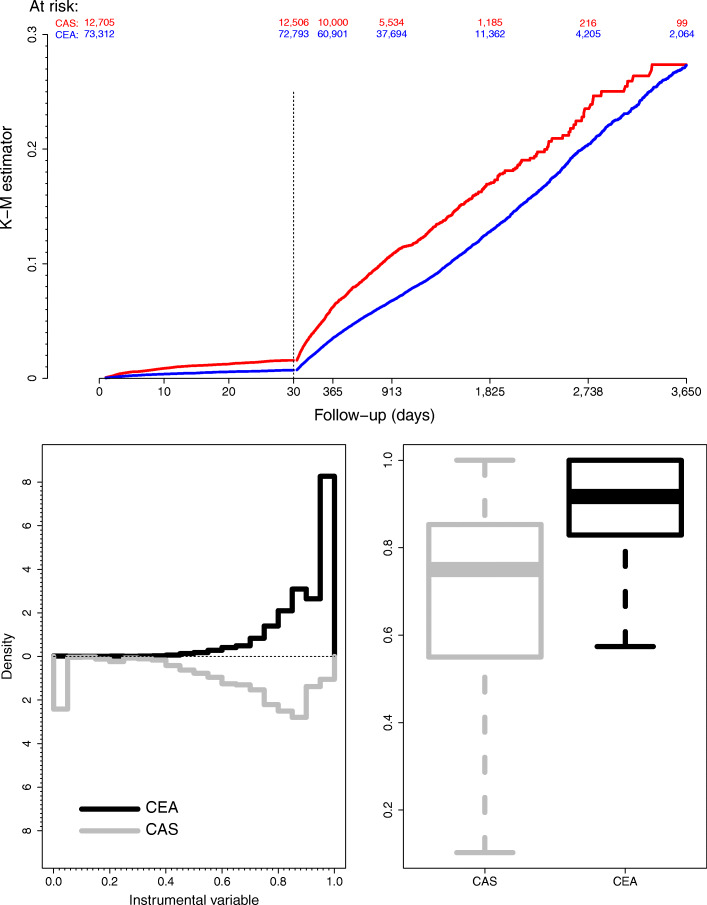
We extend IV based estimation of Cox's model beyond proportionality of hazards, and address estimation of a log-linear time dependent hazard ratio and a piecewise constant HR. We estimate the marginal time-dependent hazard ratio unlike other approaches that estimate the hazard ratio conditional on the omitted covariates. We use estimating equations motivated by Martingale representations that resemble the partial likelihood score statistic. We conducted simulations that include the use of copulas to generate potential times-to-event that have a given marginal structural time dependent hazard ratio but are dependent on omitted covariates. We compare our approach to the partial likelihood estimator, and two other IV based approaches. We apply it to estimation of the time dependent hazard ratio for two vascular interventions.
The method performs well in simulations of a stepwise time-dependent hazard ratio, but illustrates some bias that increases as the hazard ratio moves away from unity (the value that typically underlies the null hypothesis). It compares well to other approaches when the hazard ratio is stepwise constant. It also performs well for estimation of a log-linear hazard ratio where no other instrumental variable approaches exist.
The estimating equations we propose for estimating a time-dependent hazard ratio using an IV perform well in simulations. We encourage the use of our procedure for time-dependent hazard ratio estimation when unmeasured confounding is a concern and a suitable instrumental variable exists.
工具变量 (IV) 的估计可以减少或消除混杂引起的偏差。在观察性研究中,工具是由自然实验产生的,例如临床医生偏好或地理距离对治疗选择的影响。在随机研究中,随机化指标通常是一个有效的工具,特别是如果研究是盲法的,例如没有安慰剂效应。通过工具进行估计是线性模型中一个高度发达的领域,但工具在时变分析中的应用还远未确立。已经提出了各种基于 IV 的 Cox 回归模型风险比 (HR) 估计量。
我们将 Cox 模型的基于 IV 的估计扩展到了风险比的比例之外,并解决了对数线性时变风险比和分段常数 HR 的估计问题。我们估计了边缘时变风险比,与其他估计条件风险比的方法不同。我们使用基于鞅表示的估计方程,类似于部分似然得分统计量。我们进行了模拟,包括使用 Copula 生成具有给定边缘结构时变风险比但依赖于遗漏协变量的潜在事件时间。我们将我们的方法与部分似然估计器和其他两种基于 IV 的方法进行了比较。我们将其应用于两种血管介入治疗的时变风险比估计。
该方法在逐步时变风险比的模拟中表现良好,但在风险比远离 unity(通常是零假设的基础值)时会出现一些偏差。当风险比是逐步常数时,它与其他方法相比表现良好。当不存在其他工具变量方法时,它也可以很好地估计对数线性风险比。
我们提出的用于使用 IV 估计时变风险比的估计方程在模拟中表现良好。当存在未测量的混杂并且存在合适的工具变量时,我们鼓励使用我们的程序进行时变风险比估计。