Burley Stephen K
Research Collaboratory for Structural Bioinformatics Protein Data Bank, Institute for Quantitative Biomedicine, Rutgers, The State University of New Jersey, Piscataway, New Jersey, USA; Department of Chemistry and Chemical Biology, Rutgers, The State University of New Jersey, Piscataway, New Jersey, USA; Rutgers Cancer Institute of New Jersey, Robert Wood Johnson Medical School, New Brunswick, New Jersey, USA; Research Collaboratory for Structural Bioinformatics Protein Data Bank, San Diego Supercomputer Center, University of California, San Diego, La Jolla, California, USA; Skaggs School of Pharmacy and Pharmaceutical Sciences, University of California, San Diego, La Jolla, California, USA.
J Biol Chem. 2021 Jan-Jun;296:100559. doi: 10.1016/j.jbc.2021.100559. Epub 2021 Mar 18.
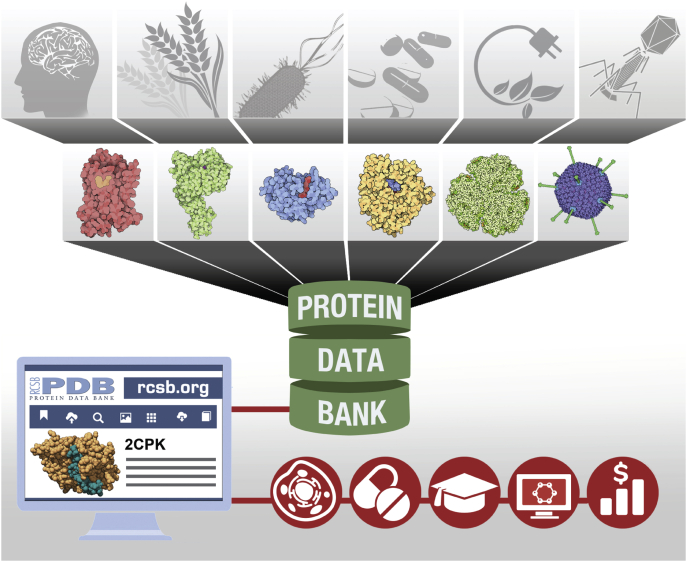
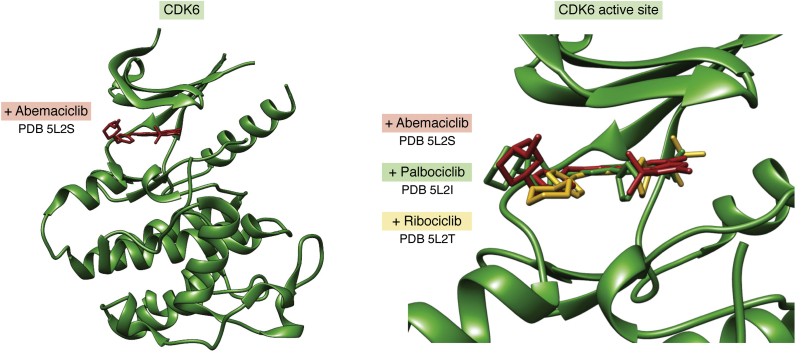
The Protein Data Bank (PDB) is an international core data resource central to fundamental biology, biomedicine, bioenergy, and biotechnology/bioengineering. Now celebrating its 50th anniversary, the PDB houses >175,000 experimentally determined atomic structures of proteins, nucleic acids, and their complexes with one another and small molecules and drugs. The importance of three-dimensional (3D) biostructure information for research and education obtains from the intimate link between molecular form and function evident throughout biology. Among the most prolific consumers of PDB data are biomedical researchers, who rely on the open access resource as the authoritative source of well-validated, expertly curated biostructures. This review recounts how the PDB grew from just seven protein structures to contain more than 49,000 structures of human proteins that have proven critical for understanding their roles in human health and disease. It then describes how these structures are used in academe and industry to validate drug targets, assess target druggability, characterize how tool compounds and other small-molecules bind to drug targets, guide medicinal chemistry optimization of binding affinity and selectivity, and overcome challenges during preclinical drug development. Three case studies drawn from oncology exemplify how structural biologists and open access to PDB structures impacted recent regulatory approvals of antineoplastic drugs.
蛋白质数据库(PDB)是基础生物学、生物医学、生物能源以及生物技术/生物工程领域核心的国际数据资源。如今,PDB迎来了它的50周年庆典,它收录了超过17.5万个通过实验测定的蛋白质、核酸及其相互之间、与小分子和药物形成的复合物的原子结构。三维(3D)生物结构信息对于研究和教育的重要性源于分子形态与功能之间在整个生物学领域都显而易见的紧密联系。PDB数据的最大用户群体之一是生物医学研究人员,他们将这个开放获取资源作为经过充分验证、精心整理的生物结构的权威来源。这篇综述讲述了PDB是如何从仅有的七个蛋白质结构发展到包含超过4.9万个对理解其在人类健康和疾病中的作用至关重要的人类蛋白质结构的。然后,它描述了这些结构在学术界和工业界是如何用于验证药物靶点、评估靶点可成药性、表征工具化合物和其他小分子如何与药物靶点结合、指导结合亲和力和选择性的药物化学优化以及克服临床前药物开发过程中的挑战的。从肿瘤学领域选取的三个案例研究例证了结构生物学家以及PDB结构的开放获取如何影响了近期抗肿瘤药物的监管批准。