Nielsen Frank, Marti Gautier, Ray Sumanta, Pyne Saumyadipta
Sony Computer Science Laboratories Inc, Tokyo, Japan.
Independent Researcher, Abu Dhabi, United Arab Emirates.
Sankhya B (2008). 2021;83(Suppl 1):167-184. doi: 10.1007/s13571-021-00255-0. Epub 2021 Mar 16.
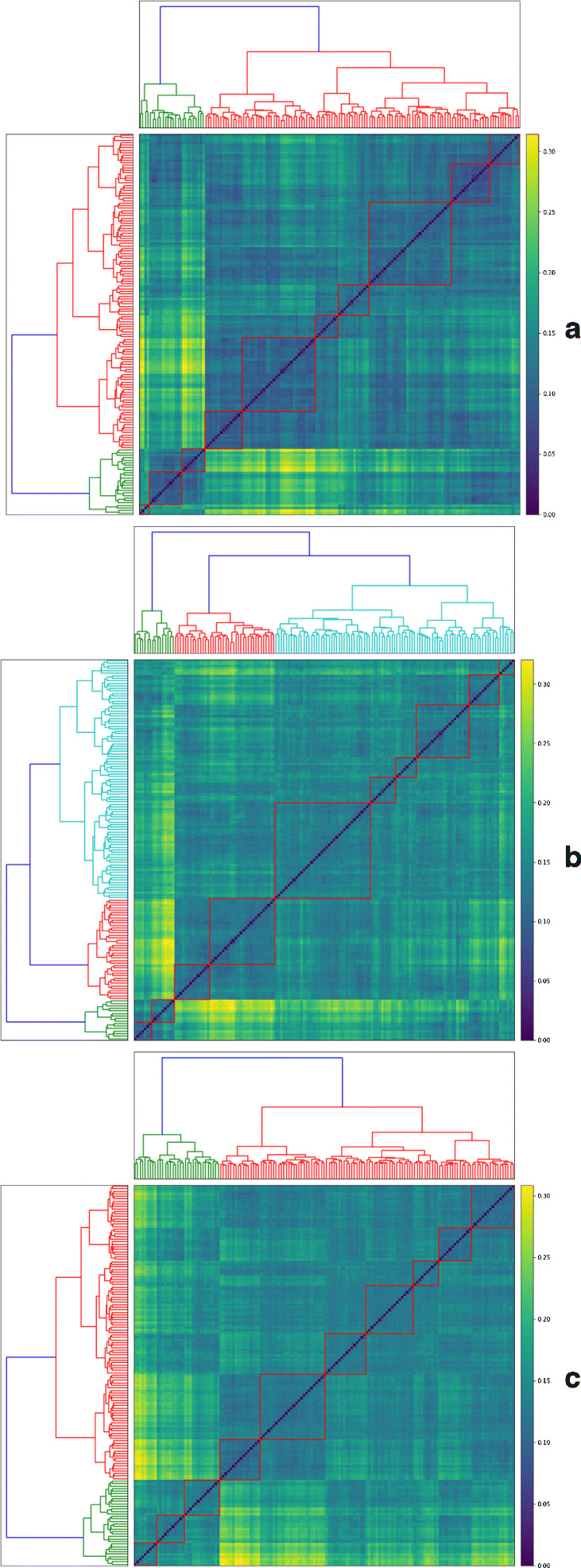
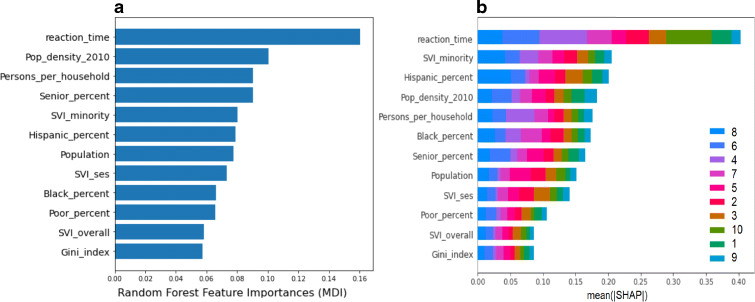
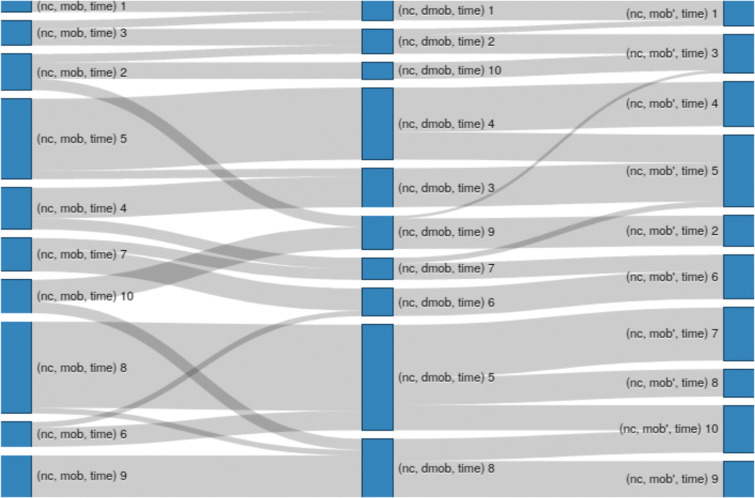
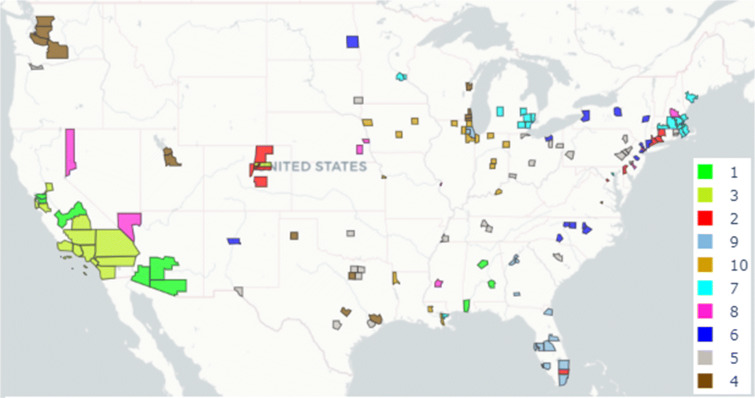
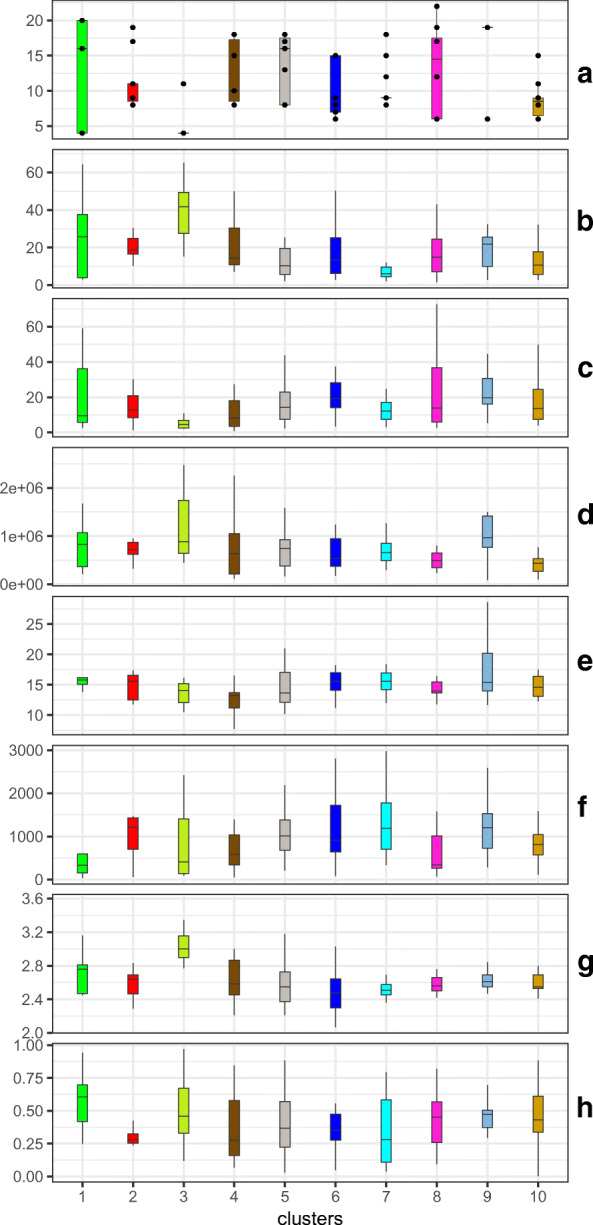
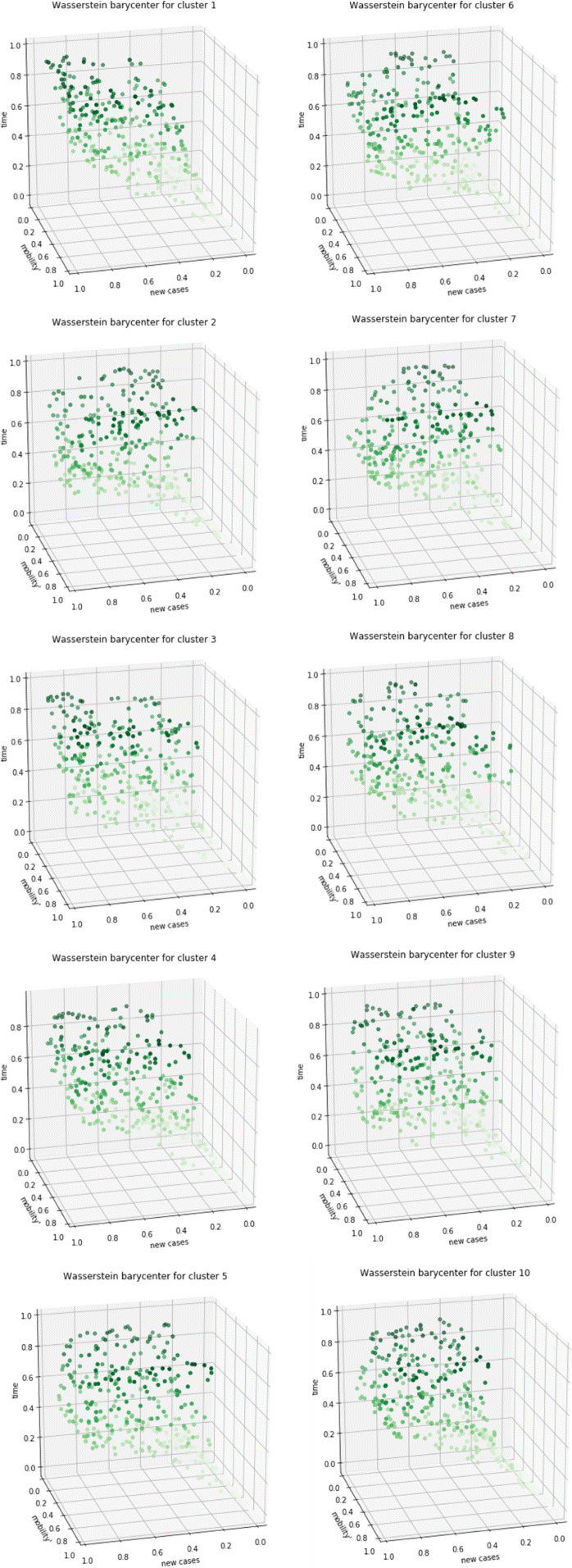
Social distancing and stay-at-home are among the few measures that are known to be effective in checking the spread of a pandemic such as COVID-19 in a given population. The patterns of dependency between such measures and their effects on disease incidence may vary dynamically and across different populations. We described a new computational framework to measure and compare the temporal relationships between human mobility and new cases of COVID-19 across more than 150 cities of the United States with relatively high incidence of the disease. We used a novel application of Optimal Transport for computing the distance between the normalized patterns induced by bivariate time series for each pair of cities. Thus, we identified 10 clusters of cities with similar temporal dependencies, and computed the Wasserstein barycenter to describe the overall dynamic pattern for each cluster. Finally, we used city-specific socioeconomic covariates to analyze the composition of each cluster.
社交距离和居家隔离是已知的少数几种在特定人群中有效遏制 COVID - 19 等大流行病传播的措施。这些措施及其对疾病发病率的影响之间的依赖模式可能会动态变化,且因不同人群而异。我们描述了一个新的计算框架,用于测量和比较美国 150 多个疾病发病率相对较高的城市中人类流动与 COVID - 19 新病例之间的时间关系。我们使用最优传输的一种新颖应用来计算每对城市由双变量时间序列诱导的归一化模式之间的距离。因此,我们识别出了 10 个具有相似时间依赖性的城市集群,并计算了瓦瑟斯坦质心来描述每个集群的整体动态模式。最后,我们使用特定城市的社会经济协变量来分析每个集群的构成。