The State Key Laboratory of Pharmaceutical Biotechnology, Division of Immunology, Medical School, Nanjing University, Nanjing 210093, China.
Jiangsu Key Laboratory of Molecular Medicine, Nanjing University, Nanjing 210093, China.
Int J Med Sci. 2021 Feb 18;18(8):1810-1823. doi: 10.7150/ijms.51654. eCollection 2021.
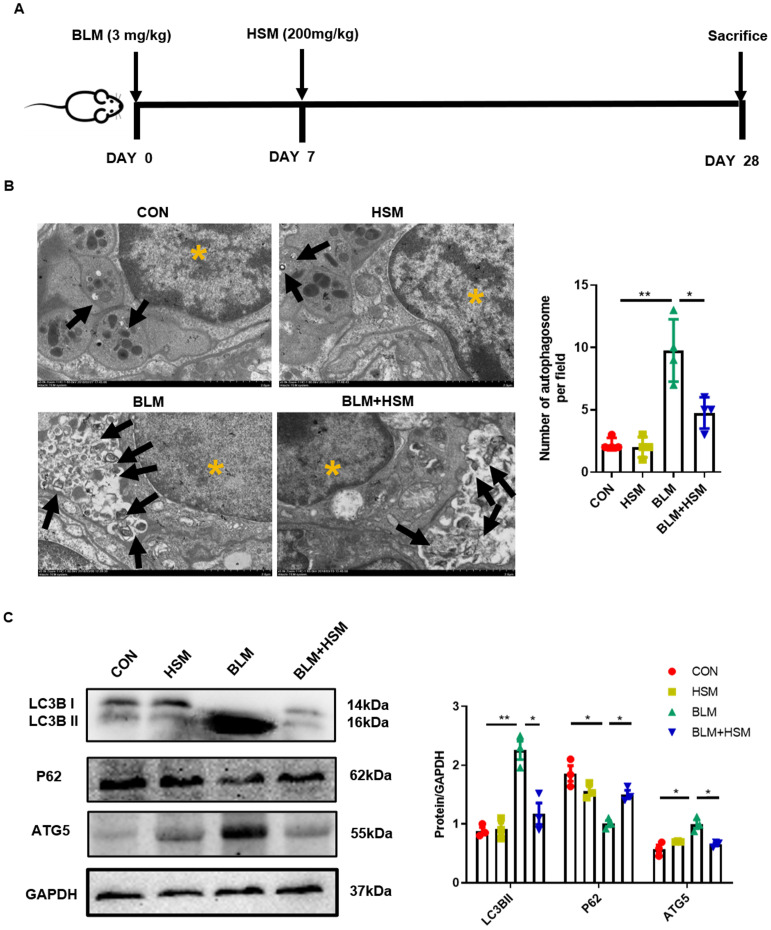
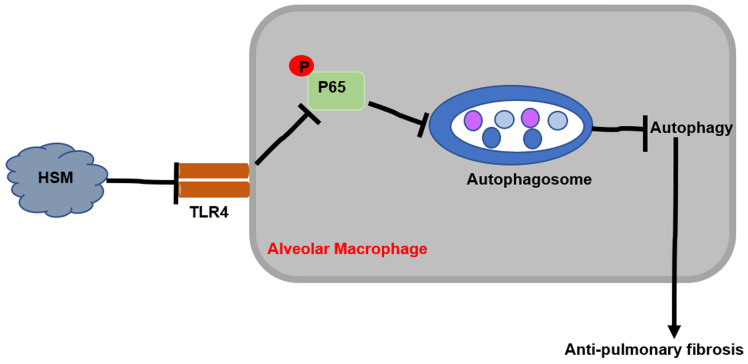
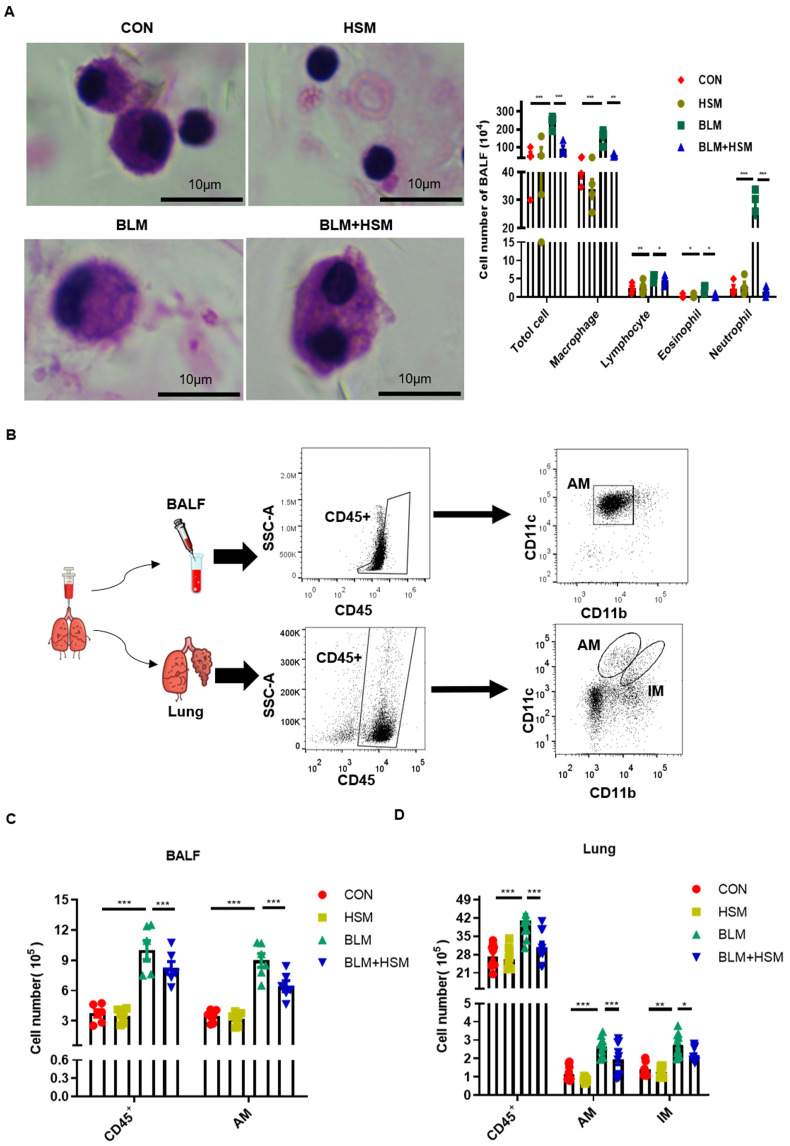
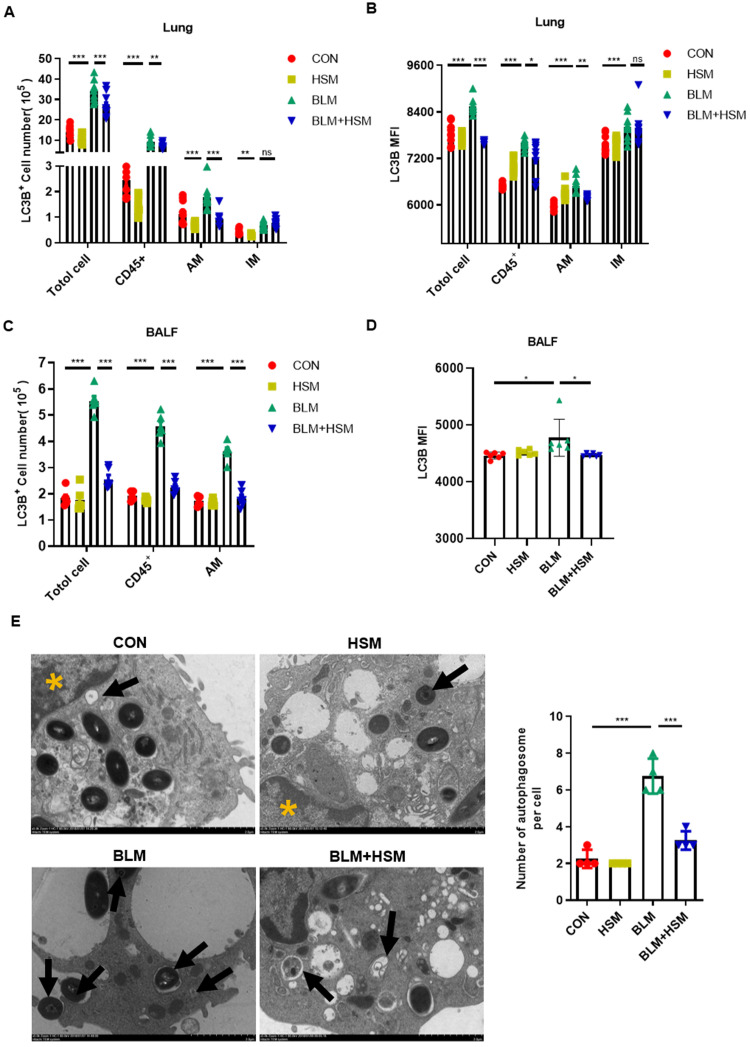
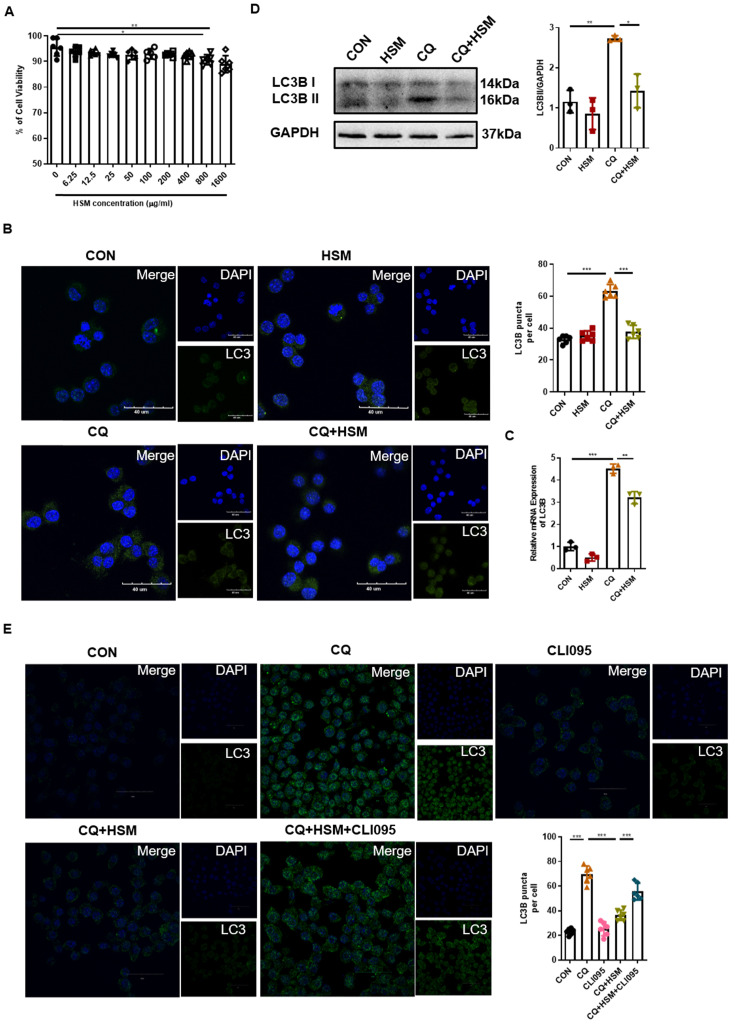
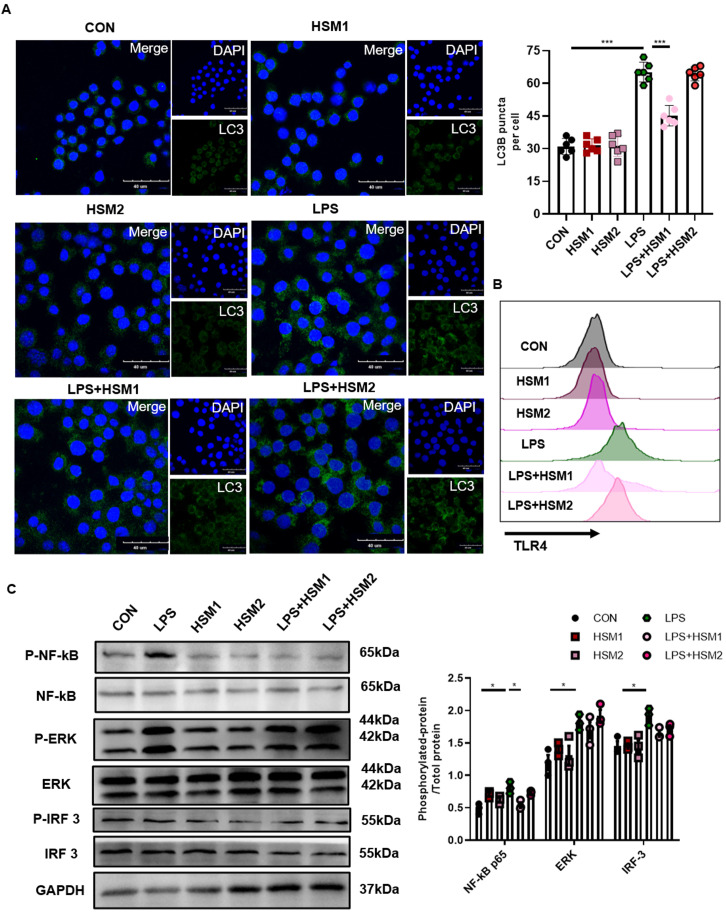
: mycelium (HSM) has potent anti-pulmonary fibrotic activities and has been proposed as an effective treatment for idiopathic pulmonary fibrosis. Macrophages are the main innate immune cells in the lung tissue, playing key roles in pulmonary fibrosis repair and homeostasis. Excessive macrophage autophagy plays a vital role in pulmonary fibrosis. The protective effect of HSM on macrophages of bleomycin (BLM)-induced pulmonary fibrotic mice remain unclear. : In this study, we collected lung tissue and bronchoalveolar lavage fluid (BALF) samples from pulmonary fibrotic mice. Meanwhile, alveolar macrophages were isolated and murine macrophage RAW264.7 cell line was cultured for further study of HSM autophagy. First, we found that HSM decreased the number of autophagosomes, as well as the levels of LC3B and ATG5, and increased the protein level of P62 during the development of pulmonary fibrosis. Meanwhile, HSM reduced alveolar macrophages infiltration into the BALF and inhibited their accumulation in the fibrotic lung tissue. Flow cytometry analysis showed that HSM administration inhibited the autophagy marker LC3B expression in CD11bCD11c alveolar macrophages in BLM-induced lung fibrosis without affecting CD11bCD11c interstitial macrophages. Transmission electron microscopy and JC-1 staining for mitochondrial membrane potential of alveolar macrophages also verified that the HSM significantly decreased autophagy in the alveolar macrophages of BLM-treated mice. , autophagosomes-lysosome fusion inhibitor chloroquine (CQ) was pre-incubated with RAW264.7 cells, and HSM reduced CQ-induced autophagosomes accumulation. TLR4 signaling inhibitor CLI095 reversed the above effects, suggesting HSM could reduce the cumulation of autophagosomes dependent on TLR4. Furthermore, lipopolysaccharide (LPS)-stimulated TLR4-related autophagy was significantly inhibited by HSM treatment. In addition, the protein expressions of TLR4 and phospho-NF-κB p65 were markedly inhibited in cells treated with HSM. : These results indicated that HSM could inhibit the autophagy of alveolar macrophages through TLR4/NF-κB signaling pathway to achieve anti-fibrotic effect.
: 菌丝体(HSM)具有很强的抗肺纤维化活性,被提议作为特发性肺纤维化的有效治疗方法。巨噬细胞是肺组织中的主要固有免疫细胞,在肺纤维化修复和稳态中发挥关键作用。过度的巨噬细胞自噬在肺纤维化中起着至关重要的作用。 HSM 对博莱霉素(BLM)诱导的肺纤维化小鼠巨噬细胞的保护作用尚不清楚。 : 在这项研究中,我们从肺纤维化小鼠中收集肺组织和支气管肺泡灌洗液(BALF)样本。同时,分离肺泡巨噬细胞并培养鼠巨噬细胞 RAW264.7 细胞系,以进一步研究 HSM 自噬。 首先,我们发现 HSM 在肺纤维化发展过程中减少了自噬体的数量,以及 LC3B 和 ATG5 的水平,并增加了 P62 的蛋白水平。同时,HSM 减少了肺泡巨噬细胞向 BALF 的浸润,并抑制了它们在纤维化肺组织中的积累。流式细胞术分析表明,HSM 给药抑制了 BLM 诱导的肺纤维化中 CD11bCD11c 肺泡巨噬细胞中自噬标志物 LC3B 的表达,而不影响 CD11bCD11c 间质巨噬细胞。肺泡巨噬细胞的透射电子显微镜和 JC-1 染色也证实,HSM 显著降低了 BLM 处理小鼠肺泡巨噬细胞中的自噬。 ,自噬体 - 溶酶体融合抑制剂氯喹(CQ)预先与 RAW264.7 细胞孵育,HSM 减少 CQ 诱导的自噬体积累。 TLR4 信号抑制剂 CLI095 逆转了上述作用,表明 HSM 可以依赖 TLR4 减少自噬体的积累。此外,HSM 处理显着抑制了 LPS 刺激的 TLR4 相关自噬。此外,用 HSM 处理的细胞中 TLR4 和磷酸化 NF-κB p65 的蛋白表达明显受到抑制。 : 这些结果表明,HSM 可以通过 TLR4/NF-κB 信号通路抑制肺泡巨噬细胞的自噬,从而达到抗纤维化作用。