Joseph Jitcy S, Anand Krishnan, Malindisa Sibusiso T, Oladipo Adewale O, Fagbohun Oladapo F
Department of Toxicology and Biochemistry, National Institute for Occupational Health, A division of National Health Laboratory Service, Johannesburg, South Africa.
Department of Chemical Pathology, School of Pathology, Faculty of Health Sciences and National Health Laboratory Service, University of the Free State, Bloemfontein, South Africa.
EXCLI J. 2021 Feb 17;20:386-399. doi: 10.17179/excli2020-3317. eCollection 2021.
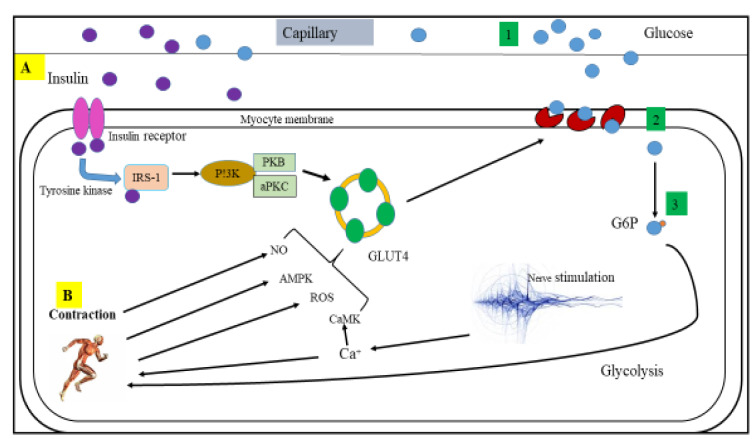
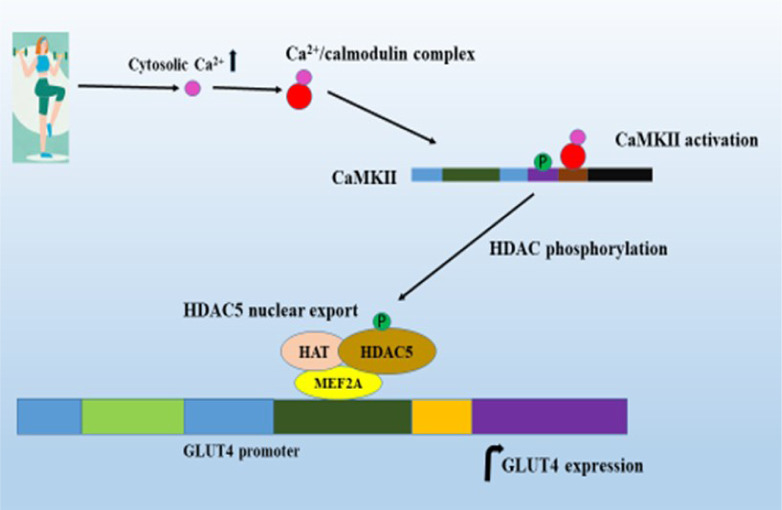
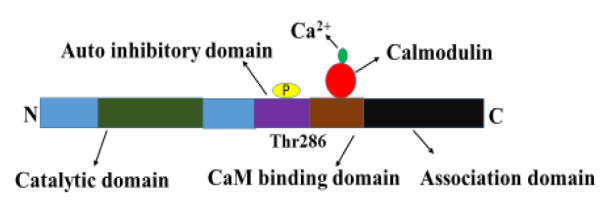
Individuals who exercise regularly are protected from type 2 diabetes and other metabolic syndromes, in part by enhanced gene transcription and induction of many signaling pathways crucial in correcting impaired metabolic pathways associated with a sedentary lifestyle. Exercise activates Calmodulin-dependent protein kinase (CaMK)II, resulting in increased mitochondrial oxidative capacity and glucose transport. CaMKII regulates many health beneficial cellular functions in individuals who exercise compared with those who do not exercise. The role of exercise in the regulation of carbohydrate, lipid metabolism, and insulin signaling pathways are explained at the onset. Followed by the role of exercise in the regulation of glucose transporter (GLUT)4 expression and mitochondrial biogenesis are explained. Next, the main functions of Calmodulin-dependent protein kinase and the mechanism to activate it are illustrated, finally, an overview of the role of CaMKII in regulating GLUT4 expression, mitochondrial biogenesis, and histone modification are discussed.
经常锻炼的人可预防2型糖尿病和其他代谢综合征,部分原因是基因转录增强以及许多信号通路的诱导,这些信号通路对于纠正与久坐不动生活方式相关的代谢途径受损至关重要。运动激活钙调蛋白依赖性蛋白激酶(CaMK)II,导致线粒体氧化能力和葡萄糖转运增加。与不运动的人相比,CaMKII调节经常锻炼的人的许多有益健康的细胞功能。首先解释运动在调节碳水化合物、脂质代谢和胰岛素信号通路中的作用。接着解释运动在调节葡萄糖转运蛋白(GLUT)4表达和线粒体生物发生中的作用。然后说明钙调蛋白依赖性蛋白激酶的主要功能及其激活机制,最后讨论CaMKII在调节GLUT4表达、线粒体生物发生和组蛋白修饰中的作用概述。