Mountford Steffeni, Effenberger Maria, Noll-Puchta Heidi, Griessmair Lucas, Ringleb Andrea, Haas Sonja, Denk Gerald, Reiter Florian P, Mayr Doris, Dinarello Charles A, Tilg Herbert, Bufler Philip
Department of Pediatrics, Dr. von Hauner Children's Hospital, Ludwig-Maximilians-University Munich, Munich, Germany.
Department of Internal Medicine I, Gastroenterology, Hepatology, Endocrinology & Metabolism, Medical University of Innsbruck, Innsbruck, Austria.
Front Immunol. 2021 Mar 4;12:603649. doi: 10.3389/fimmu.2021.603649. eCollection 2021.
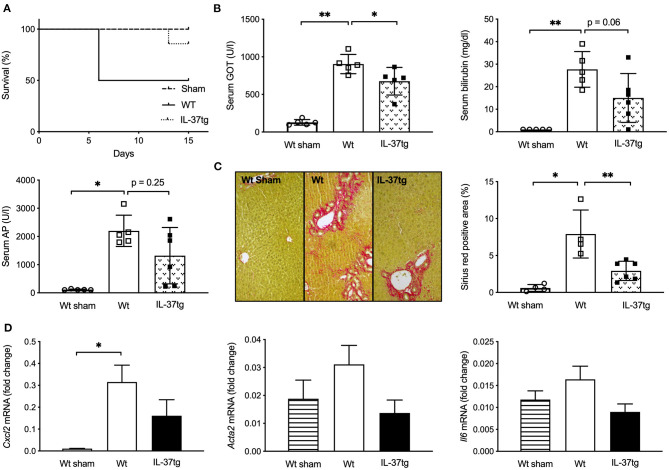
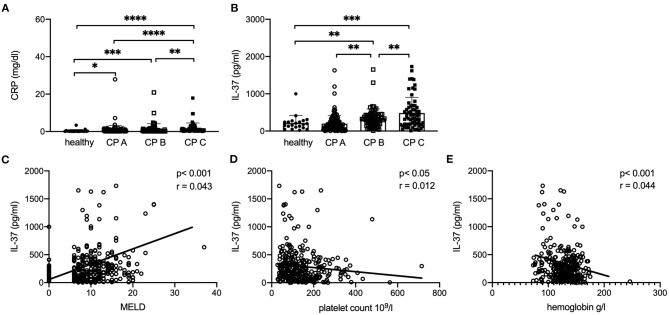
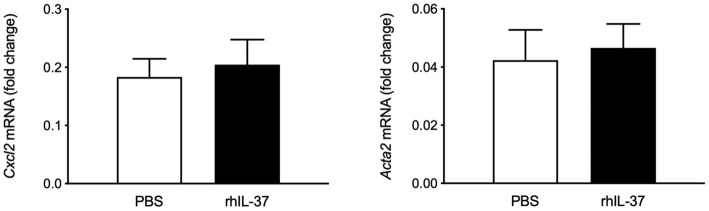
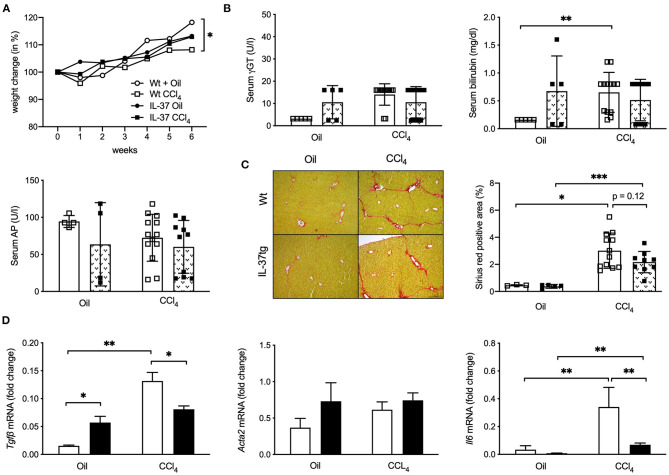
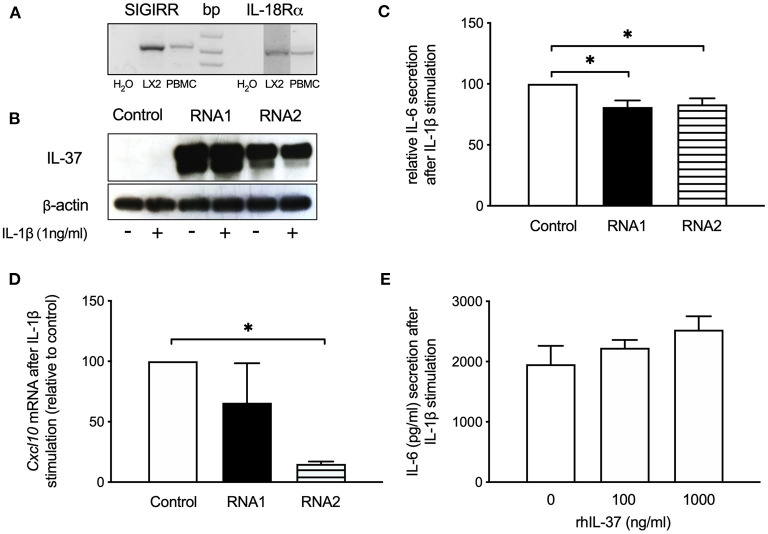
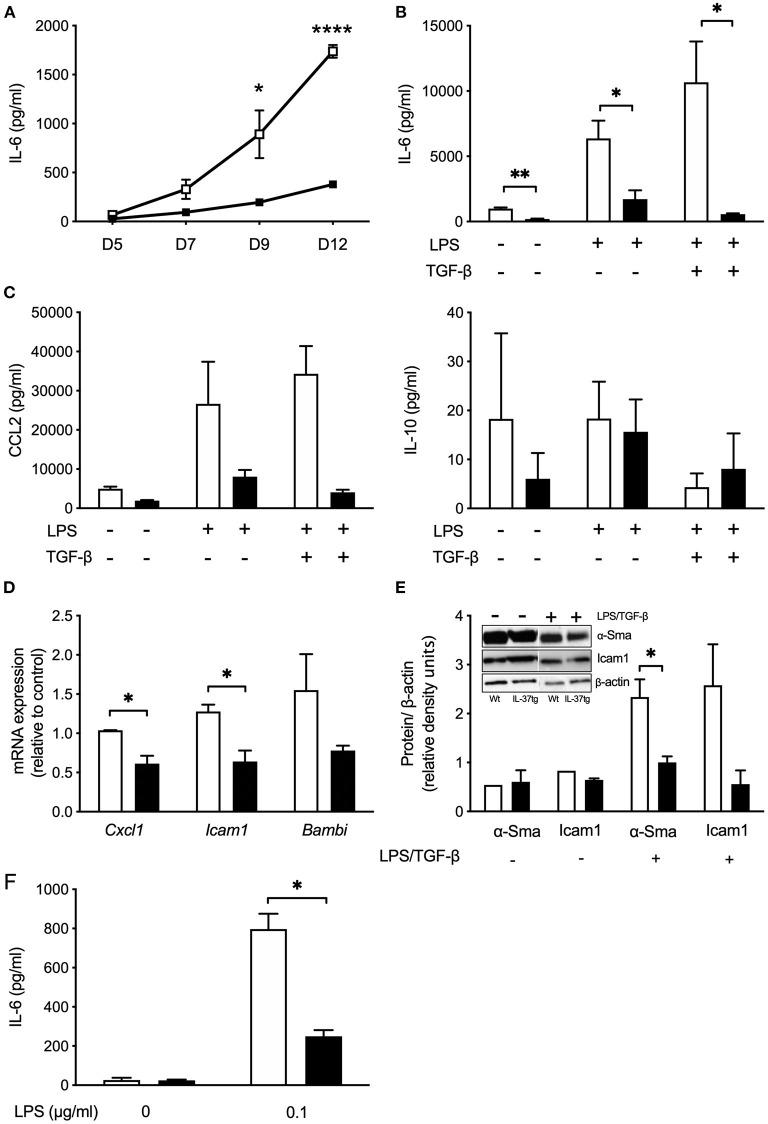
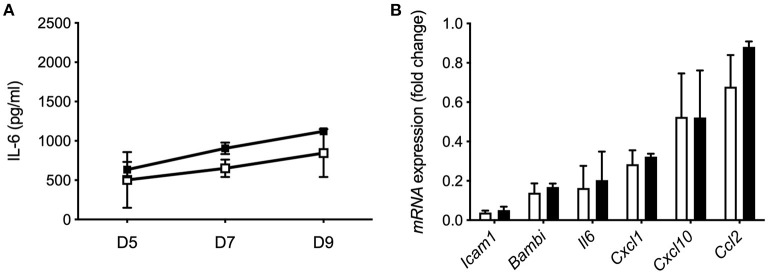
Chronic inflammation induces liver fibrosis, cirrhosis and potentially liver cancer. Kupffer cells modulate hepatic stellate cells by secreting immunologically active proteins as TGF-β. TGF-β promotes liver fibrosis the activation of Sma- and Mad-related protein 3. IL-37 broadly suppresses innate and adaptive immune responses. Intracellular IL-37 interacts with Smad3. We hypothesize that IL-37 downregulates the activation of hepatic Kupffer and stellate cells and interferes with the TGF-β signaling cascade to modulate liver fibrogenesis. The role of IL-37 on liver inflammation and fibrogenesis was assessed in three mouse models as well as isolated Kupffer- and stellate cells. Serum IL-37 was tested by ELISA in a clinical cohort and correlated with liver disease severity. Transgene expression of IL-37 in mice extends survival, reduces hepatic damage, expression of early markers of fibrosis and histologically assessed liver fibrosis after bile duct ligation. IL-37tg mice were protected against CCl-induced liver inflammation. Colitis-associated liver inflammation and fibrosis was less severe in IL-10 knockout IL-37tg mice. Spontaneous and LPS/TGF-β-induced cytokine release and profibrogenic gene expression was lower in HSC and KC isolated from IL-37tg mice and IL-37 overexpressing, IL-1β stimulated human LX-2 stellate cells. However, administration of recombinant human IL-37 did not modulate fibrosis pathways after BDL in mice, LX2 cells or murine HSCs. In a large clinical cohort, we observed a positive correlation of serum IL-37 levels with disease severity in liver cirrhosis. Predominantly intracellular IL-37 downregulates liver inflammation and fibrosis. The correlation of serum IL-37 with disease severity in cirrhosis suggests its potential as a novel target modulating the course of liver fibrosis.
慢性炎症可诱发肝纤维化、肝硬化,并有可能引发肝癌。库普弗细胞通过分泌免疫活性蛋白(如转化生长因子-β,TGF-β)来调节肝星状细胞。TGF-β通过激活Sma和Mad相关蛋白3来促进肝纤维化。白细胞介素-37(IL-37)广泛抑制先天性和适应性免疫反应。细胞内的IL-37与Smad3相互作用。我们推测,IL-37可下调肝库普弗细胞和星状细胞的激活,并干扰TGF-β信号级联反应,从而调节肝纤维化的形成。我们在三种小鼠模型以及分离出的库普弗细胞和星状细胞中评估了IL-37对肝脏炎症和纤维化形成的作用。通过酶联免疫吸附测定法(ELISA)在一个临床队列中检测血清IL-37,并将其与肝病严重程度相关联。在小鼠中,IL-37的转基因表达可延长生存期、减轻肝损伤、降低纤维化早期标志物的表达,并在胆管结扎后通过组织学评估减轻肝纤维化。IL-37转基因小鼠对四氯化碳诱导的肝脏炎症具有保护作用。在白细胞介素-10基因敲除的IL-37转基因小鼠中,结肠炎相关的肝脏炎症和纤维化程度较轻。从IL-37转基因小鼠中分离出的肝星状细胞(HSC)和库普弗细胞(KC),以及过表达IL-37、经白细胞介素-1β刺激的人LX-2星状细胞中,自发性和脂多糖/TGF-β诱导的细胞因子释放及促纤维化基因表达均较低。然而,在小鼠、LX2细胞或小鼠肝星状细胞中,胆管结扎后给予重组人IL-37并未调节纤维化途径。在一个大型临床队列中,我们观察到肝硬化患者血清IL-37水平与疾病严重程度呈正相关。主要存在于细胞内的IL-37可下调肝脏炎症和纤维化。血清IL-37与肝硬化疾病严重程度的相关性表明其有可能成为调节肝纤维化进程的新靶点。