Theil Gerit, Boehm Catrin, Fischer Kersten, Bialek Joanna, Hoda Raschid, Weber Ekkehard, Schönburg Sandra, Kawan Felix, Fornara Paolo
Medical Faculty of Martin Luther University Halle-Wittenberg, University Clinic and Outpatient Clinic for Urology, D-06120 Halle (Saale), Germany.
Institute of Physiological Chemistry, Medical Faculty of Martin Luther University Halle-Wittenberg, D-06120 Halle (Saale), Germany.
Oncol Lett. 2021 May;21(5):357. doi: 10.3892/ol.2021.12618. Epub 2021 Mar 4.
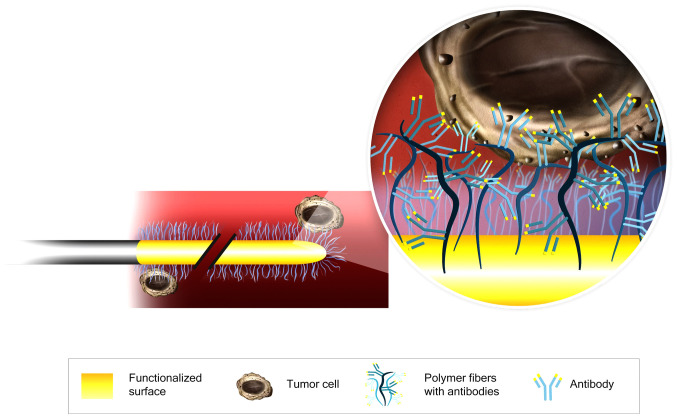
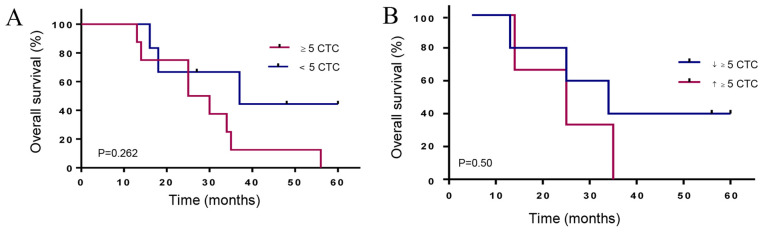
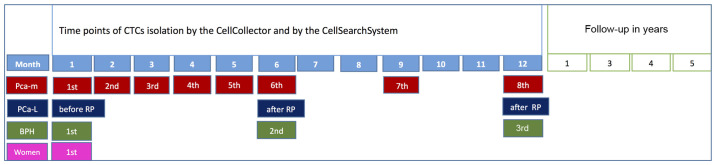
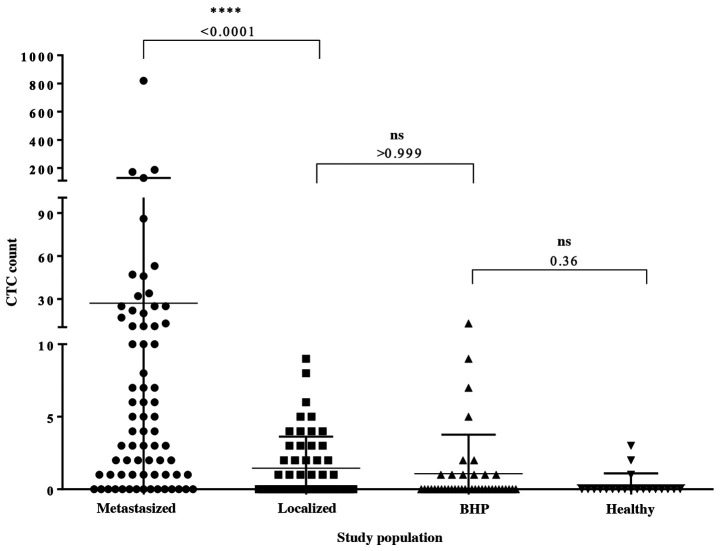
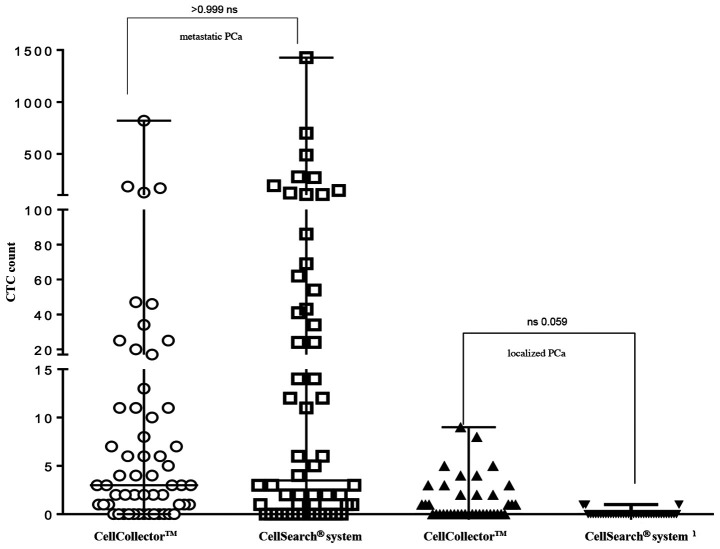
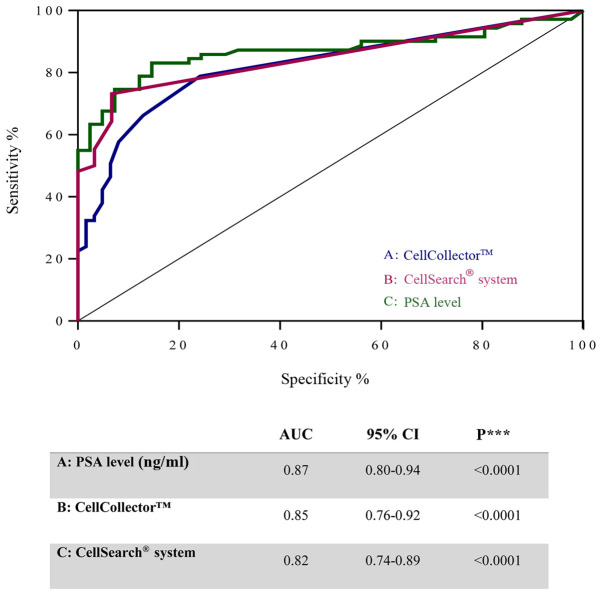
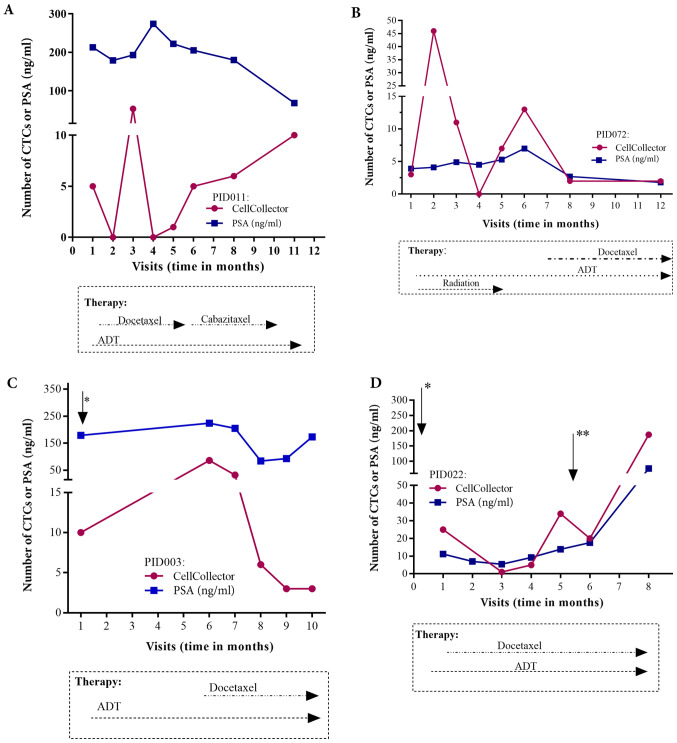
Circulating tumor cells (CTCs) provide accurate information on the clinical stage of cancer progression. The present study examined the clinical validity and feasibility of a new medical device for the isolation of CTCs from the blood of patients with prostate cancer (PCa). The GILUPI CellCollector (DC01) was applied in 188 cases. The CTC/prostate-specific antigen (PSA) profile of each patient was checked for therapeutic monitoring of patients with PCa. The CellCollector, which is a unique approach for the isolation of CTCs, was compared with the CellSearch system, which is the current standard. Overall survival (OS) and diagnostic performance were evaluated. By isolation, 78.9% (56/71) of patients with metastatic disease (PCa-m) and 46.3% (24/53) of patients with localized disease (PCa-l) had ≥1 captured CTC. Kaplan-Meier analysis revealed that patients with PCa-m that had ≥5 CTCs had a significantly different OS compared with those with <5 CTCs (27.5 months vs. 37 months; HR 2.6; 95% CI 0.78-8.3). Patients with a higher number of CTCs at all time-points had the shortest median OS of 25 months (HR 1.9; 95% CI 0.4-11.6). The effectiveness of CTC isolation technologies demonstrated that in 65.7% of the applications, patients with cancer were positive for CTCs using the CellCollector. By contrast, the CellSearch system detected CTCs in 44.4% of applications. isolation of CTCs demonstrated the clinical viability of the CellCollector, related to the current standard for the isolation of CTCs from patients with PCa. The advantage of the device is that it overcomes the blood volume limitations of other CTC assays. Furthermore, the present study revealed that the CellCollector was well tolerated, and no adverse events (AEs) or serious AEs were reported.
循环肿瘤细胞(CTCs)为癌症进展的临床分期提供了准确信息。本研究检验了一种用于从前列腺癌(PCa)患者血液中分离CTCs的新型医疗设备的临床有效性和可行性。GILUPI细胞采集器(DC01)应用于188例患者。检查每位患者的CTCs/前列腺特异性抗原(PSA)谱,用于PCa患者的治疗监测。将这种独特的CTCs分离方法——细胞采集器,与当前标准的CellSearch系统进行了比较。评估了总生存期(OS)和诊断性能。通过分离,78.9%(56/71)的转移性疾病患者(PCa-m)和46.3%(24/53)的局限性疾病患者(PCa-l)捕获到≥1个CTCs。Kaplan-Meier分析显示,CTCs≥5个的PCa-m患者与CTCs<5个的患者相比,OS有显著差异(27.5个月对37个月;风险比2.6;95%置信区间0.78 - 8.3)。在所有时间点CTCs数量较多的患者中位OS最短,为25个月(风险比1.9;95%置信区间0.4 - 11.6)。CTCs分离技术的有效性表明,在65.7%的应用中,使用细胞采集器癌症患者的CTCs呈阳性。相比之下,CellSearch系统在44.4%的应用中检测到CTCs。CTCs的分离证明了细胞采集器与从PCa患者中分离CTCs的当前标准相关的临床可行性。该设备的优点是克服了其他CTCs检测方法的血容量限制。此外,本研究表明细胞采集器耐受性良好,未报告不良事件(AEs)或严重不良事件。