Almaeen Abdulrahman Hamdan, Alduraywish Abdulrahman Abdulwahab, Mobasher Maysa Ahmed, Almadhi Omar I M, Nafeh Hanan M, El-Metwally Tarek Hassan
Department of Pathology, Jouf University College of Medicine, Sakaka, Saudi Arabia.
Department of Internal Medicine, Jouf University College of Medicine, Sakaka, Saudi Arabia.
Arch Med Sci. 2020 Jan 3;17(2):368-375. doi: 10.5114/aoms.2019.91451. eCollection 2021.
Hepatitis C virus (HCV) is the main cause of chronic liver disease, with calamitous complications. Its highest rate is recorded in Egypt. This study investigated whether oxidative stress, immunological chaos and cellular hypoxia are implicated in the pathophysiology of the disease.
This cross-sectional study aimed to evaluate the changes in blood oxidative stress, cellular hypoxia/angiogenesis and cellular immunological biomarkers in hospital-diagnosed treatment-naïve HCV-infected Upper Egyptian chronic liver disease patients vs. healthy controls ( = 40). The consecutively included patients comprised 120 with normal serum enzymes (HCV-NE) and 130 with high serum enzymes (HCV-HE), along with 120 cirrhotic patients.
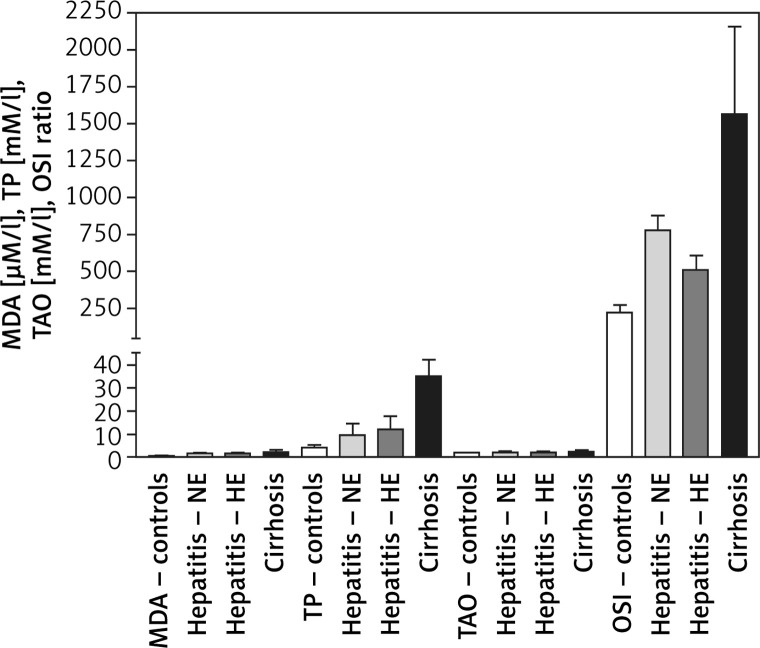
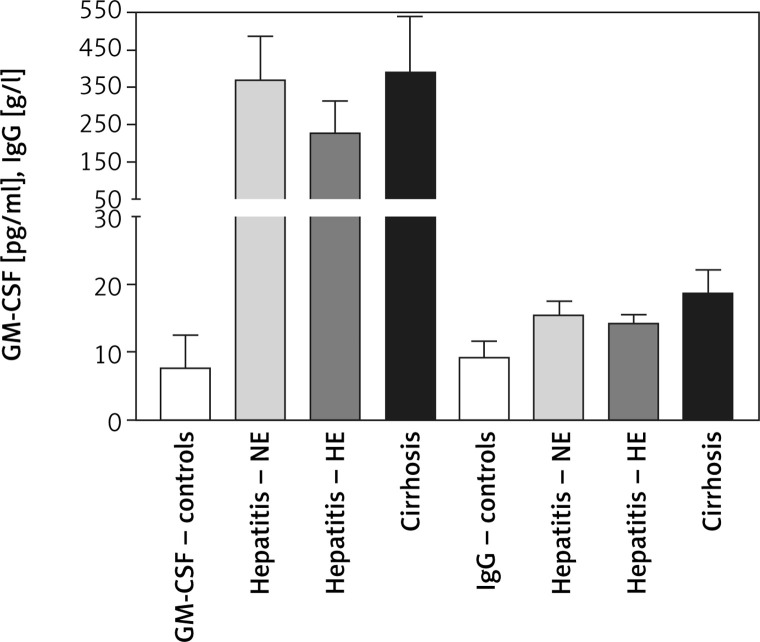
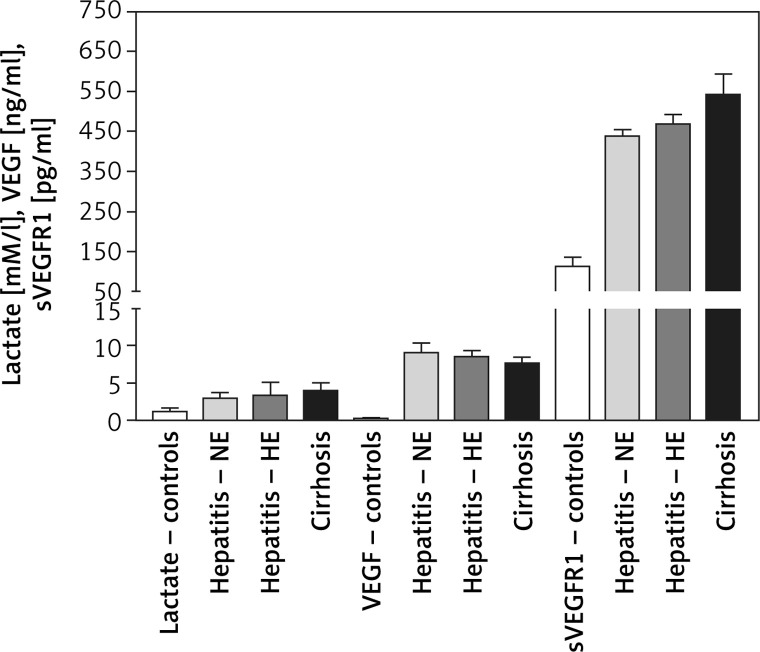
Oxidative stress biomarkers - malondialdehyde (MDA), total peroxides and oxidative stress index (OSI) - were significantly lower in controls vs. each of the patient groups. Cirrhotic patients presented the highest levels. However, total antioxidants (TAO) showed non-significant differences among the four groups. The cellular hypoxia/angiogenesis biomarkers - lactate, vascular endothelial cell growth factor (VEGF) and its soluble receptor 1 (sVEGFR1) - vs. controls were massively increased in patient groups. VEGF was lowest while sVEGFR1 was highest among cirrhotic patients. Immunological biomarkers, - granulocyte/monocyte-colony stimulating factor (GM-CSF) and total immunoglobulin G (IgG) - were massively increased in patient groups vs. controls. GM-CSF was lowest in HCV-HE and IgG was highest in cirrhotic patients. sVEGFR1 correlated with the progression towards cirrhosis.
Oxidative stress is implicated in the progress of HCV infection with marked induction of cellular hypoxia and dysfunctional angiogenesis, and a futile immunological reaction. sVEGFR1 level correlated with progression towards HCV-induced liver fibrosis.
丙型肝炎病毒(HCV)是慢性肝病的主要病因,会引发严重并发症。埃及的发病率最高。本研究调查了氧化应激、免疫紊乱和细胞缺氧是否与该疾病的病理生理学有关。
本横断面研究旨在评估医院诊断的未经治疗的HCV感染的上埃及慢性肝病患者与健康对照者(n = 40)血液中氧化应激、细胞缺氧/血管生成和细胞免疫生物标志物的变化。连续纳入的患者包括120例血清酶正常的患者(HCV-NE)、130例血清酶升高的患者(HCV-HE)以及120例肝硬化患者。
与各患者组相比,对照组的氧化应激生物标志物——丙二醛(MDA)、总过氧化物和氧化应激指数(OSI)显著更低。肝硬化患者的水平最高。然而,总抗氧化剂(TAO)在四组之间无显著差异。与对照组相比,患者组的细胞缺氧/血管生成生物标志物——乳酸、血管内皮细胞生长因子(VEGF)及其可溶性受体1(sVEGFR1)大幅升高。肝硬化患者中VEGF最低而sVEGFR1最高。与对照组相比,患者组的免疫生物标志物——粒细胞/单核细胞集落刺激因子(GM-CSF)和总免疫球蛋白G(IgG)大幅升高。HCV-HE组中GM-CSF最低,肝硬化患者中IgG最高。sVEGFR1与向肝硬化的进展相关。
氧化应激与HCV感染的进展有关,伴有细胞缺氧的显著诱导和血管生成功能障碍,以及无效的免疫反应。sVEGFR1水平与HCV诱导的肝纤维化进展相关。