Arozal Wawaimuli, Louisa Melva, Rahmat Deni, Chendrana Priska, Sandhiutami Ni Made Dwi
Department of Pharmacology and Therapeutics, Faculty of Medicine, Universitas Indonesia, Jakarta, Indonesia.
Faculty of Pharmacy, University of Pancasila, Jakarta, Indonesia.
Adv Pharm Bull. 2021 Jan;11(1):77-85. doi: 10.34172/apb.2021.008. Epub 2020 Nov 7.
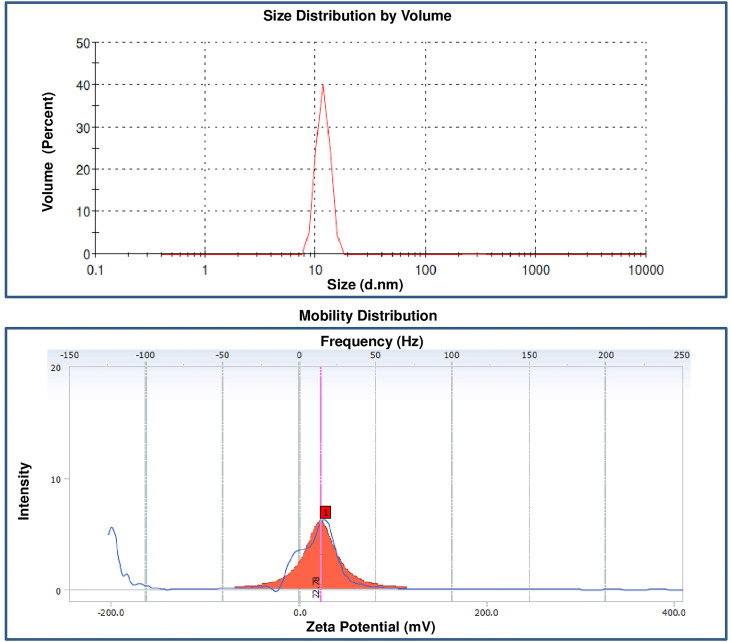
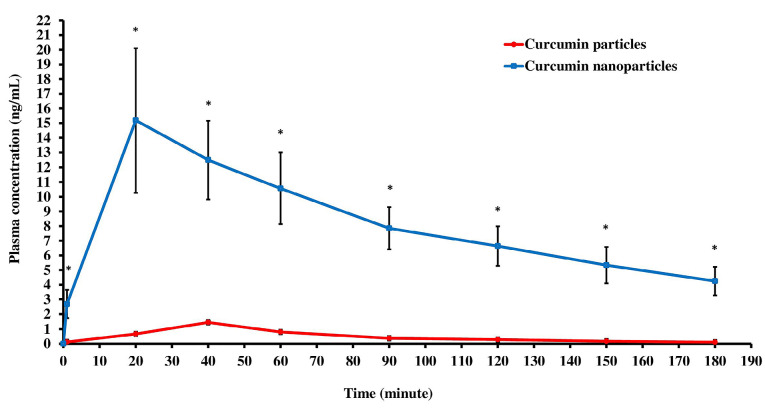
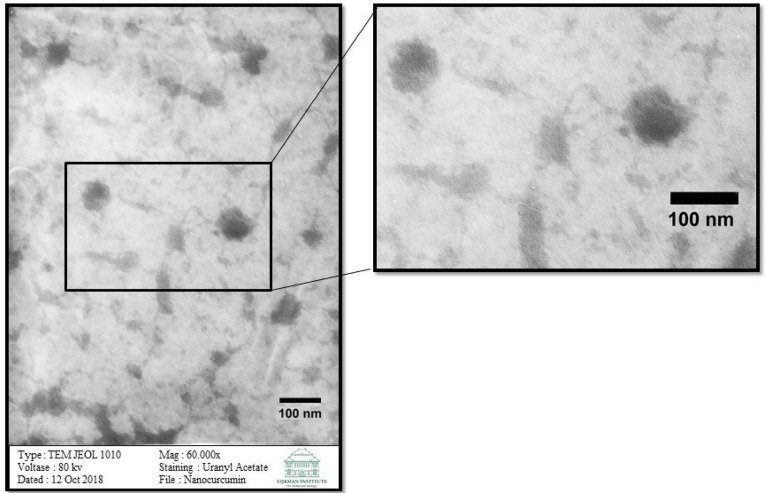
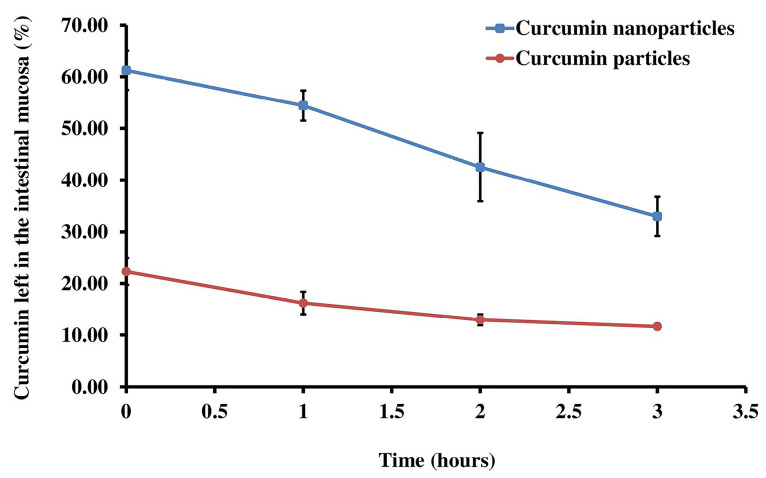
This study aimed to provide the method of preparation, characterization of curcumin-loaded chitosan-sodium tripolyphosphate (NaTPP) nanoparticle, and evaluate its pharmacokinetic profiles. Curcumin-loaded chitosan-NaTPP nanoparticles were synthesized using ionic gelation methods. Curcumin was dissolved using surfactants and cosurfactants. Chitosan polymer was then mixed in the curcumin solution and dripped with NaTPP solution until nanoparticle formation. The mucoadhesive study was evaluated by measuring the fluorescence of curcumin within the prepared nanoparticles. The pharmacokinetic profiles of curcumin particles and nanoparticles were then assessed in rats by administering a single oral dose of 100 mg/kg BW. Blood samples were taken from nine predetermined time points, and curcumin plasma concentrations were then analyzed using UPLC-MS/MS. The particle size of the curcumin nanoparticles obtained were 11.5 nm. Entrapment efficiency (EE) of curcumin nanoparticles were exceeding 99.97%, and drug loading capacity (DLC) was 11.34%. The mucoadhesive properties of the nanoparticles were superior to that of curcumin particles. Pharmacokinetic evaluation in rats revealed that curcumin nanoparticles resulted in an increase of area under the curve (AUC), maximum concentration (Cmax), earlier time to reach maximum concentration (Tmax), and lower clearance (CL). Curcumin-loaded chitosan-NaTPP nanoparticles is an effective formulation to improve curcumin plasma concentrations. Thus, enable its applications for the treatment of various diseases.
本研究旨在提供载姜黄素的壳聚糖-三聚磷酸钠(NaTPP)纳米颗粒的制备方法、表征,并评估其药代动力学特征。采用离子凝胶法合成了载姜黄素的壳聚糖-NaTPP纳米颗粒。姜黄素用表面活性剂和助表面活性剂溶解。然后将壳聚糖聚合物加入姜黄素溶液中,滴加NaTPP溶液直至形成纳米颗粒。通过测量制备的纳米颗粒中姜黄素的荧光来评估黏膜黏附性。通过单次口服给药100 mg/kg体重,在大鼠中评估姜黄素颗粒和纳米颗粒的药代动力学特征。在九个预定时间点采集血样,然后使用超高效液相色谱-串联质谱法(UPLC-MS/MS)分析姜黄素血浆浓度。所获得的姜黄素纳米颗粒的粒径为11.5 nm。姜黄素纳米颗粒的包封率(EE)超过99.97%,载药量(DLC)为11.34%。纳米颗粒的黏膜黏附性能优于姜黄素颗粒。大鼠药代动力学评估显示,姜黄素纳米颗粒导致曲线下面积(AUC)、最大浓度(Cmax)、达到最大浓度的时间(Tmax)增加,清除率(CL)降低。载姜黄素的壳聚糖-NaTPP纳米颗粒是提高姜黄素血浆浓度的有效制剂。因此,可使其应用于各种疾病的治疗。