Pras Anita, Nollen Ellen A A
Laboratory of Molecular Neurobiology of Ageing, European Research Institute for the Biology of Ageing, University Medical Centre Groningen, University of Groningen, Groningen, Netherlands.
Front Cell Dev Biol. 2021 Mar 5;9:637084. doi: 10.3389/fcell.2021.637084. eCollection 2021.
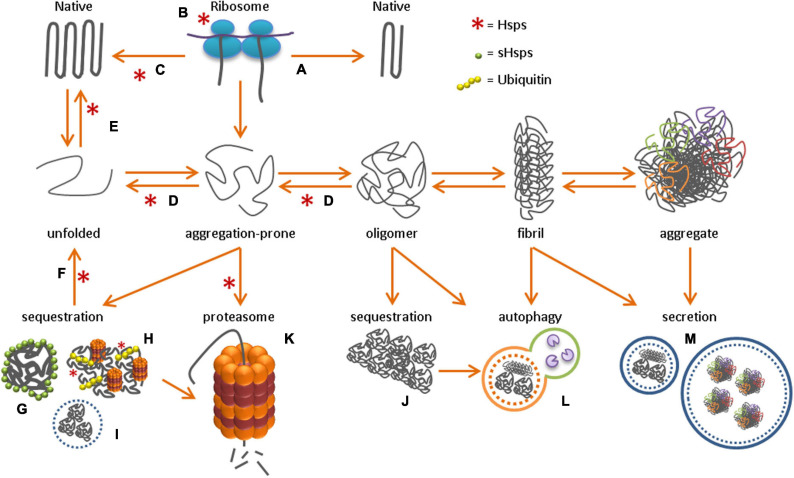
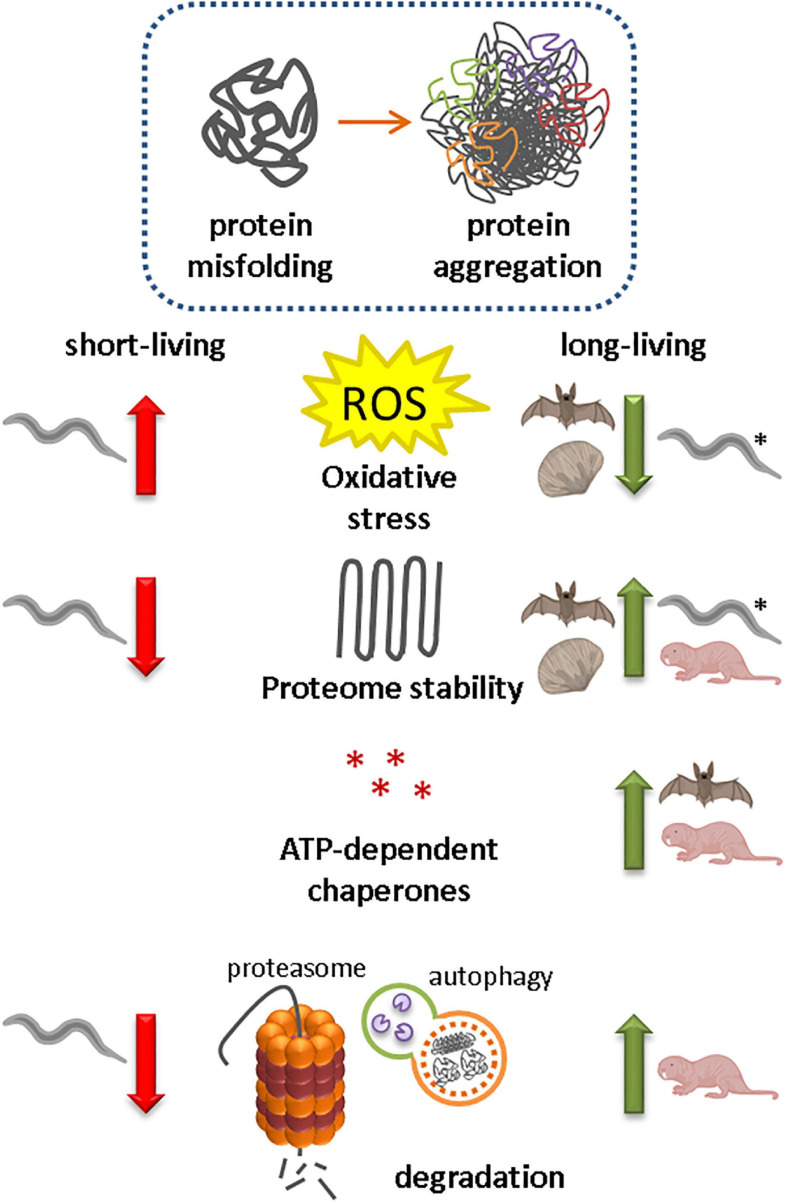
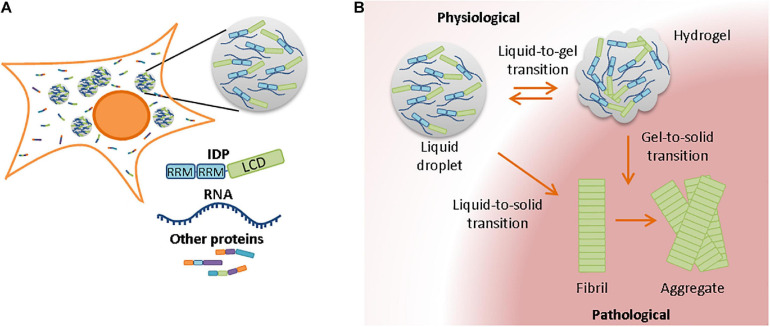
Proteome damage plays a major role in aging and age-related neurodegenerative diseases. Under healthy conditions, molecular quality control mechanisms prevent toxic protein misfolding and aggregation. These mechanisms include molecular chaperones for protein folding, spatial compartmentalization for sequestration, and degradation pathways for the removal of harmful proteins. These mechanisms decline with age, resulting in the accumulation of aggregation-prone proteins that are harmful to cells. In the past decades, a variety of fast- and slow-aging model organisms have been used to investigate the biological mechanisms that accelerate or prevent such protein toxicity. In this review, we describe the most important mechanisms that are required for maintaining a healthy proteome. We describe how these mechanisms decline during aging and lead to toxic protein misassembly, aggregation, and amyloid formation. In addition, we discuss how optimized protein homeostasis mechanisms in long-living animals contribute to prolonging their lifespan. This knowledge might help us to develop interventions in the protein homeostasis network that delay aging and age-related pathologies.
蛋白质组损伤在衰老及与年龄相关的神经退行性疾病中起主要作用。在健康状况下,分子质量控制机制可防止有毒蛋白质错误折叠和聚集。这些机制包括用于蛋白质折叠的分子伴侣、用于隔离的空间区室化以及用于清除有害蛋白质的降解途径。这些机制会随着年龄增长而衰退,导致易于聚集的有害蛋白质在细胞中积累。在过去几十年中,人们使用了各种快速衰老和缓慢衰老的模式生物来研究加速或预防此类蛋白质毒性的生物学机制。在本综述中,我们描述了维持健康蛋白质组所需的最重要机制。我们描述了这些机制在衰老过程中如何衰退并导致有毒蛋白质错误组装、聚集和淀粉样蛋白形成。此外,我们讨论了长寿动物中优化的蛋白质稳态机制如何有助于延长它们的寿命。这些知识可能有助于我们开发针对蛋白质稳态网络的干预措施,以延缓衰老及与年龄相关的病理变化。