Xie Chunfeng, Zhu Jianyun, Yang Xue, Huang Cong, Zhou Liping, Meng Zili, Li Xiaoting, Zhong Caiyun
Department of Nutrition and Food Safety, School of Public Health, Nanjing Medical University, Nanjing, China.
Department of Digestive Disease and Nutrition Research Center, The Affiliated Suzhou Hospital of Nanjing Medical University, Suzhou, China.
Front Cell Dev Biol. 2021 Mar 4;9:645402. doi: 10.3389/fcell.2021.645402. eCollection 2021.
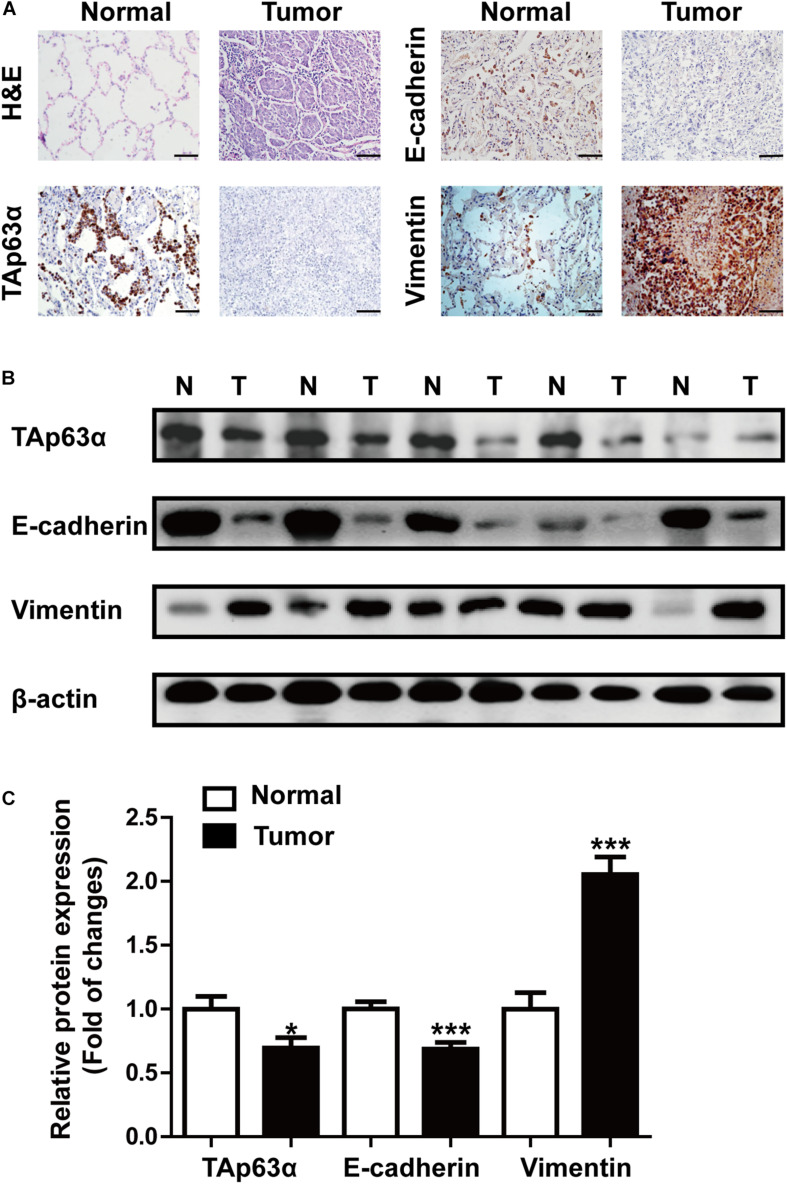
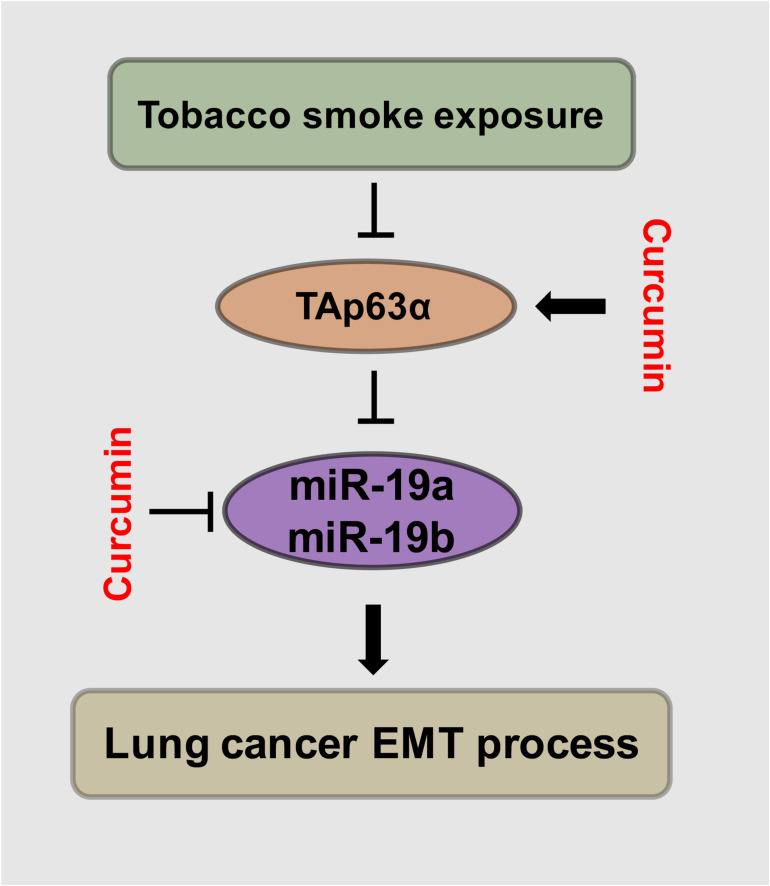
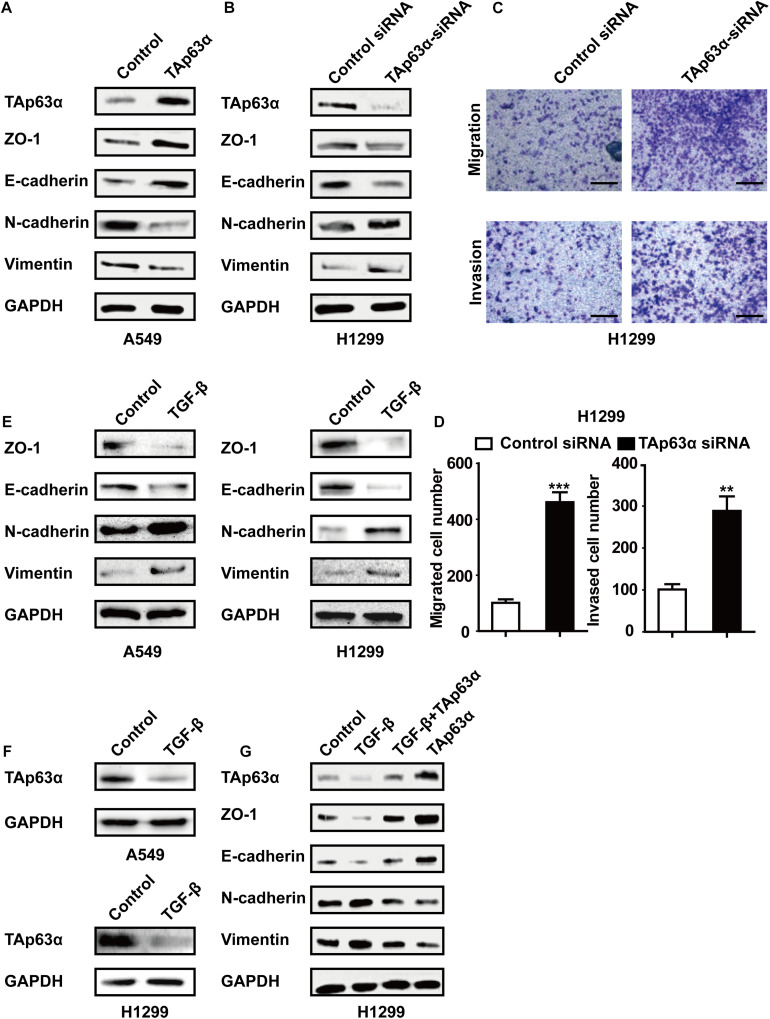
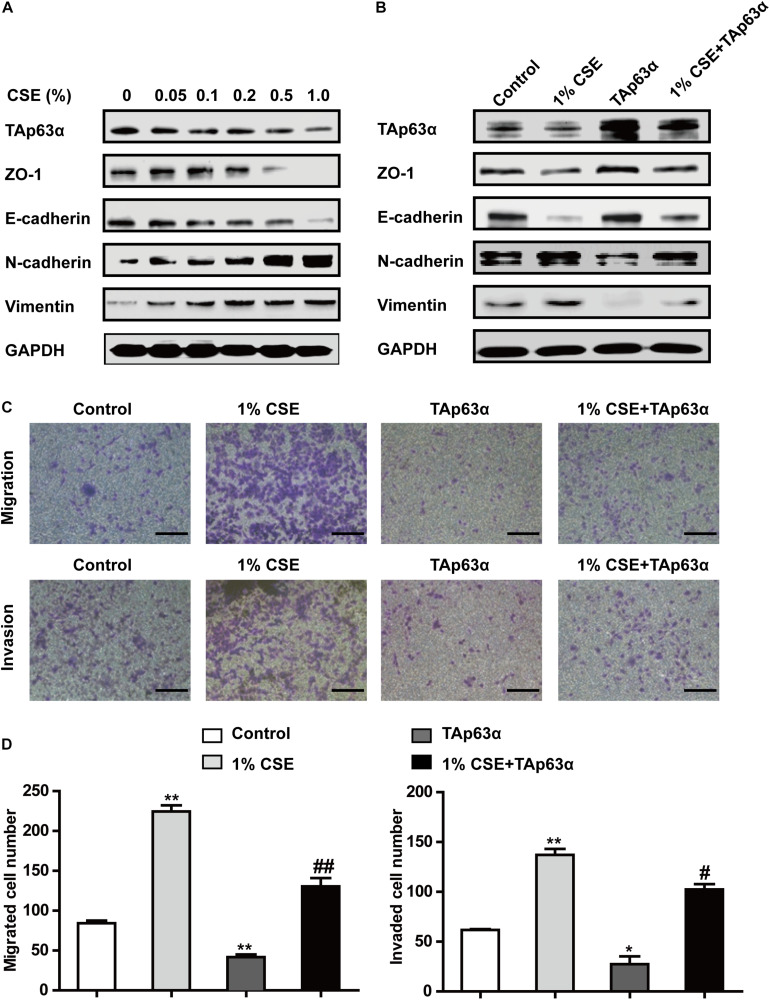
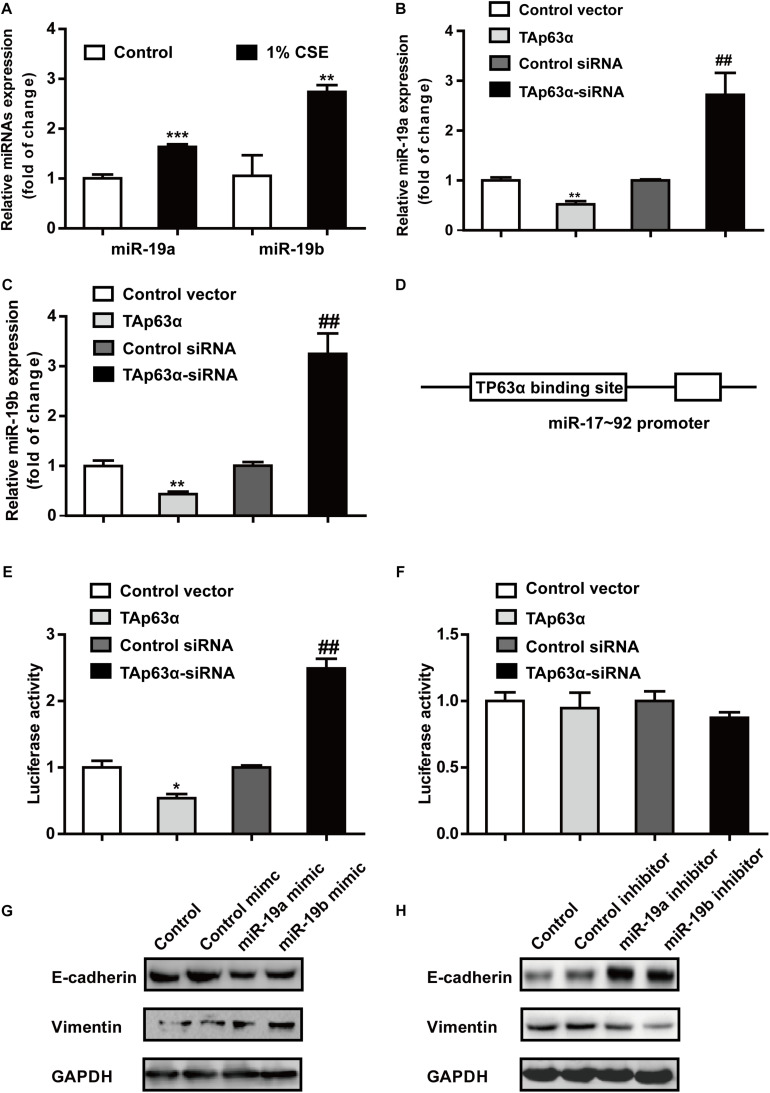
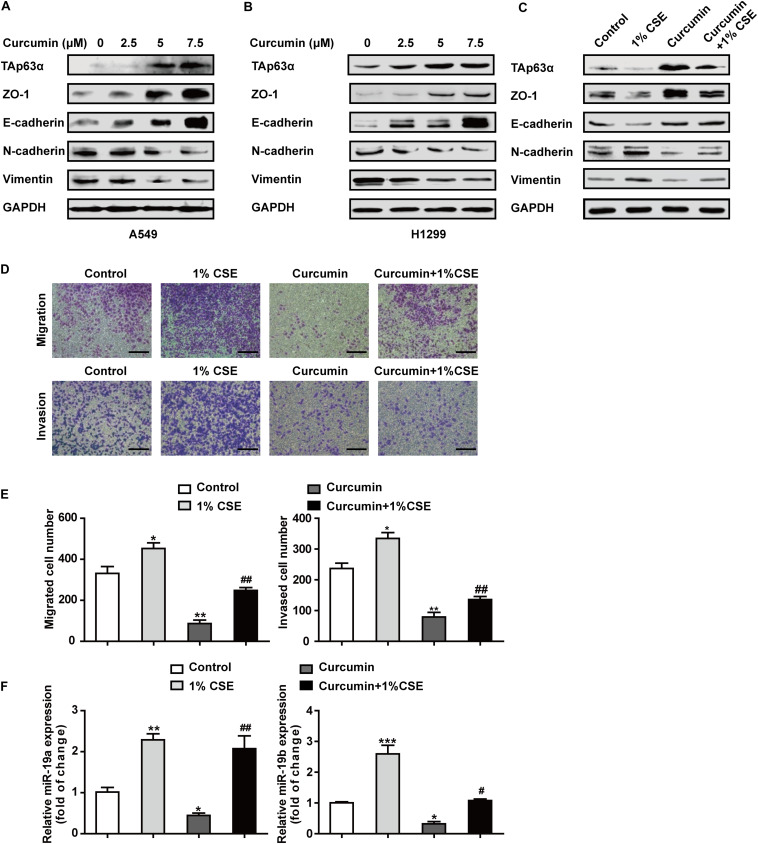
As a key risk factor for lung cancer, tobacco smoke (TS) influences several cellular processes, including epithelial-mesenchymal transition (EMT). TAp63α is a crucial transcription factor involved in tumor progression. The present study was designed to investigate the potential role and underlying mechanisms of TAp63α in TS-induced lung cancer EMT. We found that compared to normal tissues, the tumor tissues collected from lung cancer patients showed a lower level of TAp63α expression, along with downregulated E-cadherin expression and upregulated Vimentin expression. Results of treatment with TAp63α and TAp63α siRNA as well as with tumor growth factor-β (TGF-β) showed that TAp63α acted as a tumor suppressor gene, and its upregulated expression suppressed lung cancer EMT. Significantly, TS exposure altered expression of EMT-related markers, enhanced cell migratory and invasive capacities, and decreased the TAp63α expression level in lung cancer cells. Overexpression of TAp63α significantly alleviated TS-stimulated lung cancer EMT. Mechanistically, TAp63α expression transcriptionally reduced the miR-19 level, which resulted in the suppression of lung cancer EMT. Additionally, as a natural compound possessing anti-cancer effects, curcumin inhibited TS-induced lung cancer EMT by increasing TAp63α expression and reducing miR-19 expression. Collectively, our results indicate that TAp63α inhibits TS-induced lung cancer EMT via transcriptionally suppressing miR-19 and the inhibitory effect of TAp63α on miR-19 mediates the anti-cancer action of curcumin. These findings provide new insights into novel targets for lung cancer prevention.
作为肺癌的关键风险因素,烟草烟雾(TS)影响多种细胞过程,包括上皮-间质转化(EMT)。TAp63α是一种参与肿瘤进展的关键转录因子。本研究旨在探讨TAp63α在TS诱导的肺癌EMT中的潜在作用及潜在机制。我们发现,与正常组织相比,肺癌患者的肿瘤组织中TAp63α表达水平较低,同时E-钙黏蛋白表达下调,波形蛋白表达上调。用TAp63α、TAp63α小干扰RNA(siRNA)以及肿瘤生长因子-β(TGF-β)处理的结果表明,TAp63α作为一种肿瘤抑制基因,其表达上调可抑制肺癌EMT。值得注意的是,暴露于TS会改变EMT相关标志物的表达,增强肺癌细胞的迁移和侵袭能力,并降低TAp63α的表达水平。TAp63α的过表达显著减轻了TS刺激的肺癌EMT。机制上,TAp63α的表达通过转录降低miR-19水平,从而抑制肺癌EMT。此外,姜黄素作为一种具有抗癌作用的天然化合物,通过增加TAp63α表达和降低miR-19表达来抑制TS诱导的肺癌EMT。总的来说,我们的结果表明,TAp63α通过转录抑制miR-19来抑制TS诱导 的肺癌EMT,且TAp63α对miR-19的抑制作用介导了姜黄素的抗癌作用。这些发现为肺癌预防的新靶点提供了新见解。