Yanta Christine A, Bessonov Kyrylo, Robinson Guy, Troell Karin, Guy Rebecca A
National Microbiology Laboratory, Public Health Agency of Canada, 110 Stone Road West, Guelph, ON N1G 3W4, Canada.
Cryptosporidium Reference Unit, Public Health Wales, Microbiology and Health Protection, Singleton Hospital, Swansea SA2 8QA, UK.
Food Waterborne Parasitol. 2021 Feb 26;23:e00115. doi: 10.1016/j.fawpar.2021.e00115. eCollection 2021 Jun.
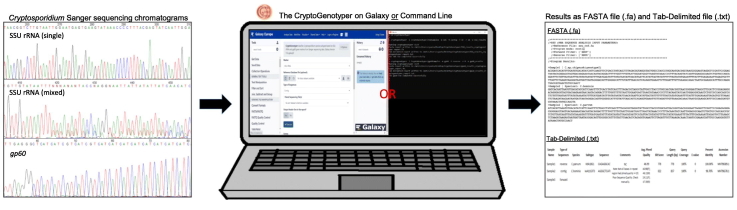
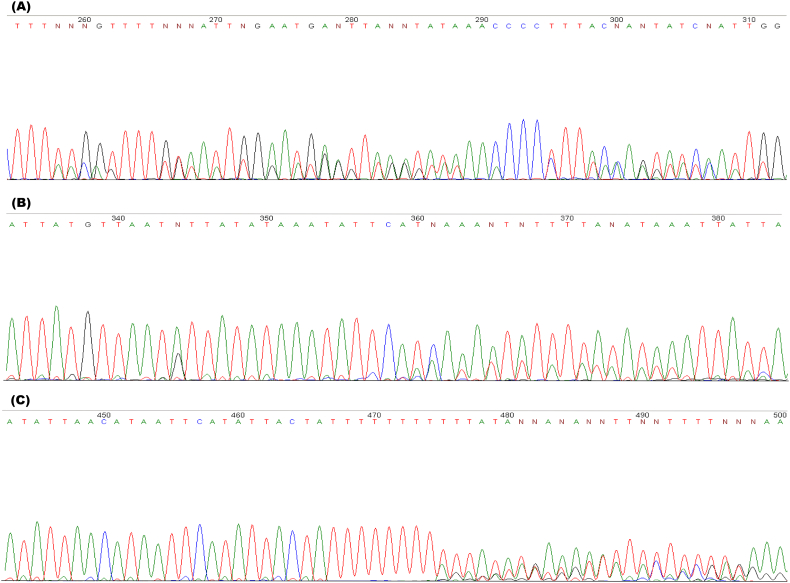
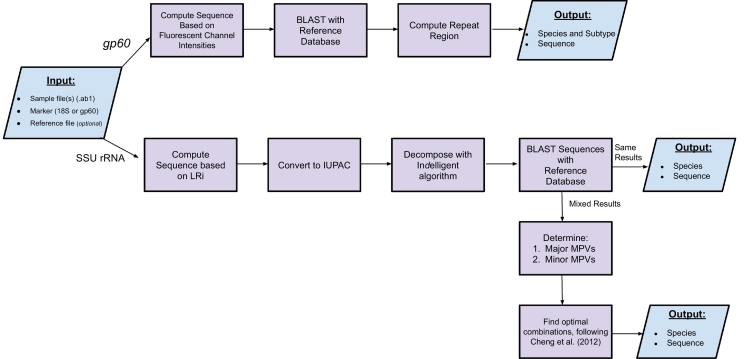
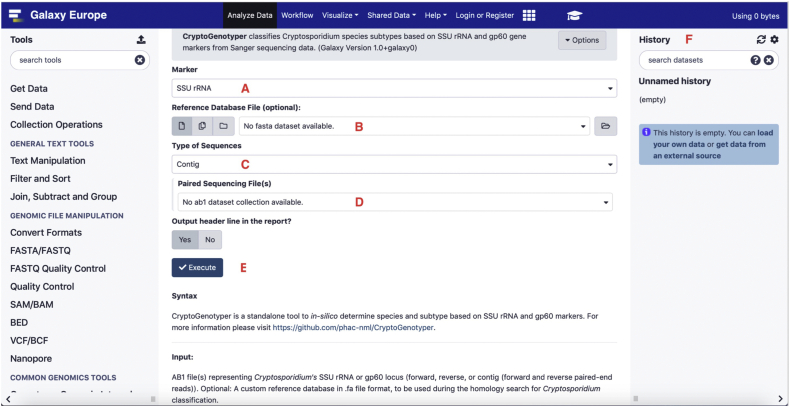
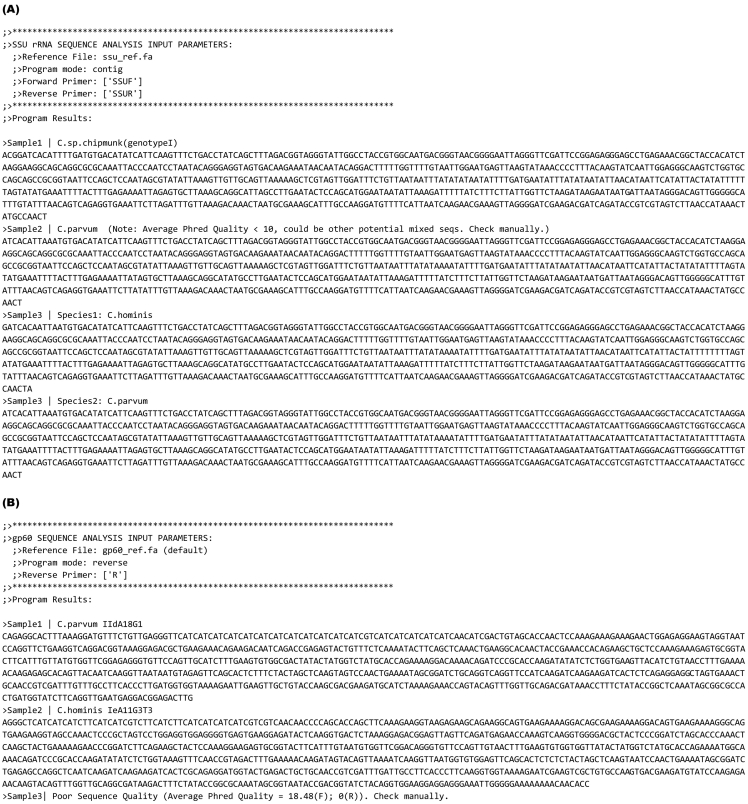
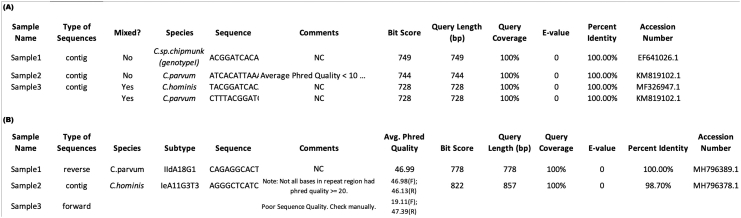
is a protozoan parasite that is transmitted to both humans and animals through zoonotic or anthroponotic means. When a host is infected with this parasite, it causes a gastrointestinal disease known as cryptosporidiosis. To understand the transmission dynamics of , the small subunit (SSU or 18S) rRNA and genes are commonly studied through PCR analysis and conventional Sanger sequencing. However, analyzing sequence chromatograms manually is both time consuming and prone to human error, especially in the presence of poorly resolved, heterozygous peaks and the absence of a validated database. For this study, we developed a genotyping tool, called CryptoGenotyper, which has the capability to read raw Sanger sequencing data for the two common gene targets (SSU rRNA and ) and classify the sequence data into standard nomenclature. The CryptoGenotyper has the capacity to perform quality control and properly classify sequences using a high quality, manually curated reference database, saving users' time and removing bias during data analysis. The incorporated heterozygous base calling algorithms for the SSU rRNA gene target resolves double peaks, therefore recovering data previously classified as inconclusive. The CryptoGenotyper successfully genotyped 99.3% (428/431) and 95.1% (154/162) of SSU rRNA chromatograms containing single and mixed sequences, respectively, and correctly subtyped 95.6% (947/991) of chromatograms without manual intervention. This new, user-friendly tool can provide both fast and reproducible analyses of Sanger sequencing data for the two most common gene targets.
是一种原生动物寄生虫,可通过人畜共患病或人传人的方式传播给人类和动物。当宿主感染这种寄生虫时,会引发一种名为隐孢子虫病的胃肠道疾病。为了了解其传播动态,通常通过聚合酶链反应(PCR)分析和传统的桑格测序法研究小亚基(SSU或18S)核糖体RNA(rRNA)和基因。然而,手动分析序列色谱图既耗时又容易出现人为错误,尤其是在存在分辨率差的杂合峰以及缺乏经过验证的数据库的情况下。在本研究中,我们开发了一种名为CryptoGenotyper的基因分型工具,它能够读取两个常见基因靶点(SSU rRNA和)的原始桑格测序数据,并将序列数据分类为标准命名法。CryptoGenotyper有能力使用高质量的、人工整理的参考数据库进行质量控制并正确分类序列,节省用户时间并消除数据分析过程中的偏差。针对SSU rRNA基因靶点并入的杂合碱基识别算法可解决双峰问题,从而恢复以前分类为不确定的数据。CryptoGenotyper分别成功地对包含单序列和混合序列的SSU rRNA色谱图的99.3%(428/431)和95.1%(154/162)进行了基因分型,并且在无需人工干预的情况下正确地对95.6%(947/991)的色谱图进行了亚型分类。这种新型的、用户友好的工具可以为两个最常见的基因靶点的桑格测序数据提供快速且可重复的分析。