Abdulwahab Doaa A, El-Missiry Mohamed A, Shabana Sameh, Othman Azza I, Amer Maggie E
Faculty of Science, Mansoura University, Mansoura, Egypt.
Heliyon. 2021 Mar 12;7(3):e06474. doi: 10.1016/j.heliyon.2021.e06474. eCollection 2021 Mar.
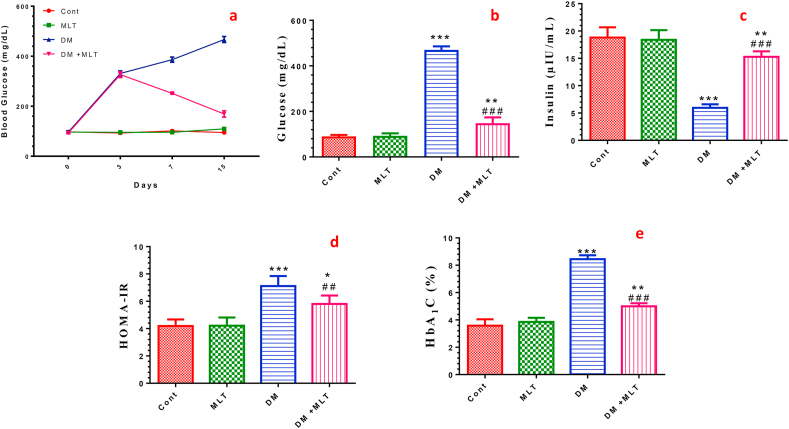
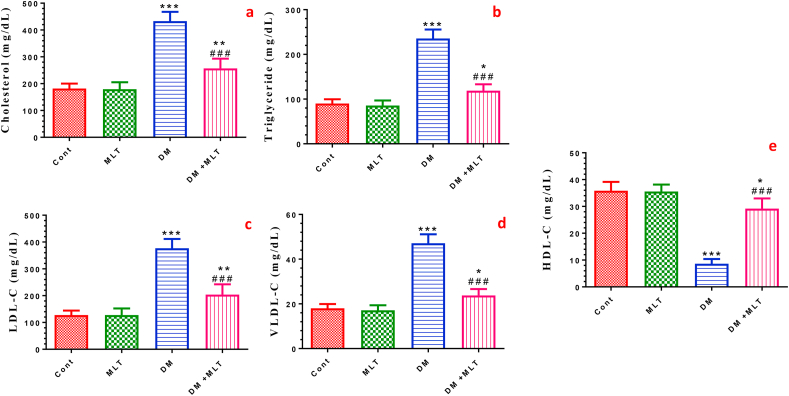
Cardiomyopathy and pancreatic injury are health issues associated with type 2 diabetes mellitus (T2DM) and are characterized by elevated oxidative stress, inflammation and apoptosis. Melatonin (MLT) is a hormone with multifunctional antioxidant activity. The protective effects of MLT on the heart and pancreas during the early development of diabetic cardiomyopathy and pancreatic injury were investigated in male Wistar rats with T2DM. MLT (10 mg/kg) was administered daily by gavage for 15 days after diabetic induction. Treatment of diabetic rats with MLT significantly normalized the levels of serum glucose, HbA1-c, and the lipid profile and improved the insulin levels and insulin resistance compared with diabetic rats, affirming its antidiabetic effect. MLT significantly prevented the development of oxidative stress and sustained the levels of glutathione and glutathione peroxidase activity in the heart and pancreas of diabetic animals, indicating its antioxidant capacity. Additionally, MLT prevented the increase in proinflammatory cytokines and expression of Bax, caspase-3 and P53. Furthermore, MLT enhanced the anti-inflammatory cytokine IL-10 and antiapoptotic protein Bcl-2. MLT controlled the levels of troponin T and creatine kinase-MB and lactate dehydrogenase activity, indicating its anti-inflammatory and antiapoptotic effects. Histological examinations confirmed the protective effects of MLT on T2DM-induced injury in the myocardium, pancreas and islets of Langerhans. In conclusion, the protective effects of melatonin on the heart and pancreas during the early development of T2DM are attributed to its antihyperglycemic, antilipidemic and antioxidant influences as well as its remarkable anti-inflammatory and antiapoptotic properties.
心肌病和胰腺损伤是与2型糖尿病(T2DM)相关的健康问题,其特征是氧化应激、炎症和细胞凋亡增加。褪黑素(MLT)是一种具有多功能抗氧化活性的激素。在患有T2DM的雄性Wistar大鼠中,研究了MLT在糖尿病性心肌病和胰腺损伤早期发展过程中对心脏和胰腺的保护作用。糖尿病诱导后,每天通过灌胃给予MLT(10 mg/kg),持续15天。与糖尿病大鼠相比,用MLT治疗糖尿病大鼠可显著使血清葡萄糖、糖化血红蛋白A1-c和血脂水平正常化,并改善胰岛素水平和胰岛素抵抗,证实了其抗糖尿病作用。MLT显著预防了氧化应激的发展,并维持了糖尿病动物心脏和胰腺中谷胱甘肽水平和谷胱甘肽过氧化物酶活性,表明其抗氧化能力。此外,MLT还预防了促炎细胞因子的增加以及Bax、caspase-3和P53的表达。此外,MLT增强了抗炎细胞因子IL-10和抗凋亡蛋白Bcl-2。MLT控制了肌钙蛋白T、肌酸激酶-MB和乳酸脱氢酶活性水平,表明其抗炎和抗凋亡作用。组织学检查证实了MLT对T2DM诱导的心肌、胰腺和胰岛损伤的保护作用。总之,褪黑素在T2DM早期发展过程中对心脏和胰腺的保护作用归因于其降血糖、抗血脂和抗氧化作用以及显著的抗炎和抗凋亡特性。