Zhai Wenliang, Luo Zujin, Zheng Yue, Dong Dawei, Wu Endong, Wang Zhengfang, Zhai Junpeng, Han Yujuan, Liu Huan, Wang Yanran, Feng Yaohui, Wang Jing, Ma Yingmin
Department of Emergency, Xuanwu Hospital, Capital Medical University, No.45 Changchunjie Street, Xicheng District, Beijing, 100053, China.
Department of Respiratory and Critical Care Medicine, Beijing Engineering Research Center of Respiratory and Critical Care Medicine, Beijing Institute of Respiratory Medicine, Beijing Chao-Yang Hospital, Capital Medical University, No. 5 Jingyuan Road, Shijingshan District, Beijing, 100043, China.
Sci Rep. 2021 Mar 22;11(1):6483. doi: 10.1038/s41598-021-85869-0.
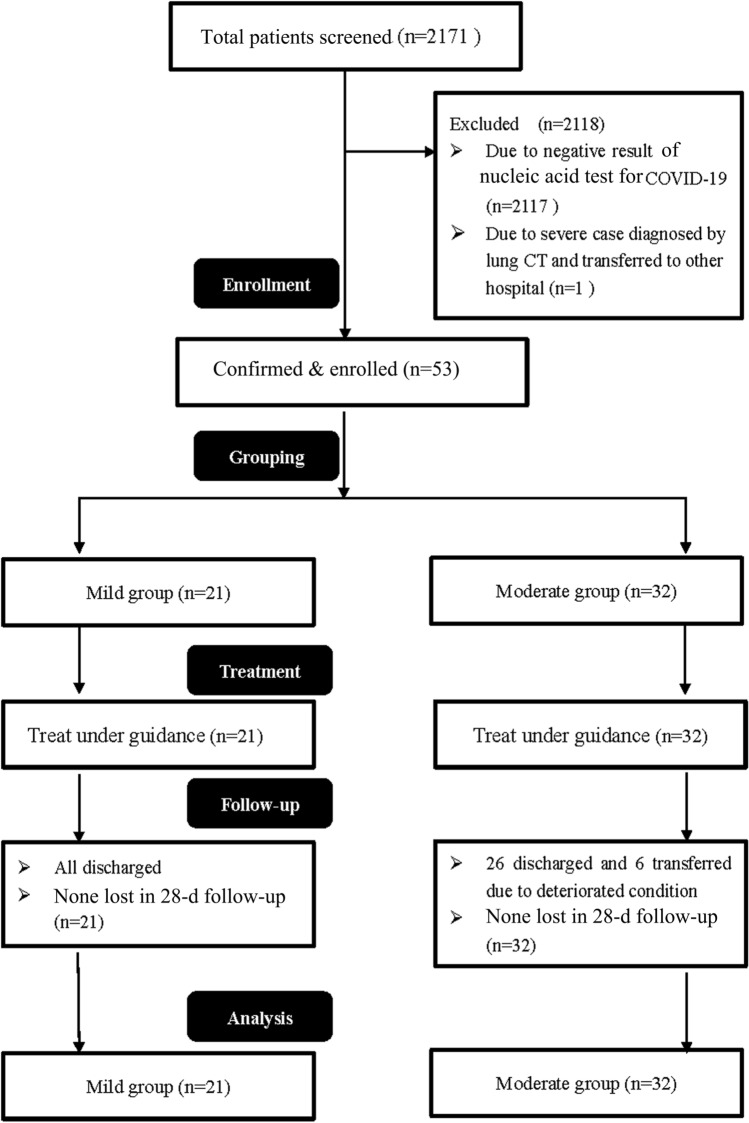
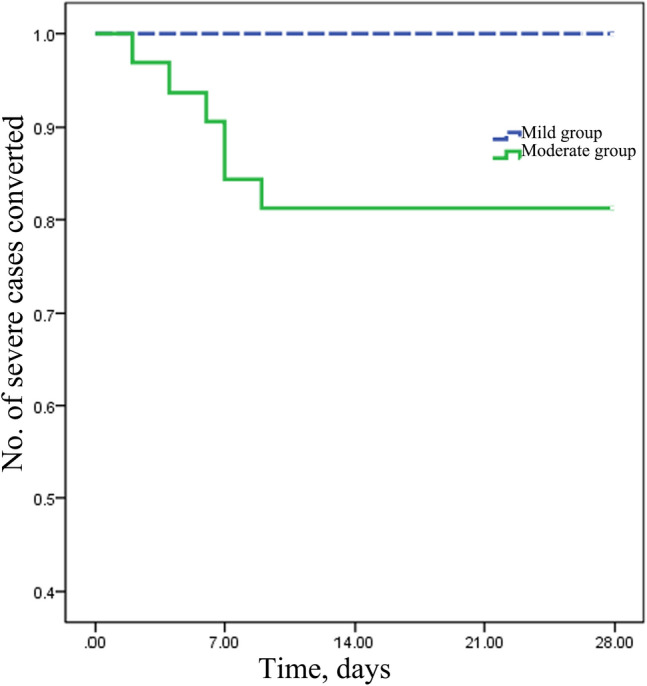
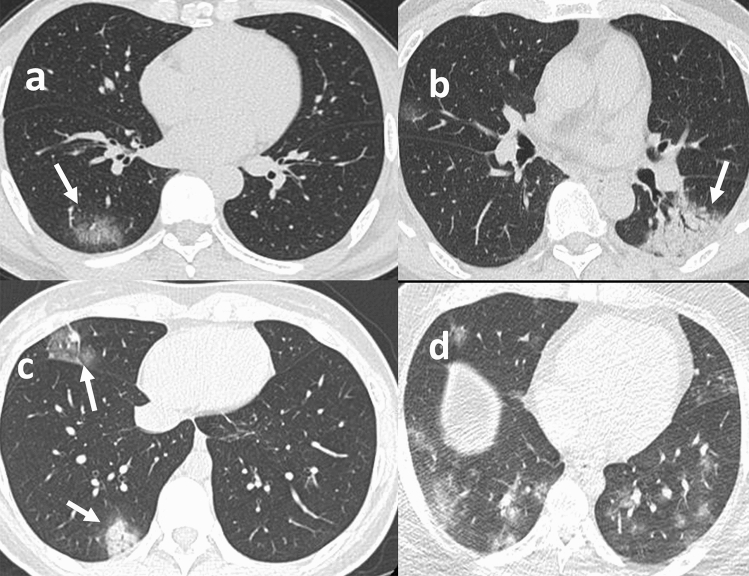
This study compared the differences in the clinical manifestations, treatment courses and clinical turnover between mild and moderate coronavirus disease 2019 (COVID-19). Clinical data of the patients with imported COVID-19 admitted to Beijing Xiaotangshan Designated Hospital between March 15 and April 30, 2020, were retrospectively analysed. A total of 53 COVID-19 patients were included, with 21 mild and 32 moderate cases. Compared with the mild group, the moderate group showed significant differences in breathing frequency, lymphocyte count, neutrophil percentage, neutrophil/lymphocyte ratio, procalcitonin, C-reactive protein, and dynamic erythrocyte sedimentation rate. In the moderate group, 87.5% exhibited ground-glass opacities, 14% exhibited consolidative opacities, 53.1% exhibited local lesions and 68.8% exhibited unilateral lesions. The proportion of patients who received antiviral or antibiotic treatment in the moderate group was higher than that in the mild group, and the number of cases that progressed to severe disease in the moderate group was also significantly higher (18.7% vs. 0%, p = 0.035). Compared with patients with mild COVID-19, those with moderate COVID-19 exhibited more noticeable inflammatory reactions, more severe pulmonary imaging manifestations and earlier expression of protective antibodies. The overall turnover of the moderate cases was poorer than that of the mild cases.
本研究比较了轻度和中度新型冠状病毒肺炎(COVID-19)在临床表现、治疗疗程和临床转归方面的差异。对2020年3月15日至4月30日收治于北京小汤山定点医院的输入性COVID-19患者的临床资料进行回顾性分析。共纳入53例COVID-19患者,其中轻度21例,中度32例。与轻度组相比,中度组在呼吸频率、淋巴细胞计数、中性粒细胞百分比、中性粒细胞/淋巴细胞比值、降钙素原、C反应蛋白和动态红细胞沉降率方面存在显著差异。中度组中,87.5%表现为磨玻璃影,14%表现为实变影,53.1%表现为局部病变,68.8%表现为单侧病变。中度组接受抗病毒或抗生素治疗的患者比例高于轻度组,且中度组进展为重症的病例数也显著更高(18.7% vs. 0%,p = 0.035)。与轻度COVID-19患者相比,中度COVID-19患者表现出更明显的炎症反应、更严重的肺部影像学表现和更早出现的保护性抗体。中度病例的总体转归比轻度病例差。