Doyen C, Kaye K
GHU Paris psychiatrie et neurosciences, 1, rue Cabanis, 75014 Paris, France.
Ethique Sante. 2021 Jun;18(2):74-80. doi: 10.1016/j.etiqe.2021.03.001. Epub 2021 Mar 18.
The COVID-19 crisis dramatically broke down the administrative, technological and clinical barriers that previously existed in the field of telemedicine. There is an important need to define standards for remote clinical observation, for instance in case of suspected autism spectrum disorder (ASD). Describing tools for the remote assessment of children with ASD and reflecting upon the ethical aspects of this practice will improve the quality of care with telemedicine.
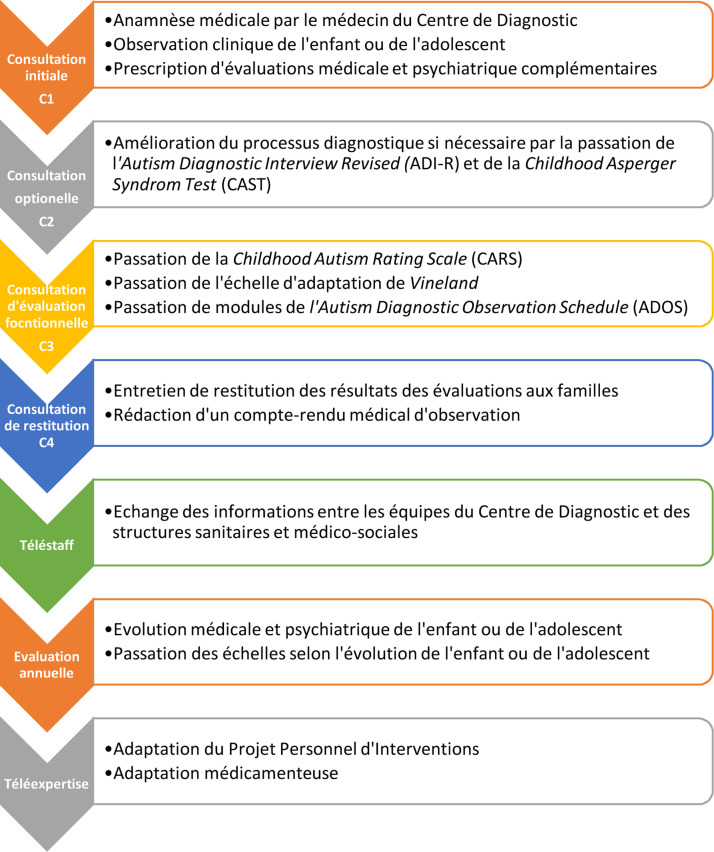
Since 2013, we have conducted clinical evaluations by means of telemedicine at the center for diagnostic and evaluation of autism of the GHU Paris Psychiatry and Neurosciences which have afforded us opportunities to develop information tools and specific procedures. This clinical procedure is associated with ethical reflections that we included in our procedure.
Benefits and risks are presented to families, and informed consent is obtained. The use of validated tools is privileged and their results are analyzed in light of the clinical experience of the professional. Privacy for persons and professionals is preserved, and the patient-doctor relationship is reinforced because of the ability of the patient to make decisions and feel more empowered in the context of the videoconsultation.
The COVID-19 crisis was the impetus for a dramatic increase in the use of telemedicine with a potential risk because of the broad and blurry framework of its application. Clinical and ethical concerns must be studied. Moving forward, societal reflection about the accessibility of telemedicine will be necessary: telemedicine for all should be a future perspective.
新冠疫情危机极大地打破了远程医疗领域先前存在的行政、技术和临床障碍。迫切需要为远程临床观察制定标准,例如在疑似自闭症谱系障碍(ASD)的情况下。描述用于ASD儿童远程评估的工具并思考这种做法的伦理问题,将提高远程医疗的护理质量。
自2013年以来,我们在巴黎精神病学与神经科学GHU自闭症诊断与评估中心通过远程医疗进行临床评估,这使我们有机会开发信息工具和特定程序。这一临床程序伴随着我们纳入程序中的伦理思考。
向家庭介绍益处和风险,并获得知情同意。优先使用经过验证的工具,并根据专业人员的临床经验分析其结果。保护个人和专业人员的隐私,并且由于患者在视频会诊中有能力做出决定并感到更有自主权,医患关系得到加强。
新冠疫情危机促使远程医疗的使用大幅增加,但由于其应用框架广泛且模糊,存在潜在风险。必须研究临床和伦理问题。展望未来,有必要对远程医疗的可及性进行社会思考:全民远程医疗应成为未来的愿景。