Department of Liver Surgery, Chinese Academy of Medical Sciences and Peking Union Medical College (CAMS & PUMC), Peking Union Medical College Hospital, No. 1 Shuaifuyuan, Wangfujing, Beijing 100730, China.
Pancreas Center, The First Affiliated Hospital of Nanjing Medical University; Pancreas Institute, Nanjing Medical University, Nanjing 210000, China.
Theranostics. 2021 Mar 4;11(10):4585-4598. doi: 10.7150/thno.56539. eCollection 2021.
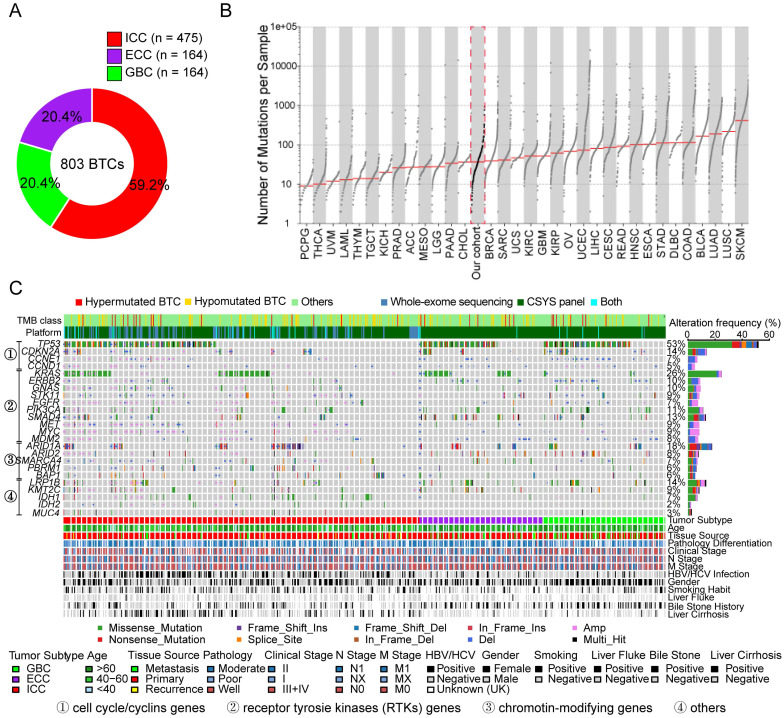
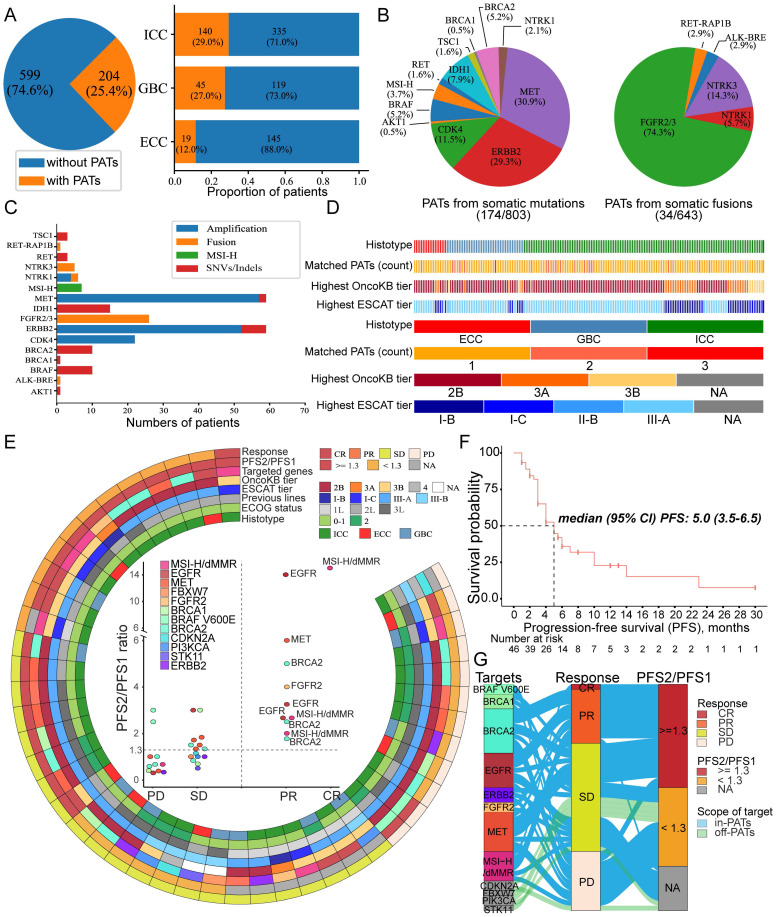
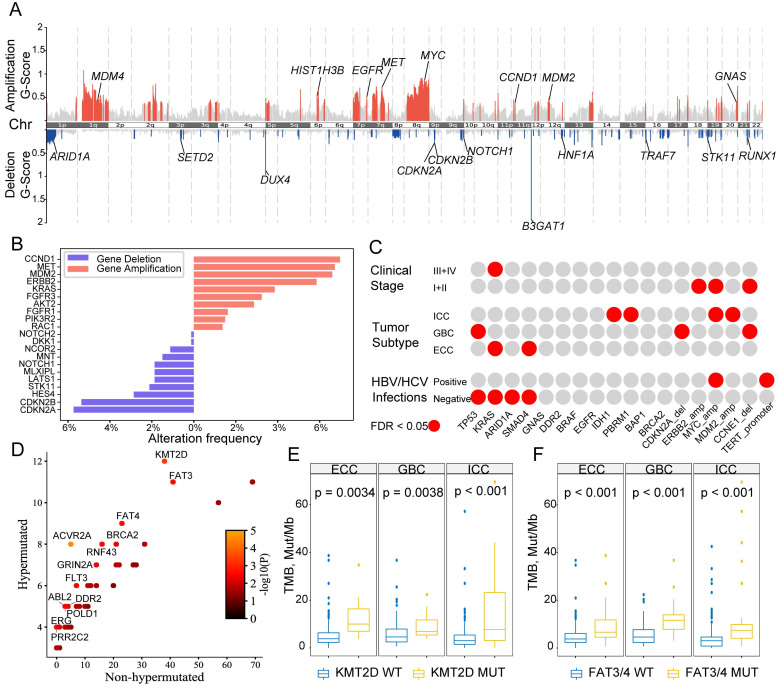
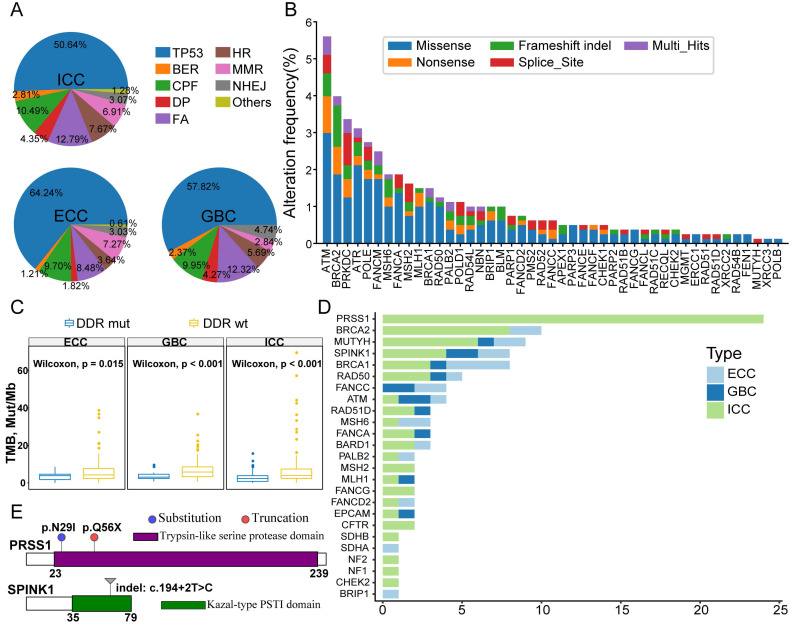
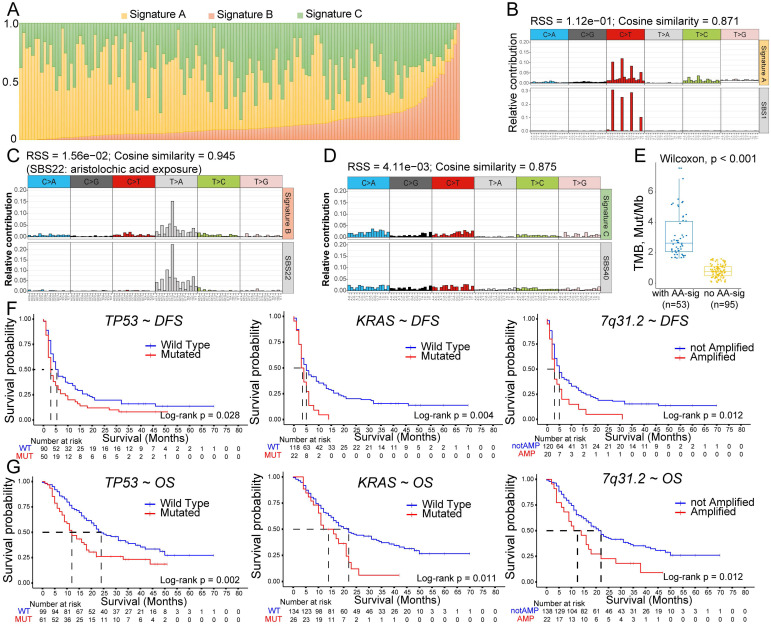
The genomic spectrum of biliary tract carcinoma (BTC) has been characterized and is associated with distinct anatomic and etiologic subtypes, yet limited studies have linked genomic alterations with personalized therapies in BTC patients. This study analyzed 803 patients with BTC:164 with gallbladder cancer, 475 with intrahepatic cholangiocarcinoma (ICC) and 164 with extrahepatic cholangiocarcinoma. We determined genomic alterations, mutational signatures related to etiology and histopathology and prognostic biomarkers. Personalized targeted therapies for patients harboring potentially actionable targets (PATs) were investigated. The median tumor mutation burden (TMB) was 1.23 Mut/Mb, with 4.1% of patients having hypermutated BTCs. Unlike the results obtained from the Western population, the most frequently altered cancer-related genes in our cohort included (53%), (26%), (18%), (14%) and (14%). Germline mutations occurred mostly in DNA damage repair genes. Notably, 35.8% of the ICCs harbored aristolochic acid related signatures and an elevated TMB. and mutations and amplified 7q31.2 were demonstrated to negatively affect patient prognosis. Moreover, 19 genes were proposed to be PATs in BTCs, with 25.4% of patients harboring these PATs. Forty-six patients received PAT-matched targeted therapies, achieving a 26.1% objective response rate; the median progression-free survival (PFS) was 5.0 months, with 56.8% of patients obtaining PFS benefits. Extensive genomic diversity and heterogeneity were observed among BTC patients, with contributions according to potential etiology exposures, anatomical subtypes and clinicopathological characteristics. We also demonstrated that patients with refractory BTCs who have PATs can derive considerable benefit from receiving a matched therapy, initiating further prospective clinical trials guided by molecular profiling among this aggressive cancer.
胆道癌(BTC)的基因组谱已得到特征描述,并与独特的解剖和病因亚型相关,但有限的研究将基因组改变与 BTC 患者的个性化治疗联系起来。本研究分析了 803 名 BTC 患者:164 名胆囊癌患者、475 名肝内胆管癌(ICC)患者和 164 名肝外胆管癌患者。我们确定了基因组改变、与病因和组织病理学相关的突变特征以及预后生物标志物。还研究了携带潜在可操作靶点(PAT)的患者的个性化靶向治疗。中位肿瘤突变负荷(TMB)为 1.23 Mut/Mb,4.1%的患者存在高突变 BTC。与西方人群的结果不同,在我们的队列中最常改变的癌症相关基因包括 (53%)、 (26%)、 (18%)、 (14%)和 (14%)。胚系突变主要发生在 DNA 损伤修复基因中。值得注意的是,35.8%的 ICC 携带马兜铃酸相关特征和较高的 TMB。 和 突变以及扩增 7q31.2 被证明对患者预后产生负面影响。此外,提出了 19 个 BTC 的 PAT 基因,其中 25.4%的患者携带这些 PAT。46 名患者接受了 PAT 匹配的靶向治疗,客观缓解率为 26.1%;中位无进展生存期(PFS)为 5.0 个月,56.8%的患者获得 PFS 获益。BTC 患者表现出广泛的基因组多样性和异质性,与潜在病因暴露、解剖亚型和临床病理特征有关。我们还证明,具有 PAT 的难治性 BTC 患者从接受匹配治疗中获得了相当大的益处,这为在这种侵袭性癌症中进行分子谱指导的前瞻性临床试验奠定了基础。