Mayo Clinic, Jacksonville, FL.
Tempus Labs Inc, Chicago, IL.
JCO Precis Oncol. 2022 Jun;6:e2100510. doi: 10.1200/PO.21.00510.
Biliary tract cancers (BTCs) are aggressive cancers that carry a poor prognosis. An enhanced understanding of the immune landscape of anatomically and molecularly defined subsets of BTC may improve patient selection for immunotherapy and inform immune-based combination treatment strategies.
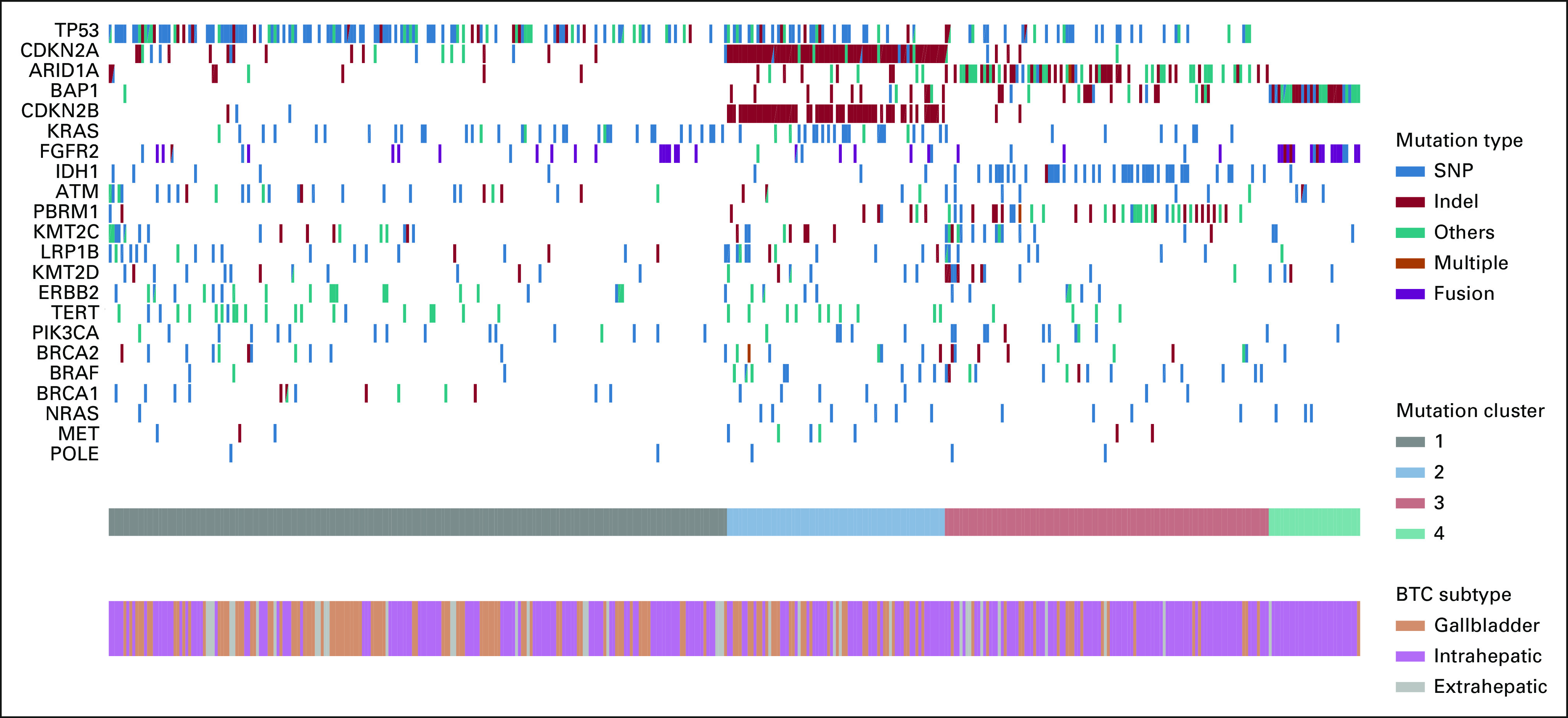
We analyzed deidentified clinical, genomic, and transcriptomic data from the Tempus database to determine the mutational frequency and mutational clustering across the three major BTC subtypes (intrahepatic cholangiocarcinoma [IHC], extrahepatic cholangiocarcinoma, and gallbladder cancer). We subsequently determined the relationship between specific molecular alterations and anatomical subsets and features of the BTC immune microenvironment.
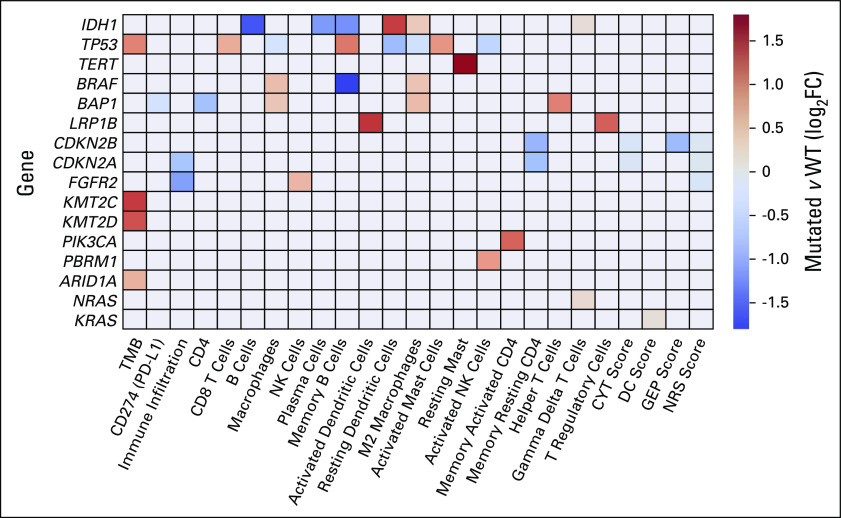
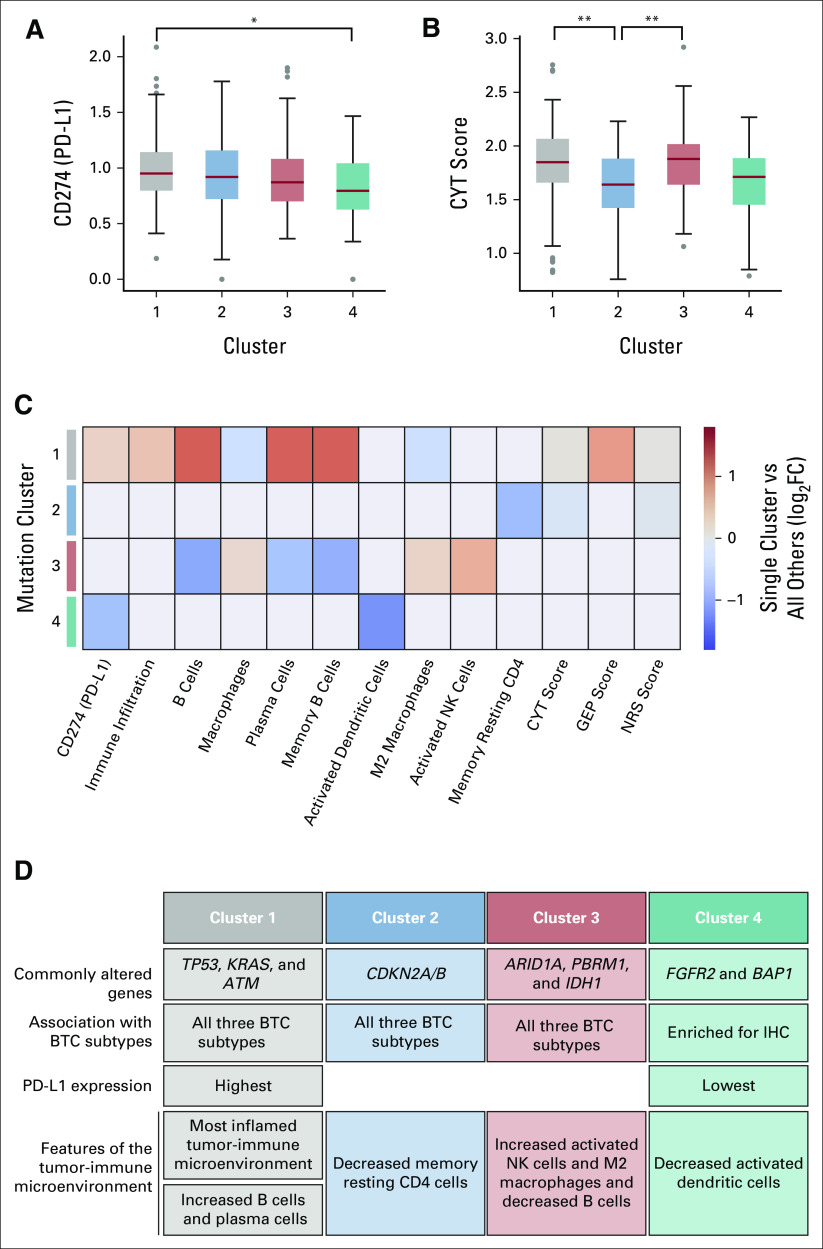
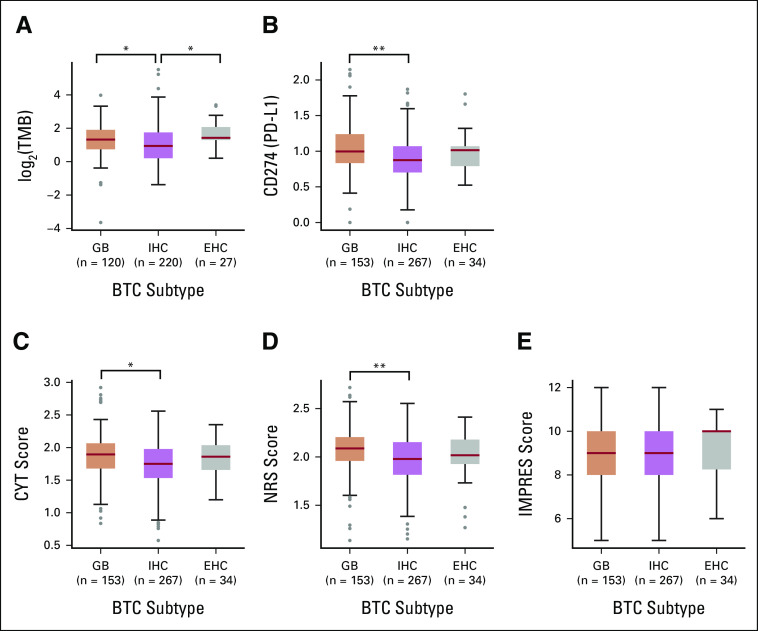
We analyzed 454 samples of BTC, of which the most commonly detected alterations were (42.5%), (23.4%), (19.6%), (15.5%), (15%), (14.2%), (11.7%), (11.7%), (8.4%), (10.4%) and (8.4%), and fusions (8.7%). Potentially actionable molecular alterations were identified in 30.5% of BTCs including 39.1% of IHC. Integrative cluster analysis revealed four distinct molecular clusters, with cluster 4 predominately associated with rearrangements and mutations in IHC. Immune-related biomarkers indicative of an inflamed tumor-immune microenvironment were elevated in gallbladder cancers and in cluster 1, which was enriched for , , and mutations. Multiple common driver genes, including , , , , , and , were individually associated with unique BTC immune microenvironments.
BTC subtypes exhibit diverse DNA alterations, RNA inflammatory signatures, and immune biomarkers. The association between specific BTC anatomical subsets, molecular alterations, and immunophenotypes highlights new opportunities for therapeutic development.
胆道癌(BTC)是一种预后不良的侵袭性癌症。深入了解解剖学和分子定义的 BTC 亚群的免疫景观,可能有助于为免疫治疗选择患者,并为免疫为基础的联合治疗策略提供信息。
我们分析了来自 Tempus 数据库的匿名临床、基因组和转录组数据,以确定三种主要 BTC 亚型(肝内胆管癌 [IHC]、肝外胆管癌和胆囊癌)的突变频率和突变聚类。随后,我们确定了特定分子改变与 BTC 免疫微环境的解剖亚群和特征之间的关系。
我们分析了 454 例 BTC 样本,最常见的改变是 (42.5%)、 (23.4%)、 (19.6%)、 (15.5%)、 (15%)、 (14.2%)、 (11.7%)、 (11.7%)、 (8.4%)、 (10.4%)和 (8.4%),融合(8.7%)。在 30.5%的 BTC 中发现了潜在可治疗的分子改变,包括 39.1%的 IHC。综合聚类分析显示出四个不同的分子簇,簇 4主要与 IHC 中的 重排和 突变相关。与胆囊癌和簇 1相关的免疫相关生物标志物升高,表明肿瘤免疫微环境呈炎症状态,该簇富含 、 、 和 突变。包括 、 、 、 、和 在内的多个常见驱动基因,分别与独特的 BTC 免疫微环境相关。
BTC 亚型表现出不同的 DNA 改变、RNA 炎症特征和免疫生物标志物。特定 BTC 解剖亚群、分子改变和免疫表型之间的关联突出了治疗开发的新机会。