Embark Veterinary, Inc., Boston, Massachusetts, United States of America.
Department of Biomedical Sciences, College of Veterinary Medicine, Cornell University, Ithaca, New York, United States of America.
PLoS One. 2021 Mar 23;16(3):e0248233. doi: 10.1371/journal.pone.0248233. eCollection 2021.
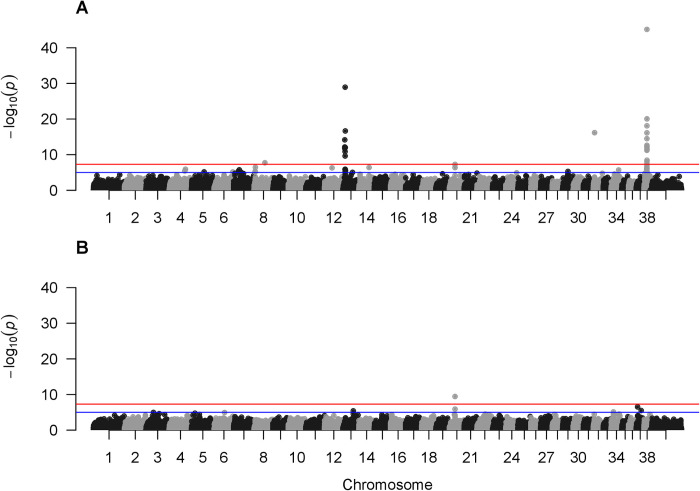
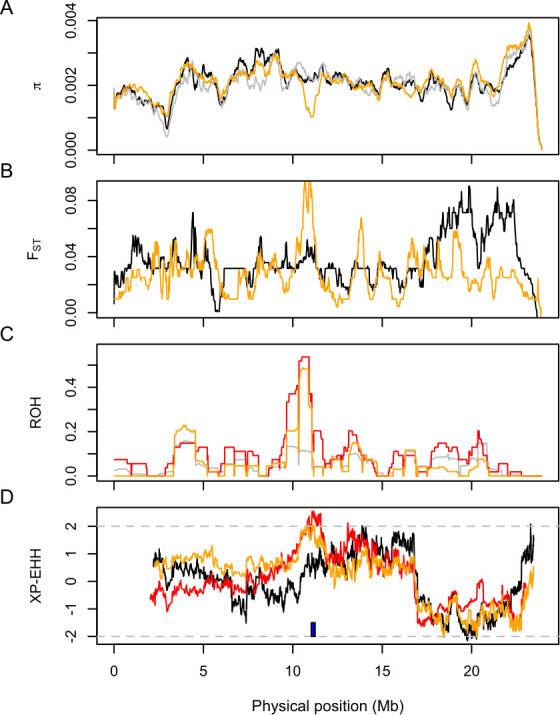
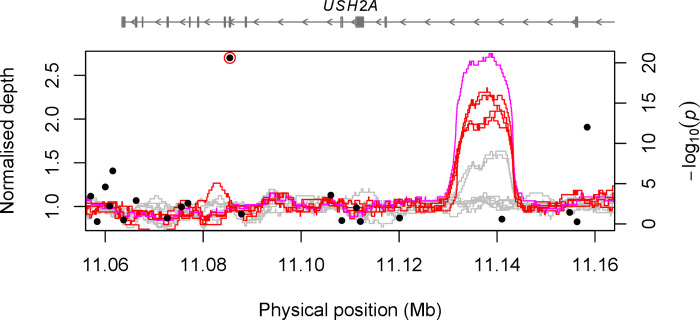
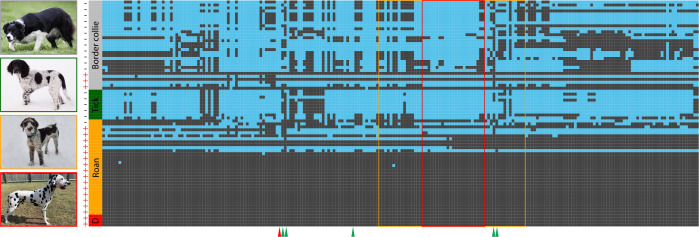
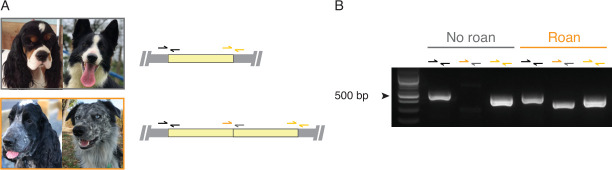
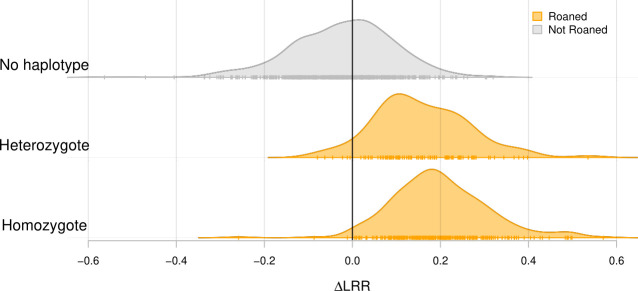
Structural variations (SVs) represent a large fraction of all genetic diversity, but how this genetic diversity is translated into phenotypic and organismal diversity is unclear. Explosive diversification of dog coat color and patterns after domestication can provide a unique opportunity to explore this question; however, the major obstacle is to efficiently collect a sufficient number of individuals with known phenotypes and genotypes of hundreds of thousands of markers. Using customer-provided information about coat color and patterns of dogs tested on a commercial canine genotyping platform, we identified a genomic region on chromosome 38 that is strongly associated with a mottled coat pattern (roaning) by genome-wide association study. We identified a putative causal variant in this region, an 11-kb tandem duplication (11,131,835-11,143,237) characterized by sequence read coverage and discordant reads of whole-genome sequence data, microarray probe intensity data, and a duplication-specific PCR assay. The tandem duplication is in an intronic region of usherin gene (USH2A), which was perfectly associated with roaning but absent in non-roaned dogs. We detected strong selection signals in this region characterized by reduced nucleotide diversity (π), increased runs of homozygosity, and extended haplotype homozygosity in Wirehaired Pointing Griffons and Australian Cattle Dogs (typically roaned breeds), as well as elevated genetic difference (FST) between Wirehaired Pointing Griffon (roaned) and Labrador Retriever (non-roaned). Surprisingly, all Dalmatians (N = 262) carried the duplication embedded in identical or similar haplotypes with roaned dogs, indicating this region as a shared target of selection during the breed's formation. We propose that the Dalmatian's unique spots were a derived coat pattern by establishing a novel epistatic interaction between roaning "R-locus" on chromosome 38 and an uncharacterized modifier locus. These results highlight the utility of consumer-oriented genotype and phenotype data in the discovery of genomic regions contributing to phenotypic diversity in dogs.
结构变异(SV)代表了所有遗传多样性的很大一部分,但这种遗传多样性如何转化为表型和生物多样性尚不清楚。狗的毛色和图案在驯化后的爆炸式多样化为探索这个问题提供了一个独特的机会;然而,主要的障碍是有效地收集足够数量的具有已知表型和数十万标记基因型的个体。我们利用客户提供的关于在商业犬基因分型平台上测试的狗的毛色和图案信息,通过全基因组关联研究,确定了 38 号染色体上一个与斑驳毛色(罗纹)强烈相关的基因组区域。我们在该区域确定了一个假定的因果变异,一个 11kb 的串联重复(11,131,835-11,143,237),其特征是序列读取覆盖和全基因组序列数据、微阵列探针强度数据和重复特异性 PCR 检测的不一致读取。串联重复位于 usherin 基因(USH2A)的内含子区域,该基因与罗纹完全相关,但在非罗纹狗中不存在。我们在该区域检测到强烈的选择信号,其特征是核苷酸多样性(π)降低、纯合性延伸和同质延伸,在 Wirehaired Pointing Griffons 和澳大利亚牛犬(通常是罗纹品种)中,以及 Wirehaired Pointing Griffon(罗纹)和拉布拉多猎犬(非罗纹)之间的遗传差异(FST)升高。令人惊讶的是,所有的斑点狗(N=262)都携带了重复序列,这些重复序列与罗纹狗的重复序列相同或相似,这表明该区域是该品种形成过程中选择的共同目标。我们提出,斑点狗独特的斑点是一种衍生的毛色模式,通过在 38 号染色体上的罗纹“R 基因座”和一个未被描述的修饰基因座之间建立一个新的上位性相互作用。这些结果突出了以消费者为导向的基因型和表型数据在发现导致狗表型多样性的基因组区域方面的作用。