Lo Cascio Ettore, Toto Angelo, Babini Gabriele, De Maio Flavio, Sanguinetti Maurizio, Mordente Alvaro, Della Longa Stefano, Arcovito Alessandro
Dipartimento di Scienze Biotecnologiche di Base, Cliniche Intensivologiche e Perioperatorie, Università Cattolica del Sacro Cuore, Largo Francesco Vito 1, 00168 Roma, Italy.
Istituto Pasteur-Fondazione Cenci Bolognetti, Dipartimento di Scienze Biochimiche "A. Rossi Fanelli" and Istituto di Biologia e Patologia Molecolari del CNR, Sapienza Università di Roma, 00185 Rome, Italy.
Comput Struct Biotechnol J. 2021;19:1838-1847. doi: 10.1016/j.csbj.2021.03.014. Epub 2021 Mar 18.
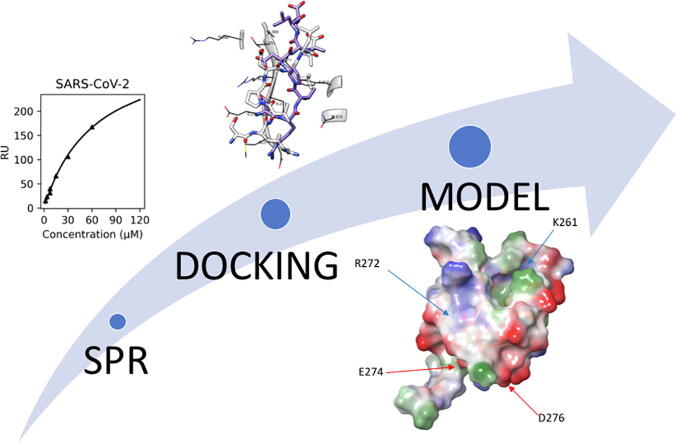
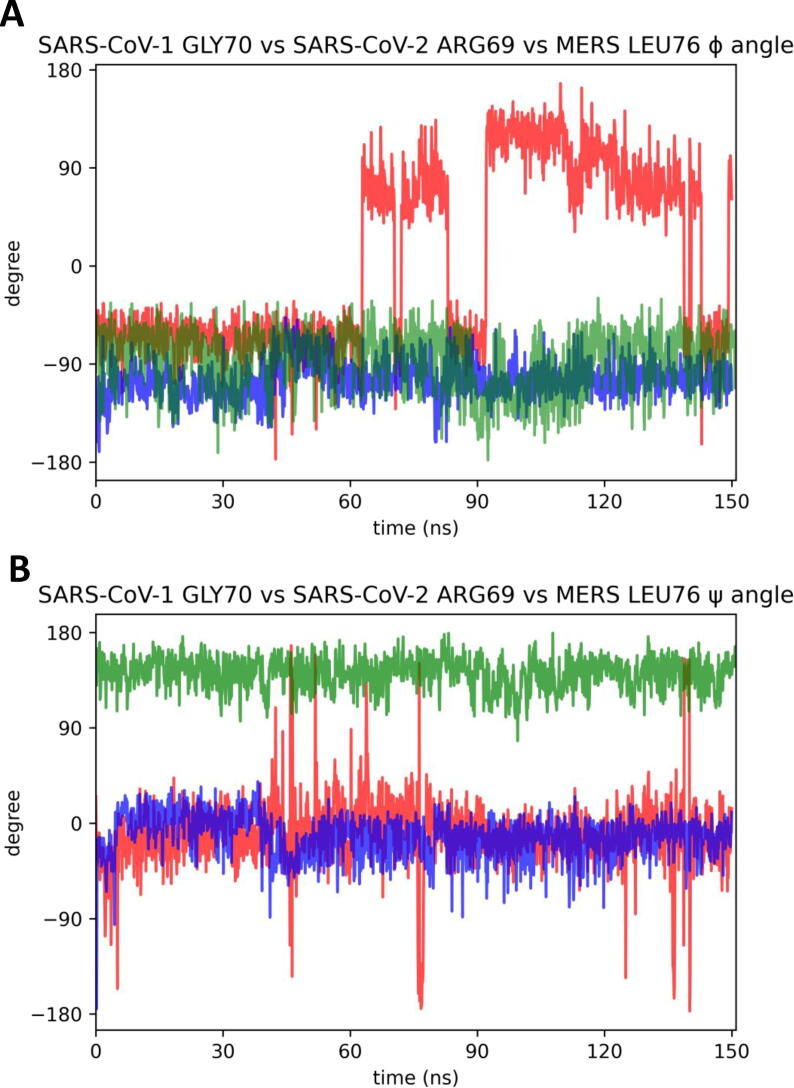
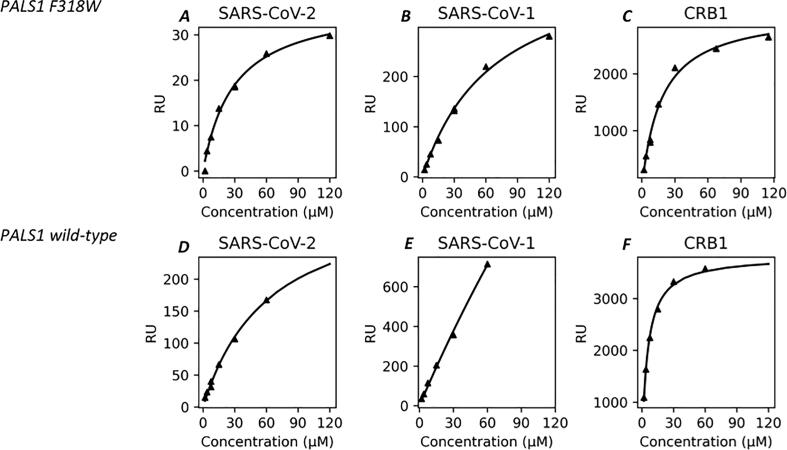
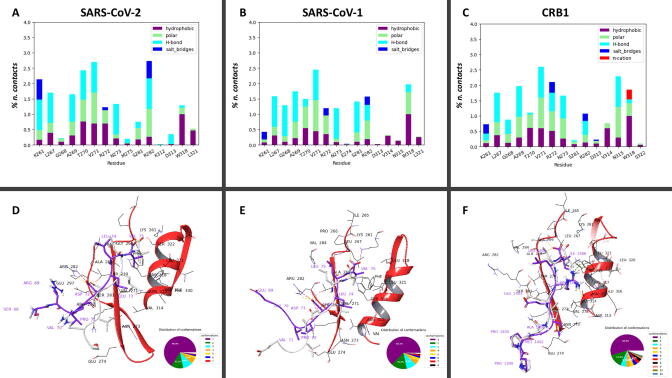
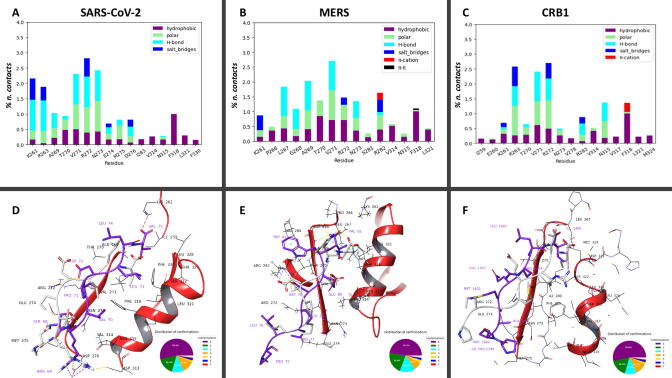
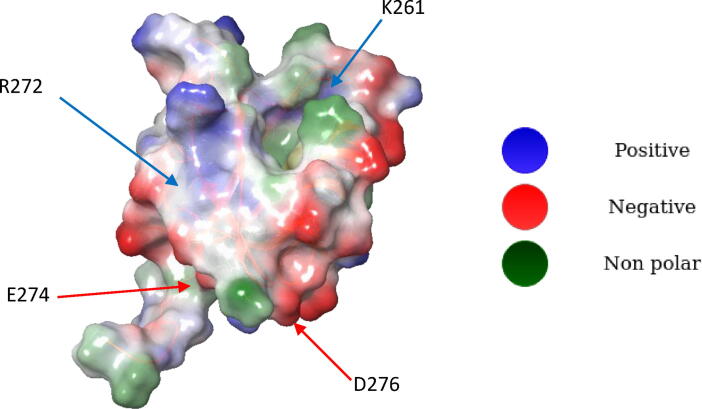
Short Linear Motifs (SLiMs) are functional protein microdomains that typically mediate interactions between a short linear region in one protein and a globular domain in another. Surface Plasmon Resonance assays have been performed to determine the binding affinity between PDZ domain of wild type human PALS1 protein and tetradecapeptides representing the SLiMs sequences of SARS-CoV-1 and SARS-CoV-2 E proteins (E-SLiMs). SARS-CoV-2 E-SLiM binds to the human target protein with a higher affinity compared to SARS-CoV-1, showing a difference significantly greater than previously reported using the F318W mutant of PALS1 protein and shorter target peptides. Moreover, molecular dynamics simulations have provided clear evidence of the structural determinants driving this binding process. Specifically, the Arginine 69 residue in the SARS-CoV-2 E-SLiM is the key residue able to both enhance the specific polar interaction with negatively charged pockets of the PALS1 PDZ domain and reduce significantly the mobility of the viral peptide. These experimental and computational data are reinforced by the comparison of the interaction between the PALS1 PDZ domain with the natural ligand CRB1, as well as the corresponding E-SLiMs of other coronavirus members such as MERS and OCF43. Our results provide a model at the molecular level of the strategies used to mimic the endogenous SLiM peptide in the binding of the tight junctions of the host cell, explaining one of the possible reasons of the severity of the infection and pulmonary inflammation by SARS-CoV-2.
短线性基序(SLiMs)是功能性蛋白质微结构域,通常介导一种蛋白质中的短线性区域与另一种蛋白质中的球状结构域之间的相互作用。已进行表面等离子体共振分析,以确定野生型人PALS1蛋白的PDZ结构域与代表SARS-CoV-1和SARS-CoV-2 E蛋白(E-SLiMs)的SLiMs序列的十四肽之间的结合亲和力。与SARS-CoV-1相比,SARS-CoV-2 E-SLiM以更高的亲和力与人靶蛋白结合,显示出的差异明显大于先前使用PALS1蛋白的F318W突变体和较短靶肽所报道的差异。此外,分子动力学模拟提供了驱动这种结合过程的结构决定因素的明确证据。具体而言,SARS-CoV-2 E-SLiM中的精氨酸69残基是关键残基,既能增强与PALS1 PDZ结构域带负电荷口袋的特异性极性相互作用,又能显著降低病毒肽的流动性。通过比较PALS1 PDZ结构域与天然配体CRB1以及其他冠状病毒成员(如MERS和OCF43)的相应E-SLiMs之间的相互作用,进一步证实了这些实验和计算数据。我们的结果提供了一个分子水平的模型,用于解释在宿主细胞紧密连接结合中模拟内源性SLiM肽所采用的策略,解释了SARS-CoV-2感染严重性和肺部炎症的可能原因之一。