Stupak Inge, Mansoor Maha, Smith C Tattersall
Department of Geosciences and Natural Resource Management, University of Copenhagen, Rolighedsvej 23, 1958 Frederiksberg C, Denmark.
University of Toronto, Toronto, Canada.
Energy Sustain Soc. 2021;11(1):5. doi: 10.1186/s13705-021-00280-x. Epub 2021 Mar 18.
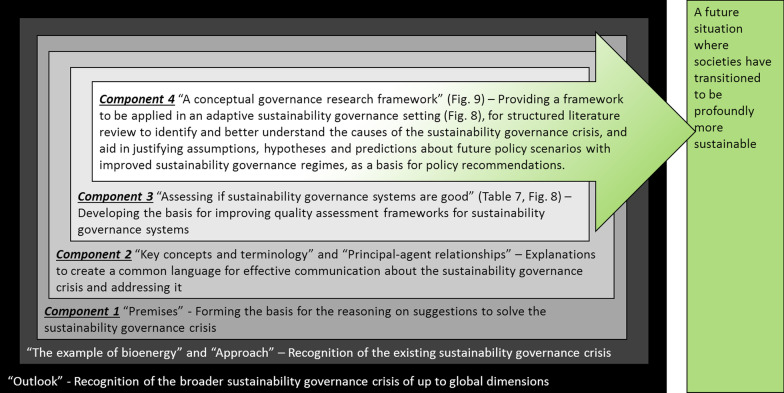
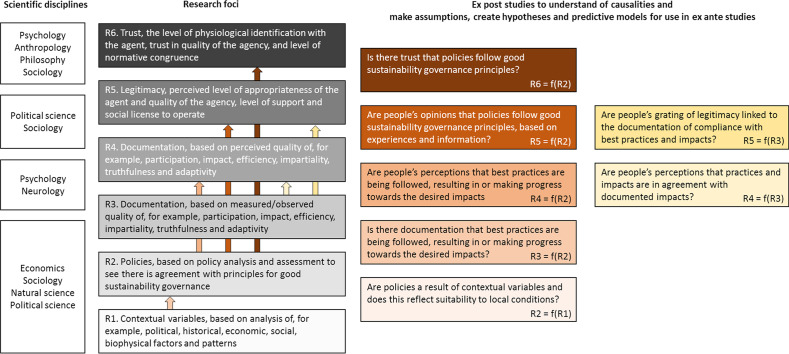
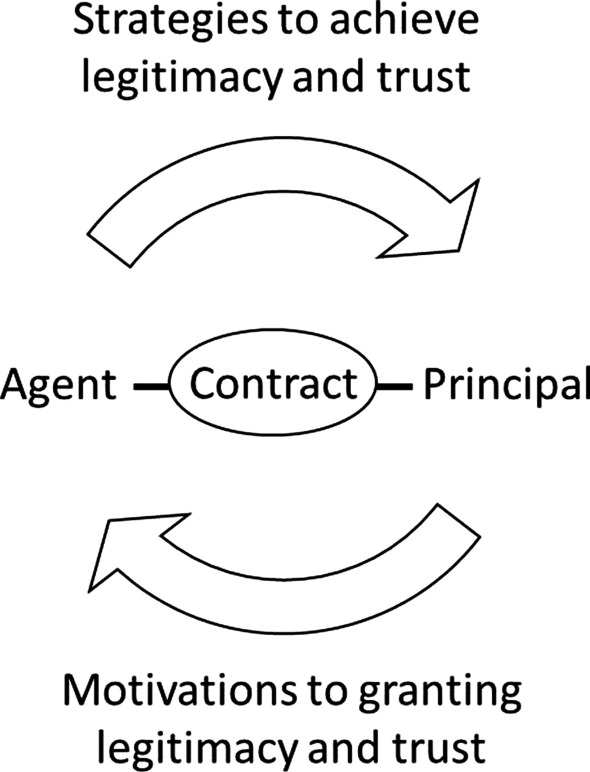
While the quantity of sustainability governance initiatives and systems has increased dramatically, crises persist over whether specific governance systems can be trusted as legitimate regulators of the sustainability of economic activities. This paper focuses on conceptual tools to improve our understanding of these crises as well as the facilitating factors and barriers for sustainability governance to play a role in transitioning to profoundly more sustainable societies than those that currently exist. Bioenergy is used throughout the paper as an example to aid contextually in understanding the theoretical and abstract arguments. We first define eight premises upon which our argumentation is developed. We then define sustainability, sustainability transition, legitimacy, and trust as a premise for obtaining effectiveness in communication and minimising risks associated with misunderstanding key terms. We proceed to examine the literature on "good governance" in order to reflect upon what defines "good sustainability governance" and what makes governance systems successful in achieving their goals. We propose input, output, and throughput legitimacy as three principles constituting "good" sustainability governance and propose associated open-ended criteria as a basis for developing operational standards for assessing the quality of a sustainability governance system or complex. As sustainability governance systems must develop to remain relevant, we also suggest an adaptive governance model, where continuous re-evaluation of the sustainability governance system design supports the system in remaining "good" in conditions that are complex and dynamic. Finally, we pull from the literature in a broad range of sciences to propose a conceptual "governance research framework" that aims to facilitate an integrated understanding of how the design of sustainability governance systems influences the legitimacy and trust granted to them by relevant actors. The framework is intended to enhance the adaptive features of sustainability governance systems so as to allow the identification of the causes of existing and emerging sustainability governance crises and finding solutions to them. Knowledge generated from its use may form a basis for providing policy recommendations on how to practically solve complex legitimacy and trust crises related to sustainability governance.
The online version contains supplementary material available at 10.1186/s13705-021-00280-x.
尽管可持续发展治理倡议和体系的数量急剧增加,但对于特定治理体系能否作为经济活动可持续性的合法监管者而被信任,危机依然存在。本文聚焦于概念工具,以增进我们对这些危机的理解,以及可持续发展治理在向比当前社会更具可持续性的社会转型中发挥作用的促进因素和障碍。本文通篇以生物能源为例,辅助从背景角度理解理论性和抽象性论点。我们首先定义了展开论证所基于的八个前提。然后,我们将可持续性、可持续性转型、合法性和信任定义为在沟通中取得成效并将与误解关键术语相关的风险降至最低的前提。我们接着审视关于“善治”的文献,以思考“良好的可持续发展治理”的定义以及使治理体系成功实现其目标的因素。我们提出输入合法性、输出合法性和通量合法性作为构成“良好”可持续发展治理的三项原则,并提出相关的开放式标准,作为制定评估可持续发展治理体系或复合体质量的操作标准的基础。由于可持续发展治理体系必须不断发展以保持相关性,我们还建议采用一种适应性治理模式,即对可持续发展治理体系设计进行持续重新评估,以支持该体系在复杂多变的条件下保持“良好”状态。最后,我们从广泛的科学文献中提炼出一个概念性的“治理研究框架”,旨在促进对可持续发展治理体系设计如何影响相关行为体赋予它们的合法性和信任的综合理解。该框架旨在增强可持续发展治理体系的适应性特征,以便识别现有和新出现的可持续发展治理危机的成因并找到解决办法。从其应用中产生的知识可为提供关于如何切实解决与可持续发展治理相关的复杂合法性和信任危机的政策建议奠定基础。
在线版本包含可在10.1186/s13705-021-00280-x获取的补充材料。