Institute for Biomedical Sciences, Digestive Diseases Research Group, Center for Diagnostics and Therapeutics, Georgia State University, Atlanta, Georgia.
Atlanta Veterans Affairs Medical Center, Decatur, Georgia.
Am J Physiol Gastrointest Liver Physiol. 2021 May 1;320(5):G888-G896. doi: 10.1152/ajpgi.00299.2020. Epub 2021 Mar 24.
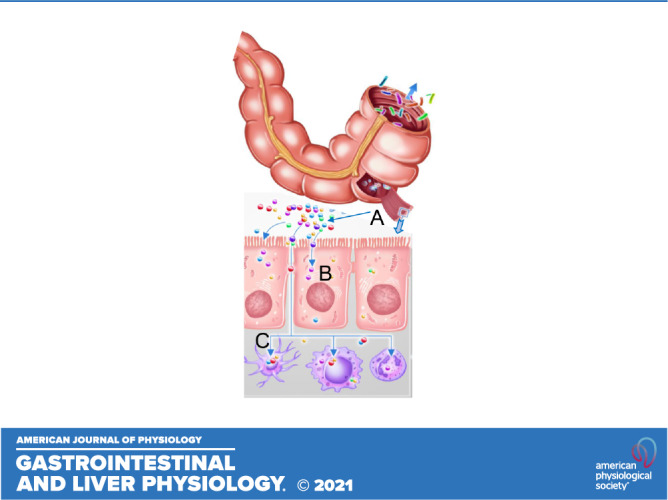
Genetic knockout (KO) of peptide transporter-1 (PepT1) protein is known to provide resistance to acute colitis and colitis-associated cancer (CAC) in mouse models. However, it was unclear which molecule(s) or pathway(s) formed the basis for these protective effects. Recently, we demonstrated that the PepT1 microbiota is sufficient to protect against colitis and CAC. Given that PepT1 KO alters the gut microbiome and thereby changes the intestinal metabolites that are ultimately reflected in the feces, we investigated the fecal metabolites of our PepT1 KO mice. Using a liquid chromatography-mass spectrometry (LC-MS)-based untargeted-metabolomics technique, we found that the fecal metabolites were significantly different between the KO and normal wild-type (WT) mice. Among the altered fecal metabolites, tuberonic acid (TA) was sevenfold higher in KO mouse feces than in WT mouse feces. Accordingly, we studied whether the increased TA could direct an anti-inflammatory effect. Using in vitro models, we discovered that TA not only prevented lipopolysaccharide (LPS)-induced inflammation in macrophages but also improved the epithelial cell healing processes. Our results suggest that TA, and possibly other fecal metabolites, play a crucial role in the pathway(s) associated with the anticolitis effects of PepT1 KO. Fecal metabolites were significantly different between the KO and normal wild-type (WT) mice. One fecal metabolite, tuberonic acid (TA), was sevenfold higher in KO mouse feces than in WT mouse feces. TA prevented lipopolysaccharide (LPS)-induced inflammation in macrophages and improved the epithelial cell healing process.
基因敲除(KO)肽转运蛋白 1(PepT1)蛋白已知可提供抵抗急性结肠炎和结肠炎相关癌症(CAC)在小鼠模型中。然而,尚不清楚哪些分子或途径构成这些保护作用的基础。最近,我们证明了 PepT1 微生物组足以预防结肠炎和 CAC。鉴于 PepT1 KO 改变了肠道微生物组,从而改变了最终反映在粪便中的肠道代谢物,我们研究了 PepT1 KO 小鼠的粪便代谢物。使用基于液相色谱-质谱(LC-MS)的非靶向代谢组学技术,我们发现 KO 和正常野生型(WT)小鼠的粪便代谢物有明显差异。在改变的粪便代谢物中,葫芦酸(TA)在 KO 小鼠粪便中的含量是 WT 小鼠粪便中的七倍。因此,我们研究了增加的 TA 是否可以直接产生抗炎作用。使用体外模型,我们发现 TA 不仅可以预防脂多糖(LPS)诱导的巨噬细胞炎症,还可以改善上皮细胞的愈合过程。我们的结果表明,TA 以及其他可能的粪便代谢物,在 PepT1 KO 相关的抗结肠炎作用途径中起着至关重要的作用。KO 和正常野生型(WT)小鼠的粪便代谢物有明显差异。一种粪便代谢物,葫芦酸(TA),在 KO 小鼠粪便中的含量是 WT 小鼠粪便中的七倍。TA 可预防脂多糖(LPS)诱导的巨噬细胞炎症,并改善上皮细胞的愈合过程。